Game Freak Addresses Beast of Reincarnation's Mixed Reception, Defends Difficulty and Promises Pacing Fixes
Following a polarized launch, Director Furushima outlines upcoming updates for Beast of Reincarnation, promising cutscene skips while defending the game's core co-op difficulty.
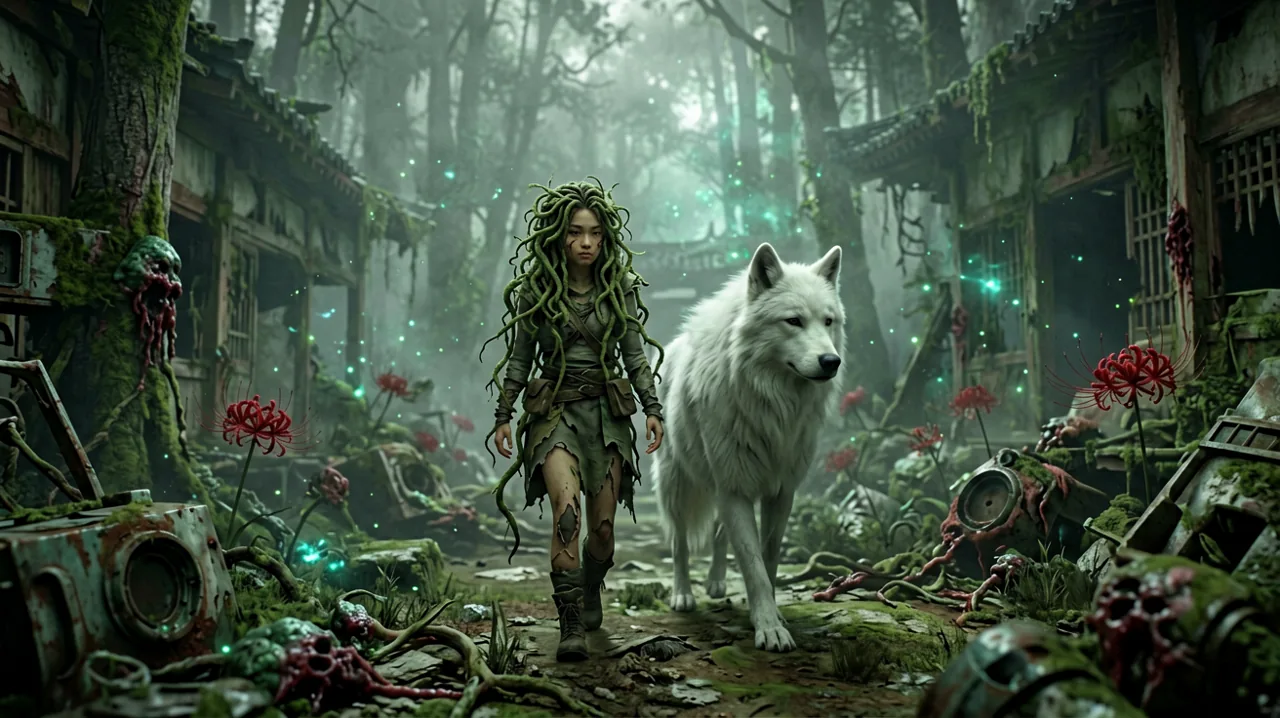
When Game Freak, the legendary studio virtually synonymous with the Pokémon franchise, announced Project Bloom—which would eventually materialize as Beast of Reincarnation—the gaming industry collectively held its breath. Stepping away from family-friendly monster-catching and leaping into the dark, punishing realm of a mature, Unreal Engine 5 action RPG was a monumental risk. Set in a post-apocalyptic vision of Japan in the year 4026, a world entirely swallowed by a parasitic anomaly known as the blight, the game launched with an enormous weight of expectations on August 4, 2026.
Now, just over a week post-launch, the reality of the game’s reception is coming into sharp focus. With a Metacritic aggregate score stabilizing around 73/100, the critical consensus is decidedly mixed. Some outlets have praised the visceral, innovative combat, while others, such as Slant Magazine, have published scathing reviews labeling the experience as an “Emotionless Journey Through Post-Apocalyptic Japan.” The heavily polarized reception has prompted direct intervention from the top, leading Game Freak’s director, Furushima, to issue a public statement addressing the community’s concerns and mapping out the immediate future of the game.
A Public Apology and Imminent Fixes
In a surprisingly candid update, Director Furushima acknowledged that the launch build fell short in specific areas. “I honestly feel that there are still areas in the game that require our sincere attention,” Furushima stated. “I’m truly sorry that parts of the game haven’t provided a sufficiently enjoyable experience.”
While early patches and known issues focused primarily on urgent camera bugs and standard performance tweaking, Furushima confirmed that systemic, structural updates are currently in the pipeline. Among the highest priorities are widespread narrative pacing adjustments and the highly requested ability to skip cutscenes.
One of the most persistent complaints regarding the narrative delivery has been the unskippable nature of in-game exposition. Critics and players alike have pointed out that the somewhat wooden character animations during these dialogue-heavy sequences sharply contrast with the fluid, dynamic animations of Emma’s vine-based combat and traversal. Being forced to sit through these scenes repeatedly—especially after a death or during a New Game Plus run—has been a major source of friction. The confirmation that a skip function is arriving soon is a massive victory for the community.
The Difficulty Debate: Why Nerfs Aren’t on the Roadmap
Despite the apologies and the promise of widespread quality-of-life improvements, Furushima stood his ground on one crucial design element: the combat difficulty. He explicitly noted that lowering the game’s difficulty or fundamentally altering enemy aggression is not high on the priority list.
His reasoning stems directly from the core design philosophy of Beast of Reincarnation. The intent was never to craft a masochistic, brutally punishing experience simply for the sake of it. Instead, the difficulty exists specifically to enforce the game’s central mechanic: the mechanical and narrative bond between Emma and her malefact companion, Koo.
Players who attempt to play Emma as a solo protagonist—relying purely on traditional combat mechanics like perfectly timed parries and dodge rolls—will find themselves severely punished. The game demands tactical co-op. You must utilize Koo’s aggro manipulation and slow-motion interruption skills to create the necessary openings for Emma to use her plant-like hair to absorb and seal the blight.
Interestingly, a highly active discussion thread among genre veterans recently highlighted that this specific difficulty curve is actually one of the game’s greatest strengths. A prominent player noted that they were exhausted by the traditional formula of throwing themselves at a single boss for three to five hours, dying upwards of a hundred times just for a fleeting hit of dopamine. For many, a balanced experience looks entirely different: dying three or four times, learning the attack patterns, executing a successful strategy, and moving on to enjoy the story and setting.
Beast of Reincarnation manages to hit this exact sweet spot. It provides challenging boss encounters that demand attention and synergy, but it respects the player’s time, assuming they engage with the mechanics presented rather than trying to brute-force their way through. In the eyes of many, this answers the lingering question of is it a souls-like with a definitive “no”—it is a unique action RPG that prioritizes tactical partnership over frame-perfect memorization.
The Tale of Two Halves: Pacing and Linear Corridors
The real substance of the community’s critique—and the likely target of Furushima’s promised pacing adjustments—lies in the game’s structural progression.
The transition from the mid-game to the late-game has been the primary source of frustration. The opening hours brilliantly establish the setting, dropping players into a beautifully realized, atmospheric semi-open world. You explore isolated mountain settlements where traditional Japanese architecture merges with the decayed remnants of hyper-advanced technology. The exploration feels organic, rewarding you with scattered lore, spirit stones, and valuable upgrade materials.
However, widespread community reviews note that as the narrative approaches its climax, the structural design takes a sharp, unexpected turn. The sprawling environments are suddenly replaced by a gauntlet of linear corridors that aggressively push the player toward the final confrontation. This bottleneck is exacerbated by a noticeable stagnation in enemy variety. Fighting the same archetypes of mutated malefact beasts in the closing chapters that you already mastered in the first dozen hours makes the finale feel rushed, leading to speculation that the studio may have run out of time or budget to fully realize the back half of the 40-hour campaign.
Lingering Technical Quirks and Frame Generation
Alongside narrative pacing, technical performance remains a hot topic. While updates have smoothed out the roughest edges on PlayStation 5 and standard PC setups, edge cases remain highly problematic.
Furushima mentioned adding native frame generation support in future updates to further stabilize the heavily detailed Unreal Engine 5 environments. In the meantime, the PC community continues to troubleshoot independently. Players utilizing high-bandwidth external setups—such as eGPUs over USB4 paired with current-generation cards like the RX 9070 XT—have reported frequent driver timeouts and black screen crashes within minutes of booting up the game.
The community has traced this back to UE5’s Lumen technology. Lumen requires massive, high-bandwidth transmission of VRAM and system RAM data to calculate global illumination in real-time. The immense processing power of modern GPUs sends this data faster than the USB4 bandwidth can physically handle, causing a bottleneck. The graphics driver interprets this choke point as a hardware failure and immediately drops the connection to prevent damage. Currently, the temporary workaround for these niche setups involves forcing the game to run in DirectX 11 mode, though this comes at a heavy cost to the visual fidelity of the spore-filled environments.
Is Beast of Reincarnation “Overhated”?
Ten days post-launch, the narrative around Game Freak’s ambitious leap is beginning to stabilize. Content creators and hardcore fans are pushing back against the overwhelmingly negative press, with many labeling the game as “overhated.”
It is a solid action RPG that swings for the fences. It nails its post-apocalyptic aesthetic, the unique plant-based Sealer magic system, and the visceral feel of fighting alongside a mutated dog. But it admittedly stumbles on the foundational RPG pillars of pacing, enemy variety, and late-game level design.
As Game Freak prepares its next wave of substantial updates, the core message to players jumping in—especially those trying it out via its Day One inclusion on Xbox Game Pass—is clear: embrace the partnership with Koo, prepare for a tighter, more linear endgame, and know that quality-of-life updates are actively in the pipeline. If you are willing to accept it on its own terms, the blighted ruins of 4026 Japan offer a journey that is absolutely worth undertaking.