Boss-Fight Primer: Prepare, Observe and Verify
Prepare for Beast of Reincarnation’s major encounters without invented weakness charts: use current difficulty, Emma’s parry-to-command loop, Koo’s slowed-time choices, equipment text, Nushi context and patch-version notes.
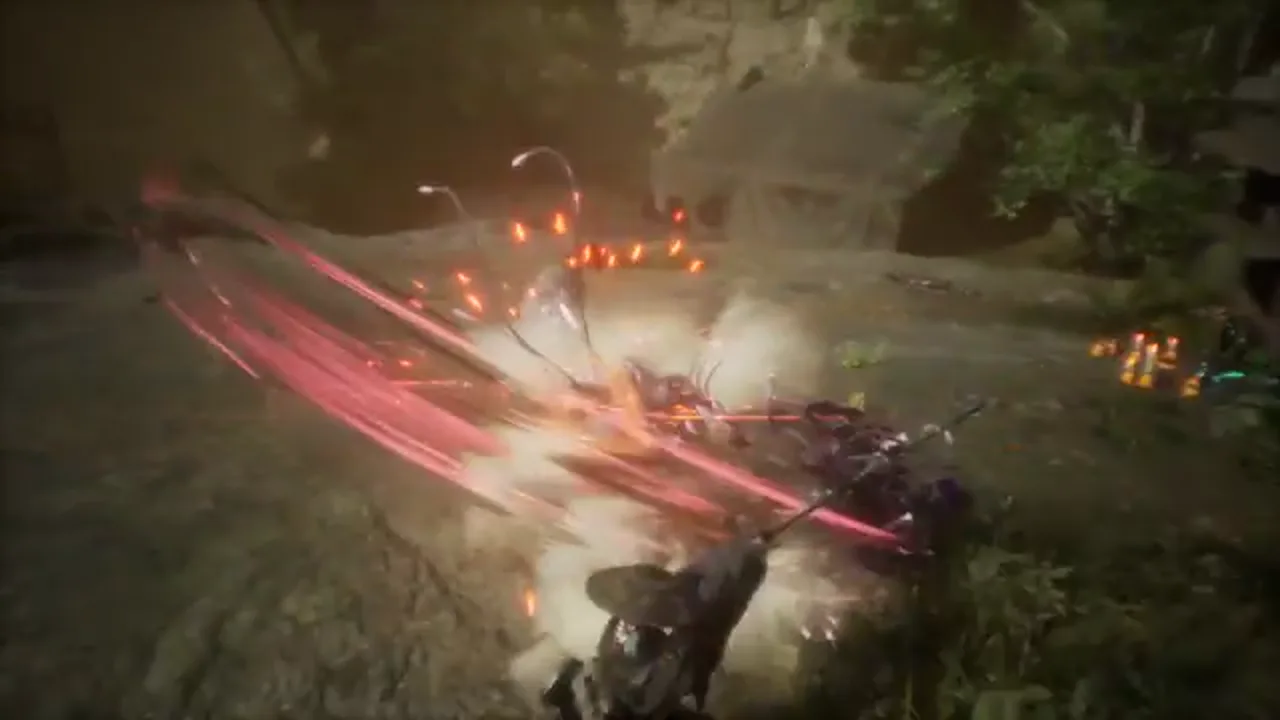
The dependable way to approach a major fight in Beast of Reincarnation is to prepare around the confirmed Emma-and-Koo loop, then observe the current encounter rather than copying an invented weakness chart. Game Freak confirms that giant malefacts called Nushi generate blighted forests and that Emma and Koo defeat them to absorb immense power and gain skills. It also confirms that Emma’s successful parries earn points for Koo’s command techniques.
The public sources do not publish a complete boss list, phase guide, elemental weakness table, health values or universal route order. This primer is therefore about reliable preparation: set a suitable difficulty, understand the action-command partnership, read your current equipment, record version context and make careful observations. It is not a claim that every major enemy behaves the same way.
Know what “boss” means in the official frame
The clearest named major-threat class is the Nushi. Xbox Wire calls them giant malefacts that generate blighted forests. Emma and Koo fight through those forests and the malefacts within them to take the Nushi down. Their immense power and skills help the pair continue toward the Beast of Reincarnation.
This establishes progression context, not a total encounter database. A large creature visible in a trailer is not automatically a Nushi, and a Nushi should not be assumed to have a particular element, phase count or reward without direct evidence. The correct first step for any detailed guide is the in-game name, location, platform, version and difficulty.
Giant Malefacts and Major Boss Context and Nushi: Giant Malefacts and Blighted Forest Bosses define the official scope.
Choose a difficulty that supports learning
Game Freak confirms Normal, Hard and Story modes. Normal is standard, Hard is highly challenging and Story Mode has more forgiving parry timing with reduced enemy damage. Difficulty is not a cosmetic setting in this game because a successful parry leads to points for Koo’s skills.
If a major encounter is preventing you from learning the system, Story Mode is an official option designed to reduce pressure. If you want the standard reference experience, Normal provides that. If you deliberately want a high challenge, Hard is available. The sources do not give numerical damage values or a full mode-difference table, so do not interpret a label as a formula.
When you record a result or use a guide, always name difficulty. A strategy without that context is incomplete. Difficulty Modes explains the official distinctions.
Start with Emma’s defensive read
Emma fights in real time. A successful parry, called a just guard by PlayStation, earns points that activate Koo’s skills. This makes defensive timing a practical preparation target. Before trying to optimize damage, spend a short attempt observing one recognizable enemy attack and testing your response.
The official sources do not say every attack is parryable or publish a perfect-timing value. Do not assume a major creature follows the same rules as an unrelated enemy. Use the visible wind-up, your current controller settings and a consistent test. If a defense fails, create distance and reassess rather than forcing an unverified parry rule.
Parrying, Positioning and Difficulty gives the source-boundary for this part of combat.
Use Koo’s menu as a decision tool
Koo’s techniques are selected through a command menu. Time slows while the player chooses, giving a moment to assess the battlefield. This is useful in a major fight not because it guarantees safety, but because it gives you room to consider position, available options and the immediate threat.
Do not enter a boss attempt with a made-up list of mandatory Koo commands. The complete command catalogue, costs and effects are not published in the primary overview. Read what is actually available on your current screen, then choose based on the live situation. If you later document a technique, identify the version and exact in-game description.
The confirmed sequence remains powerful: read, defend, earn points, choose and reassess. Commanding Koo explains why this is a partnership system rather than a companion AI routine.
Check your current equipment text
Game Freak confirms Spirit Stones with effects based on actions in battle, along with exploration-found katanas for Emma and Charms for Koo with specialized bonuses. Before a major encounter, read your actual current loadout. Choose a goal—more comfortable defense, preferred command rhythm or a style of positioning—then change one component at a time.
Do not expect a universal “boss build.” The public sources do not name all stones, weapon effects or Charm interactions. An item is only as useful as its documented effect in your version and the actions you can execute reliably. A new loadout should be tested in a repeatable encounter before you depend on it in a major fight.
See Builds & Spirit Stones and Gear and Equipment for an evidence-led equipment process.
Treat the environment as context, not a stat table
Nushi generate blighted forests, and the blight can turn wasteland into forest. That means a major encounter may be embedded in a landscape shaped by the world’s threat. Pay attention to space, visibility and the routes actually available to Emma.
The sources do not support claims that forest terrain automatically changes damage, guarantees stealth or contains a fixed hidden item. Use the visible environment to make positional decisions, but do not invent terrain multipliers. A current area guide must name the location and conditions before giving an exact route.
Keep patch version in view
Fictions’ first post-launch patch adjusts boss balance across all difficulty levels. It also changes Normal encounter balance and a parry-related condition when Emma is taking damage. The notes do not provide a boss-by-boss table, so the accurate conclusion is that detailed launch advice may need retesting.
Before following an older video or guide, check its platform, patch version and difficulty. If it lacks those details, use it as a possible idea rather than a reliable instruction. After you patch, retest one key behavior in a low-risk context before assuming your older timing and build notes remain identical.
Patches, v1.0.7 Changes & Known Issues separates live changes from future plans.
A reproducible preparation checklist
Use this order before a major fight: confirm your current version and difficulty; read the actual katana, Charm and Spirit Stone text; identify the command input; practice one defensive read; enter the encounter with a simple goal; record what you observed. If you change the setup, change only one element and test again.
This is slower than copying a “cheese” list, but it gives you information that remains useful after a patch. It also creates a solid foundation for a future encounter page: observations can be linked to the exact conditions under which they were true.
The verified takeaway
Nushi are confirmed giant malefact major threats connected to blighted forests and progression. Emma’s parries produce command points for Koo, the menu slows time for tactical choices, and difficulty/equipment settings can support different approaches.
No official source publishes a universal boss weakness chart. Prepare with the systems you can verify, observe the current encounter and keep platform, version and difficulty attached to any detailed conclusion.