Commanding Koo: Techniques, Time Slowdown and Teamwork
Companion System · Player-Directed Koo Techniques
A source-checked reference for commanding Koo in Beast of Reincarnation: opening the slowed-time command menu, earning access through Emma’s parries, choosing techniques under pressure and avoiding unverified move-list claims.
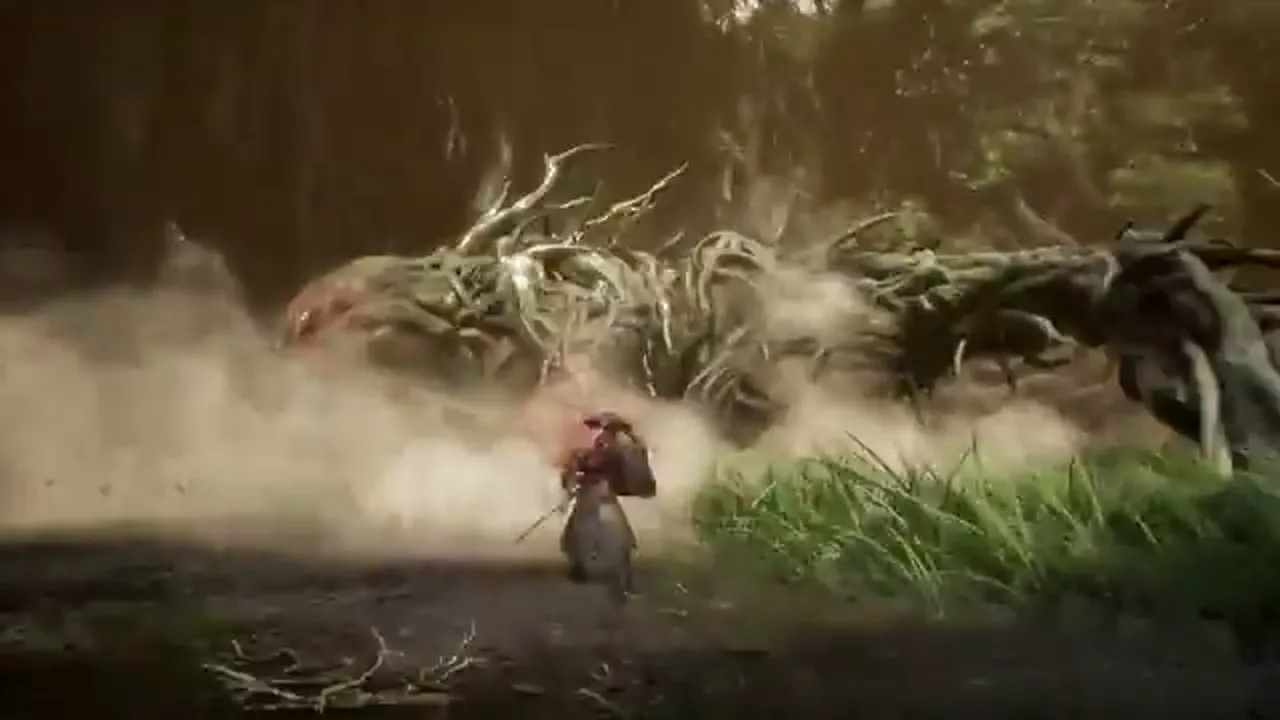
Koo’s techniques are chosen through a command menu while combat slows.
Koo is a commandable combat partner, not a decorative follower. Official descriptions of Beast of Reincarnation repeatedly make that distinction: Emma performs real-time sword action, while Koo supports her with powerful skills chosen through a command-based system. The command menu slows combat while a player selects a technique, creating room to think without turning the entire encounter into conventional turn-based play.
This page focuses on what is established by Game Freak and PlayStation. It does not supply a fabricated full move list, individual command costs, targeting rules, cooldowns or a best-command ranking. Those details need live, versioned in-game evidence. The confirmed design is already meaningful: Emma’s defensive timing produces points, and Koo’s commands turn those points into a tactical response.
The one-person, one-dog structure
Koo is a malefact dog, a fact that makes his relationship with Emma unusual in a world where malefacts are threats to be hunted. Game Freak calls the game a one-person, one-dog action RPG because the pair fight as a unit. Emma owns the immediate action layer; Koo’s techniques add a command layer that the player directs.
This is not a claim that Koo acts only when a menu is open. The official overview says he has a range of skills designed for different combat situations, but it does not publish the complete behavior of every skill. The safe conclusion is that a player should treat Koo as part of the combat plan. Ignoring the command system means ignoring a confirmed core of the game’s partnership design.
For Koo’s narrative context, see Koo, the Malefact Dog. For the broader battle architecture, see Real-Time Action & Command Combat.
Command access begins with Emma’s timing
The official sources provide a direct chain. Emma parries an enemy attack; the successful parry or just guard earns points; those points activate Koo’s skills. This makes a command decision the result of a player action, rather than an unrelated companion meter.
The source does not say every attack can be parried, that every success awards the same point amount, or that every Koo technique has the same cost. It also does not publish an exact cap. A careful player should learn the visible feedback in the current game and avoid copying unverified numbers from old posts.
The practical point remains strong: a clean defensive read can open a Koo option. That makes the pair’s coordination active. Emma creates access by playing the real-time layer well; the player then decides how Koo should contribute. Koo Command Points documents the evidence boundary around the resource itself.
The menu slows time, not the whole game
PlayStation uses Triangle on PS5 as its example for opening Koo’s command menu and says time slows while a technique is selected. Xbox Wire also says combat slows, giving a player breathing room to assess the battlefield and plan a comeback. This wording matters.
“Slows” is not the same as “pauses.” The player has a tactical decision window, but the fight remains a real-time encounter once normal speed returns. Use that window to notice where Emma stands, which enemy is closest, which command options are available and what danger may follow. It is a chance to choose deliberately, not proof that every mistake can be erased.
Platform-specific controls should be checked in the live settings menu. The PS5 Triangle example confirms the feature but does not establish the same label on Xbox or PC. Fictions’ first patch adds independent interact-button remapping; it does not claim that every input is universally identical. Controls, Remapping and Presentation Settings covers the current support boundaries.
How to choose without inventing a move list
When the menu is open, begin with the information the game actually displays. Read the technique name, the visible cost or availability indication, the description and the current enemy layout. Until individual commands are verified, do not assume a technique always staggers, pins, heals, attacks at range or works on bosses. Those are the kinds of claims that need a reproducible test.
This does not make the menu opaque. The design purpose is clear: Game Freak wanted moments where players can pause their reflex pressure enough to think with a command-RPG mindset. A good first habit is to inspect what you have rather than spending resources automatically. With practice, the slowed-time window becomes a bridge between reading an enemy and choosing the most appropriate response.
Record observations responsibly. A useful technique page would identify the exact in-game name, platform, version, difficulty, resource cost, target situation and observed effect. A vague “Koo is broken” comment does not survive a balance patch.
Difficulty and patch context
The developer confirms Normal, Hard and Story modes. Story Mode offers more forgiving parry timing and reduced enemy damage. Because parries are the published route to command points, difficulty can affect how readily a player reaches Koo’s techniques. The sources do not give a numeric formula, so no page should claim a precise mode-to-point conversion.
Fictions’ first post-launch update adjusts parry behavior when Emma is taking damage and includes boss-balance changes across difficulty levels. These are reasons to name version and difficulty whenever you share a command strategy. A launch-day clip may no longer represent the live build.
For the mode definitions, read Difficulty Modes. For implemented versus planned changes, use Patches, v1.0.7 Changes & Known Issues.
Commands, equipment and progression
Koo’s command role does not exist in isolation. Game Freak also confirms Koo Charms with specialized bonuses, Spirit Stones whose effects depend on battle actions, and power gained by defeating giant Nushi. Those systems can shape a player’s approach to the command layer, but the primary overview does not enumerate every interaction.
Do not assume a Charm automatically improves a particular named technique or that a Spirit Stone must be a Koo item. Inspect the current in-game text, change one component at a time and test in a consistent encounter. This produces better advice than a speculative combo list.
See Katanas and Koo Charms and Spirit Stones: Action-Triggered Build Effects for the confirmed customization context.
The verified takeaway
Koo’s skills are chosen through a command menu that slows time. Emma’s successful parries earn the points that activate those skills, making defense and companion direction one connected system. The detailed techniques, costs and edge cases remain outside the current first-party overview.
Learn the visible loop first: read an attack, defend, open the menu when points are available, choose from the real options on screen and return to action. That is a durable way to command Koo even as patches and verified reference details expand the site.