Koo Command Points: Parry, Choice and Evidence
Combat Resource · The Link Between Emma and Koo
A source-checked explanation of the command points earned through Emma's just guards, how they activate Koo's techniques, and which details the official material does not yet specify.
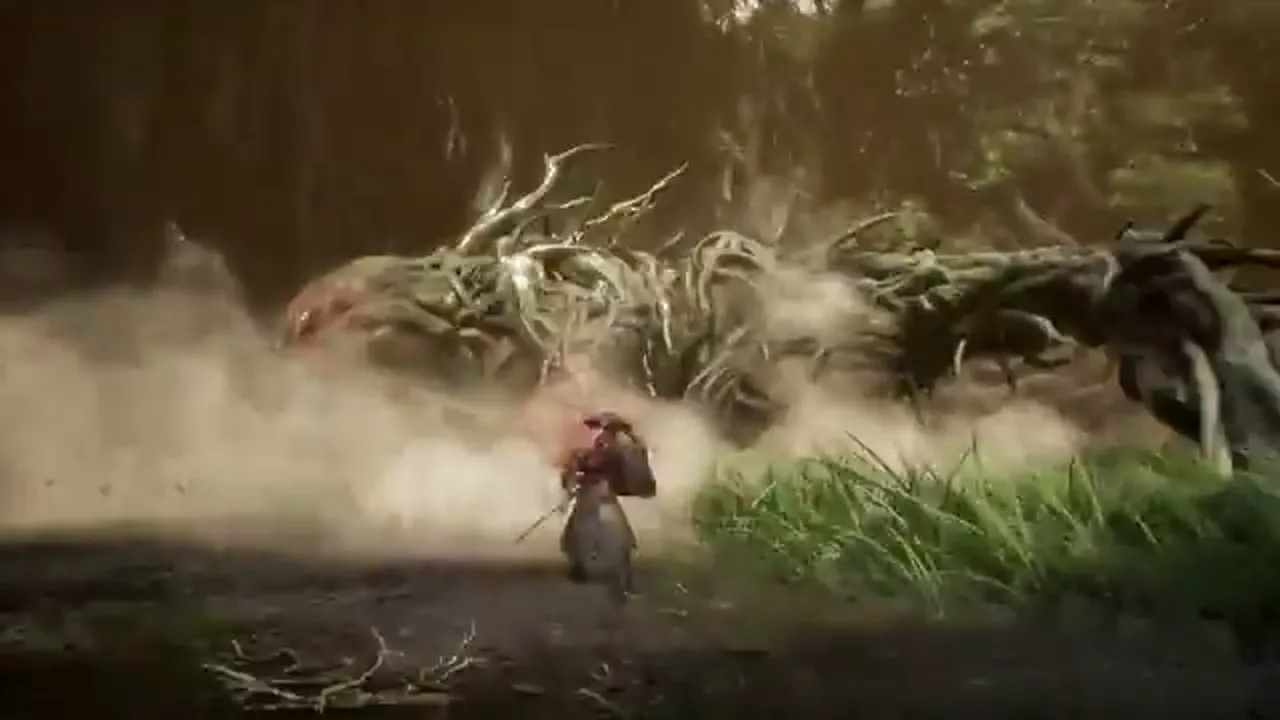
A well-timed just guard earns the points that activate Koo's skills.
Command points are the confirmed bridge between Emma’s real-time defense and Koo’s command techniques. PlayStation’s official explanation says that a successful parry, described there as a just guard, earns points. Those points activate Koo’s skills. It is a small statement, but it tells us a great deal about the intended rhythm of Beast of Reincarnation: the companion system is not separate from player timing, and a good defensive read creates a strategic option.
This page keeps the boundary between confirmed information and useful inference visible. It does not claim a maximum point total, a universal cost for every technique, a hidden multiplier, or the best command for a particular boss. Those facts need a current, reproducible in-game check or a first-party explanation. What follows is the reliable system outline published by PlayStation and Fictions, plus a practical way to read it without turning a promotional description into invented numbers.
The confirmed chain
The official sequence is direct. Emma fights with sword-based actions in real time. When she performs a successful parry or just guard, she earns points. Those points can be used to activate Koo’s skills. The player can open Koo’s command menu during combat; the menu slows time while a technique is selected.
That produces a five-part loop:
- Observe an enemy and keep control of Emma in real time.
- Defend at the right moment with a parry / just guard.
- Receive the point resource attached to that success.
- Open the command menu when a Koo skill is available and appropriate.
- Choose a technique, return to the live fight, and reassess the next threat.
The sequence should not be read as a compulsory script for every second of combat. A player may need to move, attack, create distance or decline to spend a resource. The point is that Koo’s active contribution is linked to the same moment-to-moment judgment that keeps Emma safe. The design therefore rewards more than damage output: it rewards reading an attack and converting a defensive success into a tactical choice.
Why the parry matters beyond damage avoidance
In many action games, a parry is principally a way to negate an incoming hit and perhaps expose an opponent. Here, the official description gives it an additional system role. A just guard generates the points that unlock Koo’s skills. That relationship makes the parry a form of resource generation.
It is important not to overstate that fact. The sources do not say every enemy attack is parryable, that every successful guard yields the same number of points, or that a parry guarantees a free command. They also do not publish a frame-by-frame timing window. Still, the connection is useful for a new player: a defensive mechanic can feed the companion toolkit. Someone who treats Koo as a passive AI ally may miss the reason the command layer exists; someone who treats the game as only a sword-action game may overlook the reward attached to accurate defense.
The current patch notes make version awareness especially important. Fictions’ v1.0.7 / v1.005.000 notes say that the parry was adjusted when Emma is taking damage. The notes do not provide numerical timing data or define every edge case. A responsible guide should say only that the live parry behavior changed in that circumstance, install the current patch, and test the timing in a low-risk situation rather than relying on launch-day clips.
Points are access, not an automatic answer
“Earn points, then use a skill” sounds simple, but the command system gives those points a decision-making role. Fictions describes the game as a combination of Emma’s real-time sword abilities and Koo’s command techniques. PlayStation adds that the menu slows time to let the player select the technique. The pause in pace is not a promise that the choice is consequence-free; it is a chance to make a considered decision before the live encounter resumes.
The safest interpretation is that points grant access to techniques, not that they automatically solve a fight. The official material does not disclose the complete command list, their costs, ranges, durations, cooldowns or interactions with individual enemies. Until such detail is verified, avoid claims such as “always save points for a finisher” or “this command stuns every boss.” Those may eventually be useful observations, but they need versioned evidence.
What can be said today is more durable: use the slowed-time menu to look at the actual situation. Consider Emma’s position, the enemy’s next likely action, the available command options and whether spending a point now fits the fight. When normal time resumes, the player still has to execute with Emma. The command menu supports thought; it does not replace awareness.
The two-character rhythm
The resource loop explains why the marketing language repeatedly presents Emma and Koo as one partnership. Emma is responsible for the immediate sword action and the timely defense that earns points. Koo is commandable through skills that those points activate. Neither side is a decorative add-on. The player acts through Emma, but the result of precise defense opens a moment to decide how Koo will change the next exchange.
This distinction also prevents a common category error. Beast of Reincarnation is not described by its official sources as a fully turn-based RPG, because Emma’s combat continues in real time. Nor is Koo merely an autonomous companion whose abilities fire without player direction. The slowed-time command selection is the hinge between the two. It gives the player a tactical layer without removing the action foundation.
Read Real-Time Action & Command Combat for the larger system overview, and Koo, the Malefact Dog for the companion’s confirmed narrative role. Together they explain why a parry has significance beyond the moment it blocks an attack.
What the sources do not yet establish
There are several questions a complete point reference would eventually answer: the cap on stored points, the exact gain from different defensive actions, every command’s cost, whether difficulty affects generation, and whether a technique can be interrupted. None is published in the first-party descriptions cited on this page. They should be marked unknown rather than filled with plausible values.
The same caution applies to controls. PlayStation uses Triangle on PS5 as its example for opening Koo’s command menu. That confirms the feature and the PS5 illustration, but it is not a substitute for the current bindings on Xbox or PC. Fictions’ first patch adds independent interact-button remapping, and additional input improvements may be planned or platform-specific. Check the live in-game control settings for your version.
For players writing or reading strategy, a good evidence note includes platform, game version, difficulty, encounter, the exact command chosen and a short clip or reproducible description. That standard lets later readers tell whether an observation remains true after a balance patch. It is particularly valuable when the patch notes already list boss balance and parry-related adjustments.
A spoiler-light practice approach
You do not need an optimal build to begin learning the loop. First identify the game’s just-guard timing in a safe encounter. Next, watch what changes after a confirmed success and open the command menu when you have a chance to read it. Rather than rushing to spend a point, observe the available techniques and the space around Emma. Then return to action and repeat.
This is practice advice, not a claim about a mandatory early-game route. It is based on the confirmed structure: defensive timing feeds command access, and commands are selected in slowed time. As direct release-era testing documents the precise costs and effects, this page can grow into a versioned lookup reference. Until then, its most useful lesson is simple: a just guard creates a decision, and Koo’s commands are where that decision becomes a coordinated response.