Parrying, Positioning and Difficulty
Combat Foundation · Defensive Timing Creates Options
A source-checked guide to Beast of Reincarnation’s confirmed parry or just-guard loop, its command-point reward, Story Mode’s more forgiving timing, patch-aware practice and the limits of published dodge detail.
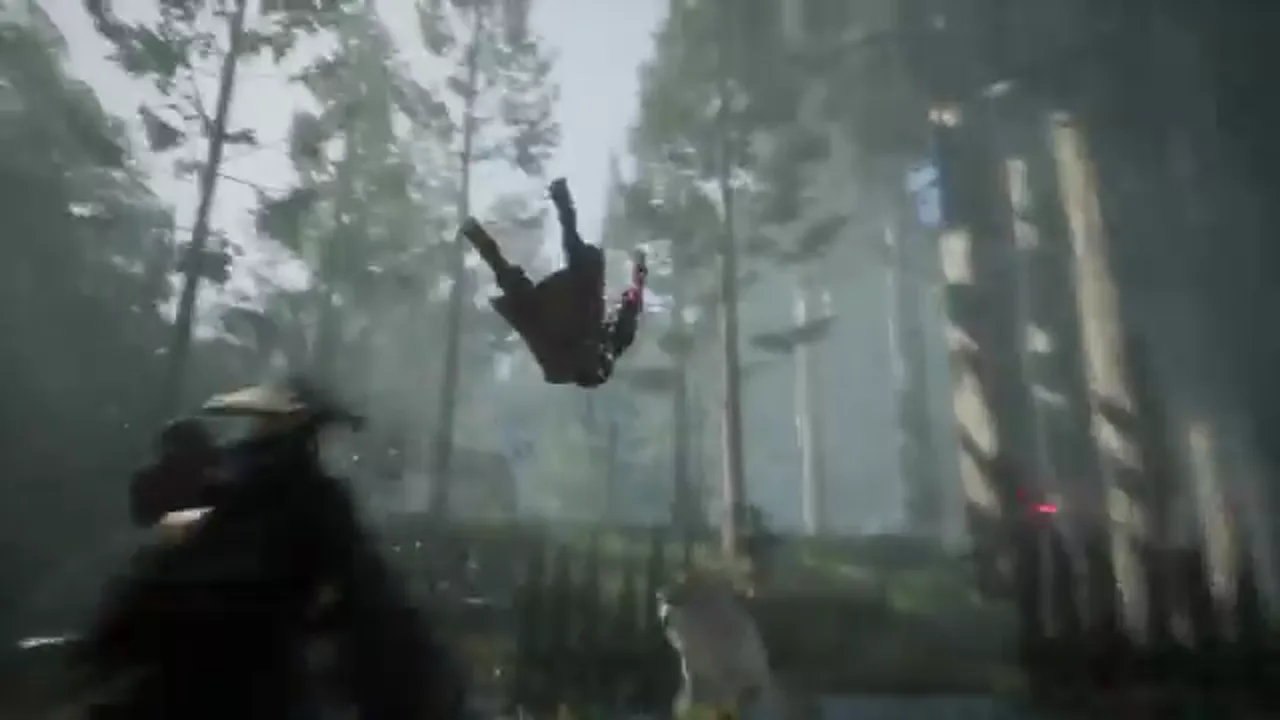
A successful parry earns the points that activate Koo’s skills.
The confirmed defensive anchor in Beast of Reincarnation is the parry, also described as a just guard. It does more than keep Emma safe in the moment: a successful parry earns points that activate Koo’s skills. That makes defensive timing part of the game’s central action-and-command loop rather than a separate reflex test with no strategic consequence.
The public descriptions do not provide a complete dodge specification. They do not publish invulnerability-frame counts, a list of unparryable attacks, stamina costs, a universal counter window or a boss-by-boss timing chart. This page treats those as things to verify in the live game, not as facts to invent. It explains what the official material does establish and how to practice without relying on copied frame data from another game or an old build.
A just guard creates a command option
PlayStation says a successful parry, or just guard, earns points. Xbox Wire explains that the points can be used to unleash Koo’s abilities. The chain is direct: Emma reads an attack and makes a precise defensive response; that success generates the resource for the companion’s command system.
This makes parrying valuable even before a player knows every command. It links an immediate combat judgment to a later tactical choice. A player who understands an enemy’s timing can gain access to Koo’s techniques; a player who never practices defense may be missing a confirmed part of the partnership loop.
The sources do not say every parry produces the same number of points, whether an attack must make contact, or how the resource changes with every difficulty. Avoid filling those gaps with numbers. Watch the feedback in the current game and record a result only when it can be repeated under the same conditions.
Positioning comes before an imagined dodge chart
Dodging is an intuitive part of action play, but public first-party material for this game gives much more detail on parrying than on dodge mechanics. The safest useful advice is therefore positioning advice: notice distance, enemy approach, nearby terrain and the space Emma needs to return to action. If a move cannot be safely answered by a just guard in your current attempt, create room and reassess rather than assuming a hidden “perfect dodge” rule.
This is not a claim that every attack requires a dodge or that a dodge has no special properties. It is a practical boundary: without an official timing table or reproducible in-game data, do not teach a specific invulnerability duration as fact. Use the current controls, the visible attack and a controlled test.
The changing world can make space more meaningful. Blighted forests, ruins and hostile creatures shape the visual context of an encounter, but the official sources do not publish terrain-specific dodge bonuses. Forest Transformation and the Changing World explains the world system without inventing combat modifiers.
Story Mode changes the learning environment
Game Freak confirms three difficulty modes: Normal, Hard and Story. Story Mode has more forgiving parry timing and reduced enemy damage. This is a concrete official accessibility-to-combat relationship. Someone who wants to learn the command loop with less timing pressure can choose Story Mode without treating it as an unofficial or lesser experience.
Normal is the standard mode, while Hard is described as highly challenging. No published source gives a percentage table for timing or damage. The correct conclusion is qualitative: Story Mode is designed to make the just guard more forgiving and incoming enemy damage lower. It is not a basis to claim that all attacks become parryable, that command points are doubled, or that a particular boss is removed.
Use Difficulty Modes for the complete source-backed comparison. Always name your selected difficulty when sharing a defensive observation, because the setting can affect its practical value.
Practice the live version, not launch folklore
Fictions’ v1.0.7 / v1.005.000 patch notes include an adjustment to parry behavior when Emma is taking damage. They also include boss-balance adjustments across difficulties and Normal encounter changes. The notes do not publish exact before-and-after timing data. That makes version awareness necessary.
Before following a strategy clip, check the platform, patch version and difficulty. Practice in a repeatable low-risk encounter. First watch the wind-up without attacking. Then attempt the just guard at a consistent moment. Observe whether command points become available. Repeat the test rather than deciding from a single lucky result.
This method also helps distinguish a real timing issue from a control or display problem. If input feels inconsistent, check your current setting and platform before deciding the mechanic is broken. Fictions has made presentation and input changes post-launch, so an old configuration may not reflect the current experience.
The parry is part of teamwork
Emma’s parry is not an isolated personal flourish. It is the published route into Koo’s skill resource. After a success, the player can open Koo’s command menu; combat slows while a technique is selected. This gives a defensive moment a second purpose: it can create space to decide how the dog should support the pair.
The menu does not fully convert the fight to turns. Time slows, the player chooses, and live action resumes. Think of the sequence as read, defend, choose and reassess. Commanding Koo covers the companion-side decision, while Koo Command Points focuses on the resource.
Do not assume a command is always available immediately after every defensive success. Exact costs and individual technique rules are not completely published. Let the current game display be the source of truth.
Equipment can change your context, not the published rule
Spirit Stones grant effects based on actions in battle, while exploration can yield katanas for Emma and Charms for Koo with specialized bonuses. These systems may shape the way a player approaches defense, but the primary sources do not name a universal parry build or guarantee that a particular item changes timing.
When you test an item that appears related to defense, change one component at a time and record the exact in-game text. A visual effect or a community nickname is not enough evidence for a numerical claim. Spirit Stones: Action-Triggered Build Effects provides a disciplined test method.
The verified takeaway
A successful parry or just guard earns the points that activate Koo’s skills. Story Mode makes parry timing more forgiving and reduces enemy damage; the first post-launch patch adjusts parry behavior in a specific damage-taking context. Exact dodge mechanics, universal timing numbers and enemy exceptions remain outside the current official detail.
Focus on readable spacing, practice one attack at a time and use the current game version as your evidence. That gives you a dependable defensive foundation without replacing the game’s real systems with generic action-game folklore.