Forest Transformation and the Changing World
World System · Blight Reshapes the Battlefield
What official material confirms about wastelands and plains becoming forests in Beast of Reincarnation, why the change matters to exploration and combat, and what triggers remain unverified.
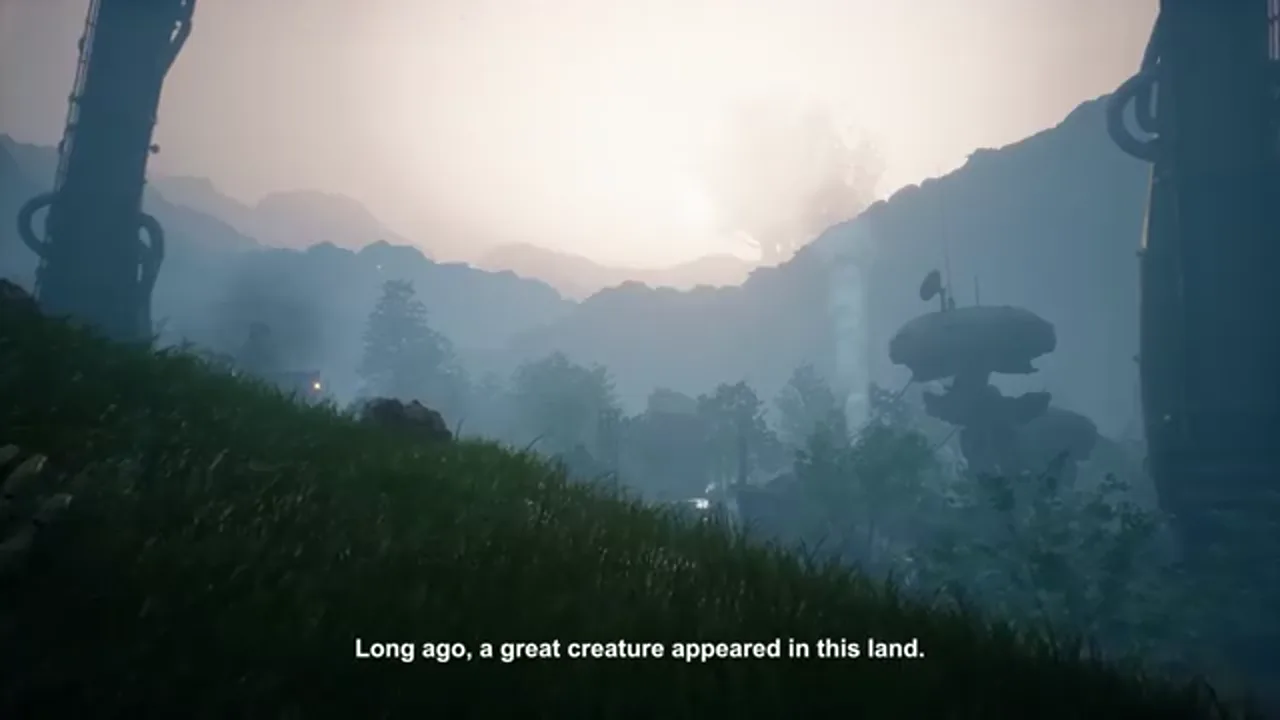
Forests can burst from wasteland as the blight changes the world.
The forest is not only scenery in Beast of Reincarnation. Official PlayStation material says the blight changes the environment in real time: plains and wastelands gradually turn into forests, and in some places the change can happen abruptly through the influence of unseen malefacts. Fictions makes the same idea central to the premise, describing forests bursting from wasteland in a world of impermanence.
That is a strong, specific promise about the setting. It is not a license to invent a complete simulation model. The public descriptions do not identify every trigger, map boundary, timer, enemy type or permanent state. This page explains the confirmed environmental concept, why it matters to the action RPG’s exploration and combat tone, and how to talk about it accurately while more reproducible release-era information is collected.
What is confirmed
Two official descriptions establish the foundation. PlayStation says the blight can make plains and wastelands turn into forests gradually. It also says that forests may spring up abruptly in some locations through unseen malefacts. Fictions describes a post-apocalyptic Japan where forests burst from the wasteland and frames the setting as a world of impermanence.
Those statements support several careful conclusions. First, environmental transformation is a designed part of the game’s world identity, rather than a fan interpretation of a single trailer shot. Second, the process has more than one pace: it may be gradual in one situation and sudden in another. Third, malefacts are connected to at least some sudden changes. The wording does not prove that every tree, forest path or ruined area is dynamically generated, nor that a player can manually toggle every transformation.
The best short description is therefore: the blight reshapes parts of the world, sometimes over time and sometimes suddenly, and the game ties at least some abrupt change to malefacts. That sentence is useful because it preserves the source’s meaning without pretending to know the underlying rules.
A world of impermanence
Fictions uses “world of impermanence” to describe the setting. In plain terms, the landscape is meant to feel unstable and alive with change. A dead-looking expanse can become overgrown; a route through a wasteland can be recontextualized by forest. This makes the environment part of the fiction of the blight rather than a fixed backdrop behind Emma and Koo.
That theme matters narratively. Emma is blightborn, Koo is a malefact, and both are outsiders in a society devastated by blight. Their journey therefore takes place inside the same force that marks them. A changing forest is not simply a pretty biome transition; it is a visible expression of the crisis they are trying to confront. For a spoiler-light account of their partnership, see Emma, the Blightborn and Koo, the Malefact Dog.
It matters mechanically as well. A landscape that can change invites players to pay attention to routes, visibility and the way an encounter is framed. The official materials do not yet publish an exhaustive list of navigation consequences, so this page will not claim that a forest always blocks a path, conceals a collectible or resets enemies. The durable point is more modest: transformation is part of the exploration context, and a player should treat the current environment as meaningful rather than merely decorative.
Gradual change and abrupt change are different claims
The word “gradually” is important. It means the official description allows for environmental change that develops over time. It does not specify the clock that governs it. It could refer to a story sequence, an area state, a scripted progression, a gameplay system or another mechanism. Without a verified test, none should be presented as fact.
The abrupt form is more narrowly described: in some places, unseen malefacts can cause forests to spring up. This gives malefacts an environmental role beyond being individual combatants. Yet the same evidence limit applies. The source does not name the malefact responsible in each place, state whether it can be defeated before the transformation, or say whether every sudden forest has the same source.
These distinctions improve a guide. “This region changes after a named story event on version X” can be a useful, testable statement when supported by a save, menu name and clip. “Forests always appear at midnight” is not useful if it is only an assumption. Recording the pace and conditions of an observation protects readers from mistaking one route or one patch behavior for a universal rule.
How transformation fits the journey
The official game page sends Emma and Koo from their meeting in the far east across a changing world, toward powerful bosses whose powers they can capture. The transformed landscape is therefore linked to a larger progression frame. They move through a harsh, beautiful Japan rather than a sequence of unrelated arenas.
The public material also says Emma’s plant-like hair can be used for traversal, including crossing broken bridges and scaling high walls. This is a separately confirmed traversal ability, but it makes sense beside the forest theme: the environment can become more overgrown while Emma has a plant-based way of reaching difficult spaces. Do not turn that thematic connection into a rule that every new forest requires her hair or that her hair causes the transformation. The sources describe the two ideas; they do not specify a universal direct interaction.
For the travel framing, read The Far East and the Road Across Japan. For the high-level setting summary, use The Ever-Changing World. These pages deliberately distinguish what the official overview says from what a full in-game regional map might later establish.
Encounters in a reshaped landscape
The reveal footage shows dense vegetation, ruined structures and large hostile forms, which visually supports the tone of a world reclaimed or altered by the blight. Video frames are valuable illustrations, but a frame alone does not identify an enemy’s name, weakness or spawn condition. This site records the official video, timestamp and rights note for each image precisely to avoid making those leaps.
It is still reasonable to say that a changing environment can alter how a player reads an encounter. Cover, sightlines, approach routes and available space are basic features of action combat. A route that looks open may feel different when surrounded by vegetation or ruined structures. The game’s confirmed real-time action and slowed-time command layer make situational awareness relevant; see Real-Time Action & Command Combat for the verified Emma-and-Koo loop.
What should be avoided is a fake tactics list. The official sources do not say that trees block lock-on, that a particular vine creature is vulnerable in forest terrain, or that forest growth changes a precise damage value. Those statements require direct in-game evidence, recorded against a version and difficulty.
A reliable way to document future changes
As the site gathers release-era observations, each detailed transformation entry should record five things: the official or in-game area name, the platform and build version, the story or menu condition, a before-and-after visual reference, and the exact claim being made. If an unseen malefact is identified in-game, the page should quote or link the identification instead of naming it from appearance alone.
The method is deliberately conservative because early coverage can turn a compelling premise into a false database. A reader deserves to know whether a sentence came from Fictions’ official description, a current in-game observation or an interpretation of footage. With that boundary in place, the site can grow from a setting overview into a reliable map of actual states, routes and encounter conditions.
The verified takeaway
The blight can transform wastelands and plains into forests. Official material says the process may be gradual, while unseen malefacts can make it sudden in some places. That makes change itself a defining feature of the game’s post-apocalyptic Japan and connects the landscape to the threat Emma and Koo face.
The exact system remains deliberately undocumented where first-party sources are silent. Until reproducible release data is added, use the forest concept to understand the world’s tone and exploration stakes—not to assume a universal timer, trigger or map rule. That balance is the most accurate way to keep a wiki useful as the world, and the game’s patches, continue to evolve.