The Ever-Changing World
World System · Blight and Impermanence
How Beast of Reincarnation's official world concept turns wasteland into blighted forest, reshapes routes and brings new Malefact threats — plus the limits of what the published material confirms.
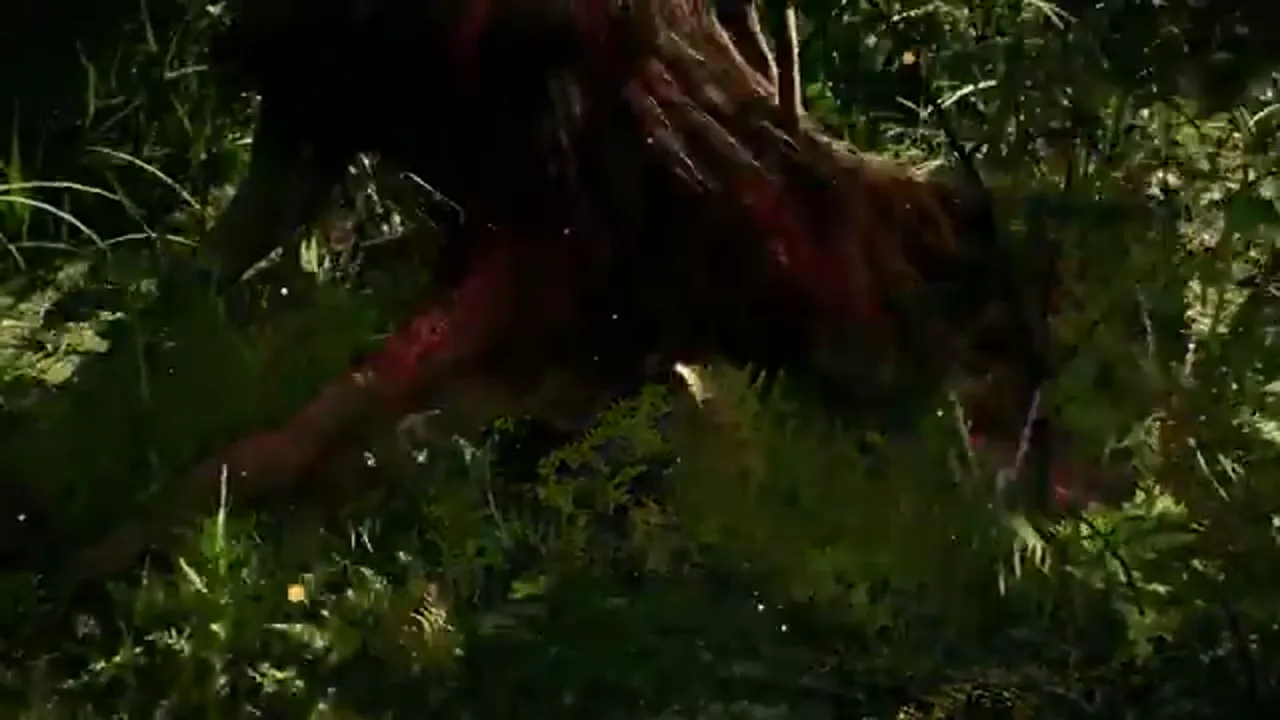
Forests suddenly burst forth amidst the wasteland.
The world of Beast of Reincarnation is not presented as a fixed post-apocalyptic map where ruin, forest and settlement stay neatly separated. Fictions calls it a “world of impermanence,” where forests can suddenly burst from the wasteland. PlayStation’s official explanation is more specific: the influence of the blight changes the environment in real time, with plains and wastelands gradually transforming into forests; in some places the shift is abrupt and produces unseen Malefacts.
That is the core of the ever-changing-world idea. It connects setting, exploration and threat rather than treating the blight as a lore term pasted onto a conventional landscape. The available official material gives a strong thematic and mechanical outline, but it does not publish a complete regional map, a timer for transformations, a list of every trigger or a confirmed route-by-route guide. This entry keeps those boundaries visible.
Impermanence is part of the setting
Fictions uses “impermanence” to describe the world Emma and Koo cross. In ordinary language, that means the environment is not expected to remain in one settled state. The post-apocalyptic Japan of year 4026 is beautiful but harsh: natural growth, ruined structures and the blight coexist in ways that can alter the player’s surroundings.
That language matters because it tells us what the publisher considers central to the game’s identity. The changing forest is not just a background image for a trailer. It is part of the journey through an unpredictable landscape, where a wasteland can become dense with unfamiliar growth and the conditions of exploration can change alongside it.
It does not mean every tree, path or combat arena transforms at all times. The official descriptions are deliberately broad. Until a current source or reproducible in-game observation identifies a particular trigger, do not turn “the world changes in real time” into a claim that a named area resets every hour, changes after each boss, or contains a procedural map system. Those are distinct technical claims that need their own evidence.
The blight is the force behind the shift
The blight has both narrative and environmental weight. PlayStation describes Emma as born corrupted by blight and Koo as a malefact in a world where the same force changes living things. Its world overview says the blight’s influence causes environments to shift, gradually transforming plains and wastelands into forests. The Fictions page likewise frames the landscape as a ravaged world in which dangerous blighted forests and powerful bosses shape the route ahead.
This is why the forest should not be read as a simple sign of recovery. It may be visually lush, but the official material attaches danger to the transformation. A newly changed area can give rise to unseen Malefacts. In this setting, beauty, survival and corruption are layered together: the world can become greener while becoming less predictable or more hostile.
For the broader lore framing, read The Blight. That page focuses on the concept and its effect on life; this entry focuses on the world-scale consequence described by the publisher and PlayStation.
Gradual changes and abrupt changes
PlayStation’s wording gives us two modes of environmental change. Some transformation is gradual: plains and wastelands slowly become forests. Some is abrupt: a sudden change can give rise to Malefacts that were not visible beforehand. The difference is useful for understanding the tone of exploration even before every in-game behavior has been verified.
Gradual change suggests a landscape in motion. You should expect a route to carry signs of the blight’s influence rather than only a hard boundary between “safe biome” and “danger biome.” Abrupt change suggests uncertainty, where a player may need to reassess sightlines, movement space and threats instead of assuming that a familiar stretch of land stays predictable.
The official source does not state whether these changes are random, scripted, tied to story progress or activated by specific player actions. It also does not tell us the number of possible forest states or whether every transformation is permanent. A good guide must leave those questions open. The important confirmed point is the relationship: environmental transformation is a natural cycle within this world, and it can create new dangers.
Forests, Malefacts and exploration
The changing world links directly to the enemy concept. Fictions describes bosses ruling the blighted forest and says Emma and Koo confront powerful enemies as they travel. PlayStation says abrupt transformations can produce unseen Malefacts. This makes the environment a source of tension, not merely a route between combat encounters.
That does not authorize a detailed enemy guide from trailer silhouettes. We do not yet list every Malefact found in a changing forest, its weakness, reward or spawn condition unless that information has been verified after release. Instead, use the official relationship as a guide-reading principle: a claim about an enemy and a location needs both a current source and a clear distinction between what is observed and what is inferred.
The Bestiary collects the site’s creature entries. Many were originally drafted from previews and retain expected-status labels until they can be checked. The page you are reading is a reminder of why that caution is necessary: the world itself can create situations that a static pre-release enemy list did not capture.
Emma’s traversal in a changing landscape
The world does not leave Emma without tools. PlayStation says her plant-like hair can be manipulated to traverse terrain such as collapsed bridges and high walls, and can also be used in combat. In a setting where forests and ruins overlap, that gives the player a confirmed reason to think about verticality and traversal as part of the journey rather than as a detached movement minigame.
What we should not claim yet is a complete catalog of traversal upgrades, shortcut rules or map gating. The official material establishes that Emma can cross obstacles with her plant powers; it does not publish an exhaustive route planner. For the focused mechanic overview, see Plant-Vine Traversal. When detailed exploration pages are updated, they should name the platform, game version and evidence for any concrete instruction.
How the changing-world idea supports the story
The environmental concept also reinforces the relationship between Emma and Koo. They travel through a world transformed by the same blight that marks both of them. Fictions describes their bond and abilities blooming as they go farther into the harsh landscape. That is a thematic connection, not proof of a particular story event: their personal status and the world-state changes are presented together because both make the journey unstable, dangerous and capable of change.
The official story material says the pair meet in the far east and are tasked with battling powerful bosses from across the world in pursuit of the Beast of Reincarnation. It does not name every region or reveal every character’s motive. Readers who want a spoiler-light summary can start with Everything Confirmed So Far and then follow the character and world links from there.
What a responsible post-launch world guide needs
To turn this overview into a specific location guide, the site needs more than a trailer. Each detailed claim should identify what changed, where it happened, what version was used, whether the player had completed a story requirement, and whether the result can be reproduced. If a patch changes a trigger or a route, the old claim needs an update note instead of being silently treated as timeless.
That standard is especially valuable here because the first post-launch patch already shows Fictions adjusting camera behavior, enemy balance, progression presentation and navigation-related plans. A route that is obvious in one version may be clarified later, and a player who reads an undated page deserves to know its evidence boundary.
The confirmed takeaway
The reliable summary is straightforward: Beast of Reincarnation’s Japan is a world of impermanence. The blight transforms wastelands and plains into forests, sometimes gradually and sometimes abruptly. Those shifts are tied to unseen Malefacts, exploration and the mood of a beautiful but hostile journey. Emma’s plant-based traversal and the pair’s journey through changing regions give the idea practical as well as narrative importance.
As we verify more release-era material, this entry will link to concrete region and encounter pages. Until then, it is better to preserve the official truth than to invent a map system the publisher has not described.