Is Beast of Reincarnation a Soulslike? A Better Comparison
A source-checked answer to the Soulslike question: Beast of Reincarnation has real-time katana action and parry timing, but its defining official system is Emma and Koo’s action-command partnership, slowed-time choices and adjustable difficulty—not a published genre label.
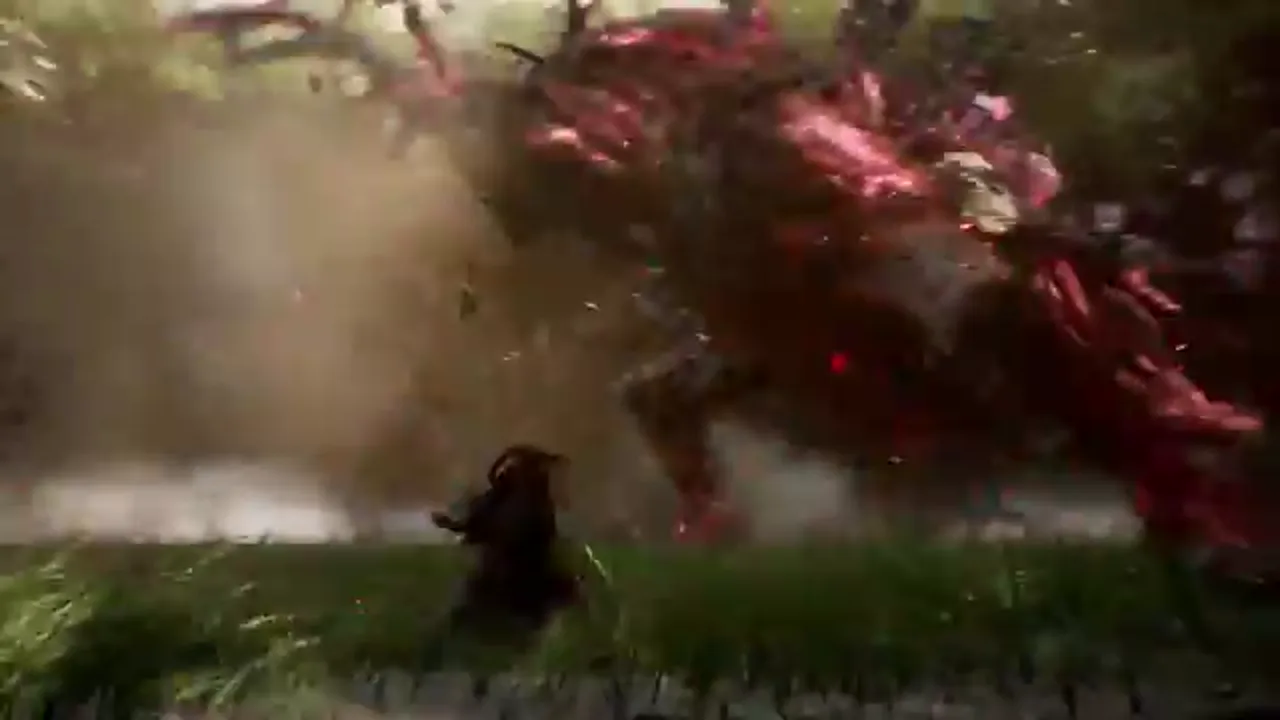
The most accurate official label for Beast of Reincarnation is a “one-person, one-dog action RPG,” not a Soulslike. Players may reasonably notice real-time katana action, parry timing, major encounters and a harsh world, but Game Freak’s own explanation emphasizes a different defining structure: Emma fights in real time, Koo’s techniques are selected through a command system, and the menu slows time for tactical decisions.
Genre labels can be useful shorthand, but they can also create expectations the game has not promised. This guide compares the confirmed systems rather than declaring the game a clone of any other title. It does not assume a corpse-run mechanic, stamina model, bonfire structure, invulnerability-frame rules, death penalty, co-op system or boss formula because the first-party sources cited here do not establish them.
Why the comparison comes up
The game clearly has real-time action. Emma uses katana or sword-based attacks, and a successful parry or just guard is important. That naturally invites comparison with other timing-focused action RPGs. Major Nushi encounters and a hostile post-apocalyptic world can reinforce the impression.
But a parry alone does not decide a genre. Many action games use defensive timing. The relevant question is what the timing does inside this game. In Beast of Reincarnation, a successful parry earns points that activate Koo’s skills. The result is a connection between real-time defense and companion commands that is central to the developer’s stated design.
That connection makes a simple “Soulslike” answer incomplete. It identifies an action sensation while missing the game’s most distinctive official system.
The official combat identity is a partnership
Game Freak describes the game as one person and one dog. Emma handles fast real-time katana action. Koo supports her with powerful skills selected through a command-based system. When the command menu is open, combat slows so the player can assess the battlefield and choose a technique.
This is not the same as a fully turn-based RPG, because Emma’s live action remains the core pace. It is also not a conventional solo action game with a passive companion, because Koo’s techniques are player-selected and tied to a resource earned through Emma’s timing. The official framing is an action-and-command hybrid.
Use Real-Time Action & Command Combat for the source-backed combat loop and Commanding Koo for the companion control context.
Parry is important, but not a published technical clone
PlayStation says a successful parry, called a just guard, earns points. Those points activate Koo’s skills. This tells us that parry timing is meaningful and rewards defensive accuracy. It does not publish a posture bar, riposte formula, exact window, every parryable move or an identical structure to another game.
The first post-launch patch adjusts parry behavior when Emma is taking damage, which also shows why specific timing claims should be version-aware. The patch note does not provide frame data. A responsible guide should not say “the parry works exactly like [another game]” when the official mechanics and current conditions differ.
Parrying, Positioning and Difficulty explains the confirmed defensive facts and the information that remains unknown.
Difficulty changes expectations
Game Freak confirms Normal, Hard and Story modes. Story Mode has more forgiving parry timing and reduced enemy damage; Hard is highly challenging; Normal is standard. This is important to any comparison because the game openly provides a mode designed to reduce timing pressure.
The public source does not state all mode differences, but it is enough to show that the experience is not defined only by an uncompromising fixed challenge. A player who wants to learn the action-command loop can choose Story Mode. A player seeking a higher challenge can choose Hard. Neither choice changes the official identity of the core systems.
For a precise source boundary, see Difficulty Modes. Do not assume the labels map one-to-one to difficulty settings in another franchise.
Build expression is not a genre verdict
Fictions says players can pursue ranged, stealthy and aggressive playstyles. Xbox Wire confirms Spirit Stones with effects based on battle actions, exploration-found katanas for Emma and Charms for Koo, and combinations that support unique builds. These systems give the game RPG customization depth.
They do not prove a particular Soulslike progression model. The sources do not publish a familiar attribute list, respec cost, upgrade currency, online message system or recovery loop. The correct conclusion is simple: there is official build variety, and it is tied to both Emma and Koo.
Builds & Spirit Stones explains how to evaluate a build with current in-game text rather than genre assumptions.
The world is distinctive too
The setting is Japan in the year 4026, transformed by blight. Forests can burst from wastelands, and giant malefacts called Nushi generate blighted forests. Emma and Koo fight through those spaces, defeat Nushi and gain power on the path toward the Beast of Reincarnation.
This world has danger, major encounters and a journey toward a central source of blight. Those elements can feel familiar to action-RPG players, but the official sources do not describe a specific open-world structure, checkpoint design or death-retrieval system. Treat the world on its own terms rather than using a genre label to invent rules.
Nushi: Giant Malefacts and Blighted Forest Bosses and Japan, Year 4026 give the verified setting context.
A better expectation checklist
If you are considering the game because you enjoy timing-focused action, the official material supports several reasonable expectations: real-time katana combat, meaningful parries, major hostile encounters, a harsh transforming world and build choices. If you want a command-based tactical layer, it also supports that: Koo’s menu slows combat for technique selection.
If you expect a particular Soulslike mechanic, check the live game or official support material rather than assuming it. Do not buy or avoid the game based on an unconfirmed death penalty, multiplayer feature, stamina system, checkpoint rule or exact boss structure. The official label gives a better guide to its actual design.
The verified takeaway
Beast of Reincarnation is officially described as a one-person, one-dog action RPG. It has real-time katana action and parry timing, but its defining confirmed feature is the partnership between Emma’s defense and Koo’s slowed-time command techniques, supported by adjustable difficulty and flexible equipment.
“Soulslike” can be an informal personal comparison, not a first-party category or a complete feature list. Use the official systems to set expectations and verify any precise genre-style claim in the current game.
Frequently asked questions
Does Beast of Reincarnation have real-time action combat?
Yes. Official sources describe Emma’s real-time sword or katana action alongside Koo’s command techniques.
Is it officially labelled a Soulslike?
The cited first-party sources call it a one-person, one-dog action RPG; they do not use Soulslike as the official genre label.