Beast of Reincarnation Combat Guide
A source-checked combat guide to Beast of Reincarnation: Emma’s real-time katana action, parry-earned command points, Koo’s slowed-time techniques, difficulty context, equipment and version-aware practice.
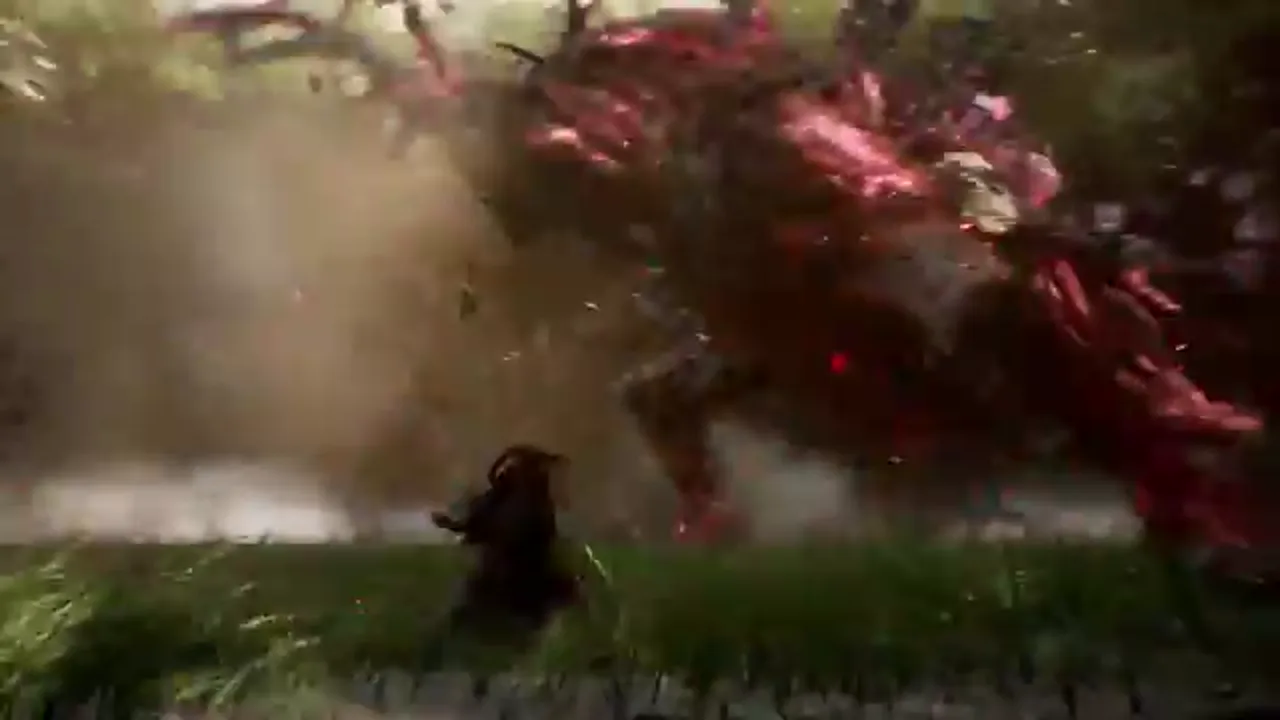
Combat in Beast of Reincarnation is built around a shared loop, not a solo sword routine. Emma uses real-time katana action. A successful parry, called a just guard in PlayStation’s official explanation, earns points. Those points activate Koo’s skills, selected from a command menu that slows time while the player decides. Game Freak describes this as a one-person, one-dog action RPG because both sides of the partnership matter in every encounter.
This guide explains the confirmed structure and avoids filling its gaps with genre assumptions. The public sources do not publish every move, enemy telegraph, damage value, invulnerability frame, command cost or boss weakness. Treat detailed claims as versioned observations only when they can be reproduced in the current game. The goal here is to give you a reliable foundation for learning, not an imaginary complete strategy database.
Emma keeps the battle moving
Emma is responsible for the real-time action layer. Fictions and PlayStation describe her sword-based combat as the active part of the pair’s system. You must still observe distance, enemy behavior and the space around you; opening Koo’s menu does not turn the entire game into a conventional turn-based RPG.
The most important confirmed defensive action is the parry / just guard. Its role is bigger than avoiding an incoming blow. A successful parry earns points used to activate Koo’s skills. That makes defense a resource generator. A player who learns attack timing gains options for the command system, while a player who ignores the defensive layer may have fewer opportunities to use it.
The official material does not say every attack is parryable or that every success generates the same amount. It also does not provide exact timing data. Do not substitute a comparison to another action game for those facts. Instead, test the current timing in a low-risk encounter and observe what the game clearly communicates after a just guard.
Koo turns timing into a decision
Koo’s skills are command-based. During combat, the player opens a menu to select a technique; PlayStation says time slows while the choice is made. On PS5, Triangle is the example input, though players on other platforms should consult their own current control menus.
Slowed time is a tactical tool, not a promise of safety. It lets you assess the position of Emma, Koo and nearby threats, then choose from the techniques presently available. Once normal time resumes, you still need to execute the next action. The intended rhythm is read, defend, earn points, select and reassess—not merely attack until the menu appears.
This is why Koo should not be treated as a passive AI follower. His command techniques are a player-directed response tied to Emma’s performance. Koo Command Points documents the confirmed relationship, while Real-Time Action & Command Combat provides a deeper system overview.
Practice the loop deliberately
In a manageable encounter, practice one element at a time. First, watch a single attack and attempt a just guard. Next, after a confirmed success, inspect whether command points are available. Then open the menu and choose a technique while paying attention to the slowed-time decision space. Return to action and repeat.
Avoid learning by mashing several unknown inputs at once. That makes it difficult to identify whether a success came from timing, equipment, an enemy state or a command effect. A small repeatable test is more valuable than a dramatic but unclear clip. Record the platform, version, difficulty and equipment if you share an observation with other players.
Fictions’ first post-launch patch adjusted the parry when Emma is taking damage. The notes do not specify a universal numerical change, so do not state that parries are simply easier or harder. Install the current patch and let current practice override launch-week impressions.
Difficulty changes the context
The developer confirms Normal, Hard and Story modes. Normal is the standard setting; Hard is highly challenging; Story Mode offers more forgiving parry timing and reduced enemy damage. This makes difficulty especially relevant to the combat loop: a more forgiving just guard can alter how readily a player reaches Koo’s command resource.
There is no official table listing every difference. A tactic that works on one difficulty should name the setting rather than pretending to be universal. Difficulty Modes explains the published distinctions and the evidence boundary around the unpublished numbers.
Choose a mode that lets you understand the partnership. Story Mode is not a failure state; it is an official option designed with specific combat support. Hard is not automatically “better”; it is a deliberate challenge setting. Normal is a useful comparison point when reading a guide or testing a build.
Equipment supports behavior, not a single mandatory route
Game Freak confirms three interconnected equipment ideas: Spirit Stones grant effects based on actions in battle, exploration yields katanas for Emma and Charms for Koo, and each can provide specialized bonuses. It also describes multiple playstyle directions, including ranged, stealthy and aggressive approaches.
These facts support experimentation, not a universal tier list. Change one katana, Charm or Spirit Stone at a time and test it against the same encounter. Read its exact current description. A bonus that helps your actual actions can be more useful than a supposedly stronger item in a different setup.
The sources do not publish every stone trigger or item location, so claims about a “best build” need current evidence. See Spirit Stones: Action-Triggered Build Effects and Katanas and Koo Charms for the confirmed structure.
Bosses, Nushi and environmental pressure
The combat journey takes place in a changing world. Giant malefacts called Nushi generate blighted forests, and Emma and Koo fight through those forests and their malefacts to take the Nushi down. The pair absorb Nushi power and acquire skills on the path to confronting the Beast of Reincarnation.
That tells us major fights have narrative and progression value. It does not publish an encounter order, universal weakness chart, or a guaranteed route through each forest. Do not attach a specific boss name to a trailer creature until the game or a first-party source identifies it. Nushi: Giant Malefacts and Blighted Forest Bosses covers the confirmed boss-class role.
In practice, treat the environment as part of your awareness. Space, visibility and enemy positioning can change how you approach the real-time phase. The sources do not support fake terrain multipliers or hidden forest rules, so keep advice observable and versioned.
Patch-aware combat advice
The v1.0.7 / v1.005.000 notes include boss-balance changes across difficulties and Normal enemy-encounter adjustments. They also include the parry-related adjustment. This means launch-day guides cannot be treated as permanent truth.
Before copying a strategy, confirm the platform, game version and selected difficulty. If an author cannot say what build or version was used, treat the recommendation as a personal impression, not a dependable rule. For live support context, consult Patches, v1.0.7 Changes & Known Issues.
The verified takeaway
Emma’s real-time katana action and Koo’s command techniques are one system. Successful parries earn points; points activate Koo’s skills; the command menu slows time for a tactical choice. Difficulty, equipment and the changing world all shape how you use that loop.
Start by practicing a clear defensive read, then build outward with current in-game information. This approach remains useful even when patches alter balance, because it is based on the official combat structure rather than on a fragile list of invented details.
Frequently asked questions
How does combat work in Beast of Reincarnation?
Emma fights in real time. Successful parries earn points for Koo’s command techniques, selected through a menu that slows time.
Does a parry only block damage?
No. Official material says a successful parry or just guard earns points that activate Koo’s skills. Exact values and all conditions are not published.
Can players customize their combat style?
Yes. Official sources confirm Spirit Stones, katanas and Koo Charms, and describe ranged, stealthy and aggressive playstyle directions.