Captured Powers and Boss Progression
Progression System · Power Earned Through Bosses
What Beast of Reincarnation officially confirms about battling powerful bosses, capturing their powers and growing Emma and Koo's abilities — and what the game page does not yet document in detail.
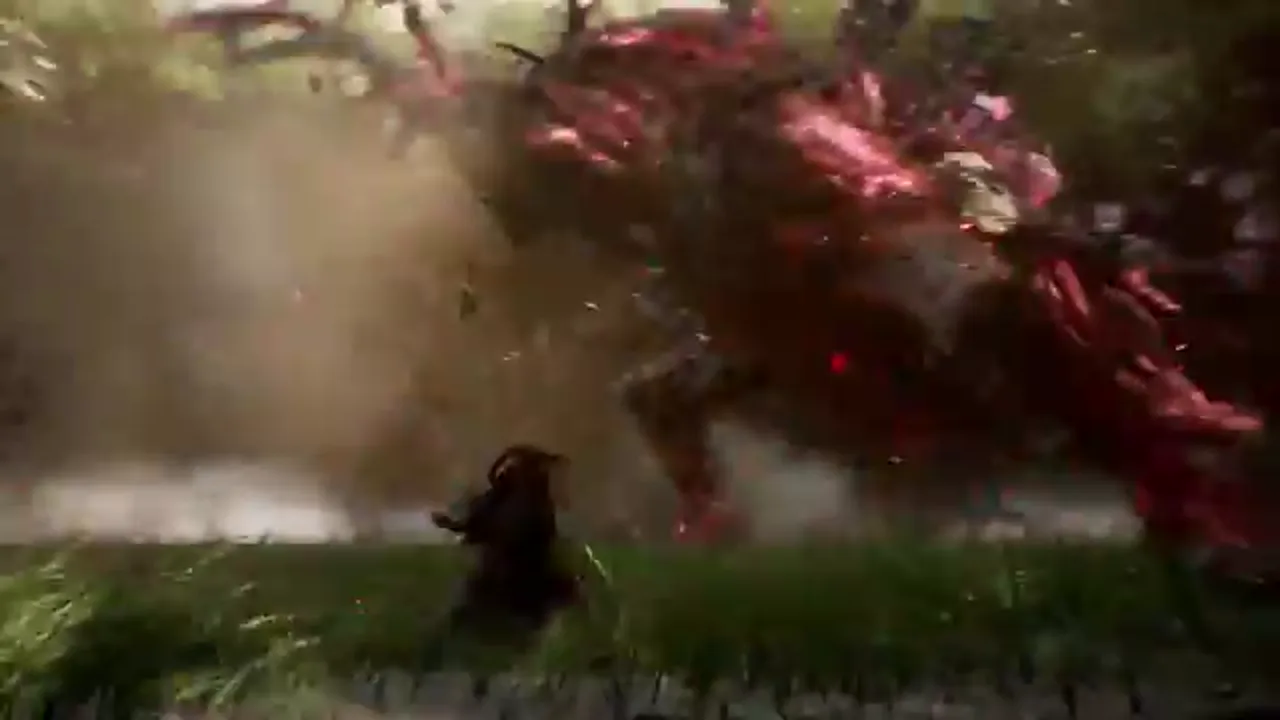
Emma and Koo battle powerful bosses and capture their powers.
In Beast of Reincarnation, powerful enemy encounters are tied to growth rather than existing only as dramatic endpoints. Fictions’ official game page says Emma and Koo travel through the world, battle powerful bosses and capture their powers on the way to defeating the Beast of Reincarnation. The same page frames their journey around abilities that blossom as their bond develops, alongside skill trees, gear and spirit stones that shape different playstyles.
That is a strong, useful foundation, but it is not a finished reward database. The official material does not provide a complete list of bosses, the name of every captured power, its cost, its unlock condition or an optimal build order. This page explains the confirmed progression relationship and sets a clear evidence standard for future boss guides. It is more valuable to state “the boss-to-power loop is confirmed” than to turn marketing imagery into a false item list.
The confirmed boss-to-power relationship
Fictions describes Emma and Koo as traveling through the changing post-apocalyptic world and confronting bosses that rule it. It says the pair are tasked with battling bosses from across the world and capturing their powers in pursuit of the Beast of Reincarnation. That gives us three reliable facts:
- powerful bosses are part of the journey rather than optional flavor in a trailer;
- boss encounters are associated with power capture; and
- the power-capture idea contributes to the growth of Emma and Koo.
This is not a claim that every single enemy awards a power, that every boss is required in the same order, or that a defeated boss becomes a summon. Those are different mechanics and need direct evidence. The official language supports a broad system relationship: powerful adversaries and player growth are connected.
Why captured powers matter to a build
Fictions also says players customize their playstyle through unique skill trees, gear and spirit stones, with ranged, stealthy and aggressive approaches named as possible directions. Captured powers sit naturally beside those systems as another source of options. A new power can matter because it changes what Emma and Koo can do, because it complements an existing choice, or because it gives a player a reason to revisit how they approach a threat.
The exact interaction is not yet documented by the primary source. We do not know, from the official description alone, whether a captured power is equipped like gear, placed in a skill tree, activated through Koo’s command menu, always on, or limited by a resource. A guide that names those implementation details without an in-game verification is making them up.
The responsible interpretation is therefore structural. Bosses are not only difficulty gates; the publisher presents them as progression moments. When later pages document a specific reward, they should identify the boss, the game version, the platform, the observed unlock condition and what the ability actually does. That approach lets players distinguish a tested fact from an attractive guess.
Emma and Koo grow as a pair
The reward language belongs to both protagonists. Fictions says that as Emma and Koo travel, their bond and abilities blossom. Its combat overview also splits their jobs: Emma uses sword actions in real time, while Koo’s techniques are selected by command. PlayStation adds that successful parries earn points that activate Koo’s skills.
Together, those facts suggest why the game frames power capture around the pair rather than only Emma’s sword. A boss reward may influence the action side, the command side or the broader relationship between them. The exact allocation remains a question for verified gameplay pages, but the companion is not a passive narrative observer. Koo is already part of combat and progression language in the official description.
For the confirmed moment-to-moment loop, read Real-Time Action & Command Combat. For a high-level companion overview, use Commanding Koo. Those pages explain what the official sources say about real-time swordplay, command techniques and parry-earned command points without pretending that every later unlock has been mapped.
Captured powers are not the same as all progression
It is easy to collapse every growth system into one label, but the official game page presents several categories: skill trees, gear, spirit stones, preferred loadouts and captured boss powers. Each may answer a different player question.
- Skill trees imply a structured way to develop abilities over time.
- Gear implies equipment choices that can influence a loadout.
- Spirit stones are explicitly named as another customization category.
- Ranged, stealthy and aggressive are examples of playstyle directions.
- Captured powers link advancement to boss encounters and the broader journey.
Until the shipped interfaces and rules are verified, do not assume a captured power replaces a spirit stone, occupies a particular slot or is automatically the strongest choice. The value of this framework is that it tells you where to look for evidence. A build page should say which category it is discussing and should not turn a broad promotional category into a simulated stat spreadsheet.
Bosses, the blight and the changing world
The boss progression idea is also connected to setting. Fictions describes blighted forests and bosses that rule the world; PlayStation says abrupt environmental changes can give rise to unseen Malefacts. The changing landscape is therefore more than scenery around a reward screen. It establishes why powerful hostile creatures are part of the road through Japan in 4026.
That connection does not prove a particular boss spawns from a particular forest transformation. It does, however, show that environmental corruption, Malefacts, boss encounters and the player-growth journey are designed as related parts of the same world. The Ever-Changing World explains the official environmental concept and its evidence limits; the Bestiary is where creature-specific facts will be documented as they are verified.
How to read a future boss guide
When the site expands from an overview to individual boss pages, look for five things before trusting a recommendation:
- A current version and platform. Balance can change after a patch.
- A named source or reproducible observation. A trailer shot is not a moveset table.
- A clear separation between encounter advice and reward facts. Beating a boss and claiming a power are related but may not have the same conditions.
- A precise ability description. “Powerful” is not enough; explain what is actually observed.
- A spoiler boundary. A player looking for a combat tip should not be forced into a late-story revelation.
This standard is especially important after launch because the first Fictions patch already adjusts boss balance across difficulty levels. A strategy that worked or failed at release may need a version note after v1.0.7 / v1.005.000. For current support and patch context, see Patches, v1.0.7 Changes & Known Issues.
What has not been confirmed on this page
This page does not claim a number of bosses, a complete power list, a required order, a respec system, a drop chance, a difficulty-specific reward table or a final boss build. It also does not identify a trailer creature as a named encounter without an official label. Those omissions are intentional. A large wiki becomes less useful when its confident-sounding list cannot be traced to the shipped game or a first-party explanation.
The verified takeaway is still substantial: Beast of Reincarnation makes boss battles part of the growth loop. Emma and Koo face powerful enemies across the world, capture powers, and develop alongside the other customization systems. That gives players a meaningful reason to pay attention to major encounters beyond simply clearing a hurdle.
As the site verifies individual rewards, this page will become the hub that links to them. Until then, use it as the source-checked explanation of what the game’s own official description promises, and use the Builds & Spirit Stones primer for the existing high-level build context.