Beyond the Souls-Like Label: How Beast of Reincarnation Channels NieR and Sekiro
Weeks after launch, the community is looking past initial comparisons to discover a unique rhythm-parry system and melancholic narrative rooted in classic Japanese sci-fi.
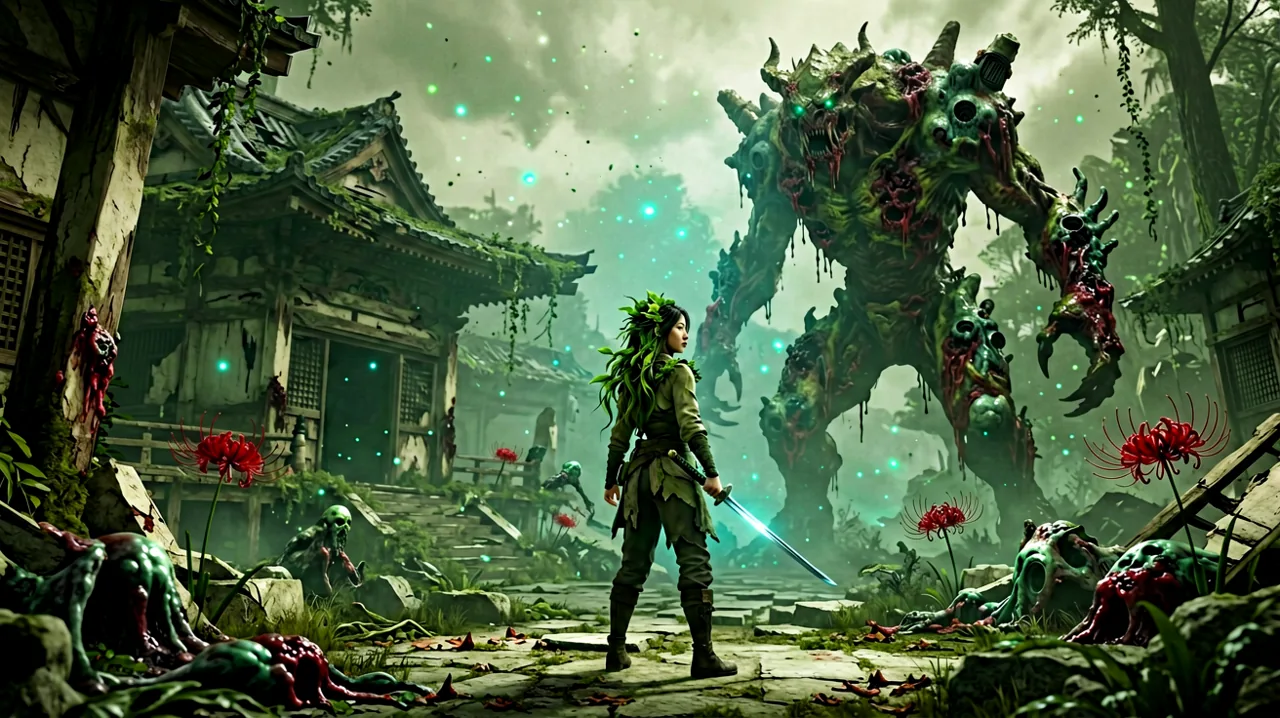
When Game Freak first revealed Beast of Reincarnation under the working title Project Bloom, the industry reacted with a mix of intrigue and skepticism. Could the studio responsible for decades of family-friendly monster-catching games successfully pivot to a grueling, photorealistic post-apocalyptic action RPG? Now, as the dust settles weeks after the game’s highly anticipated launch on PlayStation 5, Xbox Series X|S, and PC, the community consensus is finally taking shape.
Players are realizing that labeling this game as just another addition to the saturated “souls-like” genre is a massive disservice. Instead, Beast of Reincarnation has carved out its own distinct identity. Through deep thematic resonances with narrative heavyweights like NieR: Automata and Shadow of the Colossus, alongside a punishing but rewarding combat loop that shares more DNA with Sekiro: Shadows Die Twice than Dark Souls, Game Freak has delivered an experience that is sparking intense discussion across forums and social media platforms.
The Entanglement System: A Rhythm-Based Dance of Death
In the weeks leading up to release, much of the marketing focused on Emma’s ability to manipulate her plant-like hair to traverse the ruined landscapes of 4026 Japan and absorb the parasitic blight. However, early debates about whether the game is a true souls-like often missed the nuance of its actual combat mechanics.
Players who have now logged dozens of hours are pointing out a crucial distinction: Beast of Reincarnation essentially abandons traditional stamina management in favor of what the community refers to as the “Entanglement” meter. Unlike standard action RPGs where a successful parry might stagger an opponent and leave them open for a visceral attack, the parrying here operates on a strict rhythm requirement that does not immediately interrupt the enemy’s flow.
When facing down a massive, grotesque malefact, you cannot simply land one lucky deflection to break their combo. These mutated beasts will continue their relentless assault, forcing players to rhythmically parry entire combo chains. Deflecting these multi-hit barrages gradually builds up the Entanglement meter. Once this meter reaches its absolute threshold, the enemy’s poise shatters, allowing Emma and her canine companion Koo to execute devastating sealing maneuvers.
This mechanical shift creates a high-stakes, musical quality to the encounters. You are not simply trading blows; you are surviving an onslaught of claws, teeth, and blight-infused energy until the precise moment the creature overextends. It elevates the combat from a standard “souls-like” into what many hardcore fans are affectionately dubbing a “souls-lite”—punishing if you lose the beat, but incredibly empowering once you master the rhythm of the wasteland. For players struggling with the exact timing windows, studying a detailed boss fight primer or adjusting your builds and spirit stones has become essential for surviving the harsher zones.
An Emotionless Husk: Emma’s Narrative Parallels
Equally surprising is the emotional weight of the narrative. Game Freak has historically kept storytelling relatively straightforward, but Beast of Reincarnation tackles heavy themes of isolation, duty, and what it means to retain humanity when you are slowly turning into the very monsters you are sworn to hunt.
Emma is introduced as a Sealer—an 18-year-old outcast burdened with the supernatural ability to absorb the parasitic blight. Early on, she presents as a seemingly emotionless husk, acting strictly on survival instincts and duty. This deliberate characterization has drawn massive praise from the community, with direct comparisons being made to iconic protagonists like 2B from NieR: Automata or the brooding, atmospheric world of the classic anime Ergo Proxy.
Community reviews have highlighted how Emma’s lack of outward emotion is not a result of flat writing, but rather a carefully constructed psychological defense mechanism against the trauma of her existence. As players progress through the ruined mountain settlements and towering cityscapes, her interactions with the giant white dog, Koo, serve to slowly chip away at her hardened exterior. According to recent features from outlets like TheGamersJoint, this partner mechanic is the beating heart of the game. Koo is reportedly much more than just a tactical asset for setting up slow-motion takedowns; he acts as Emma’s emotional tether to her own fading humanity.
The botanical themes running through the game—specifically the focus on blooming flowers and parasitic vines—stand in stark contrast to the decaying, brutalist architecture of futuristic Japan. Fans have noted striking moral and plot similarities to Shadow of the Colossus, where every victory over a giant malefact feels less like a heroic triumph and more like a tragic, inevitable necessity. Furthermore, the community has strongly praised the developers for entirely avoiding cheap fanservice, opting instead for a grounded, respectful portrayal of a young woman carrying the weight of a dying world on her shoulders.
Expanding the Map: Gated Exploration and QoL Fixes
The world design of Beast of Reincarnation heavily rewards meticulous exploration. Rather than offering an empty, sprawling open world, Game Freak opted for interconnected, gated areas that require specific skills—often linked to Emma’s mutated vine arms—to fully navigate.
Recent updates to community mapping tools and databases have revealed the sheer scale of the late-game zones. Players pushing past the 20-hour mark will find themselves exploring visually arresting areas such as the Crater Zone, the Inukami River Zone, the ominous Starfall Tower, and the culturally rich Mount Hiei Zone, before finally reaching The Capital. These environments seamlessly blend traditional Japanese architecture with rotting, futuristic technology, creating a haunting backdrop for the journey.
The experience of navigating these treacherous locales has been significantly improved thanks to swift action from the development team. While early adopters voiced frustrations over tedious traversal penalties and unskippable dialogue, recent patches have reportedly addressed these pain points. The community-reported removal of fall damage has completely changed how players approach exploration, encouraging daring leaps using Emma’s hair-vines without the fear of instant death. Additionally, the implementation of a cutscene skip function and faster dialogue advancement has made subsequent playthroughs much smoother.
Speaking of completion, dedicated players report that a thorough playthrough takes roughly 37 hours, with a full 100% Platinum run requiring closer to 48 hours. It is a tightly paced experience that respects the player’s time, deliberately avoiding the bloated filler quests that plague many modern open-world titles.
The PC Performance Reality Check
Despite the glowing praise for its combat mechanics and narrative depth, Beast of Reincarnation is undeniably demanding on hardware, and PC players need to set realistic expectations. Powered by Unreal Engine 5, the dense volumetric fog, dynamic spore particles, and chaotic visual effects during combat push even modern gaming rigs to their absolute limits.
A recent reality check shared within laptop gaming communities paints a sobering picture for those attempting to play on mid-to-high-tier portable setups. Benchmarks conducted on a machine equipped with an Intel Ultra 7 155H processor, an NVIDIA RTX 4070 GPU, and 16GB of RAM at a 2560x1600 resolution yielded highly concerning results.
When pushing the game to its “Highest” preset with Ray Tracing enabled and DLSS set to Balanced, the framerate plummeted to an unplayable average of 14 FPS, accompanied by heavy stuttering during intense malefact encounters. Dropping the preset to “High” and pushing DLSS to Performance only managed to bump the average to a sluggish 31 FPS. To achieve a relatively stable, playable experience, users found that turning Ray Tracing off completely, setting graphics to “Medium,” and relying on DLSS Performance was absolutely necessary just to hover around the 41 FPS mark.
These performance numbers confirm that the dense environments of the blight-infested Japanese wilderness are incredibly taxing. PC players looking to optimize their setup should heavily consult our PC settings and performance guide. Turning off Ray Tracing entirely seems mandatory for anyone without a top-tier desktop GPU, and aggressively tweaking upscaling settings will be required to maintain the steady framerates necessary for the game’s rhythm-based parry system. A dropped frame can easily result in a missed parry, which often leads to Emma being fatally stun-locked by a malefact’s combo chain.
The Verdict: A Bold Step Forward
Game Freak took an enormous risk stepping away from their colorful comfort zone to create Beast of Reincarnation. The result is a game that refuses to hold your hand, demanding patience, rhythmic precision, and emotional investment. By leaning into the melancholic atmosphere of classic Japanese sci-fi and adopting a combat system that rewards mastery over mindless button-mashing, they have successfully created one of the standout action RPGs of 2026.
As the community continues to dissect the lore, optimize their equipment loadouts, and map out the deepest, darkest corners of The Capital, it is clear that Emma and Koo’s journey has resonated deeply. Whether you are arriving for the Sekiro-esque combat mechanics or staying for the NieR-inspired narrative, the blighted world of 4026 offers an unforgettable, uncompromising adventure that proves Game Freak is capable of far more than just catching them all.