Beast of Reincarnation Patch 1.0.8 Breakdown: Camera Overhaul, FSR 4 Performance, and Unresolved Malefact Spawns
Game Freak's latest 1.0.8 update introduces highly requested camera distance settings and DLSS 4.5/FSR 4 support. Here is how the community is adapting to the changes and mid-game mechanics.
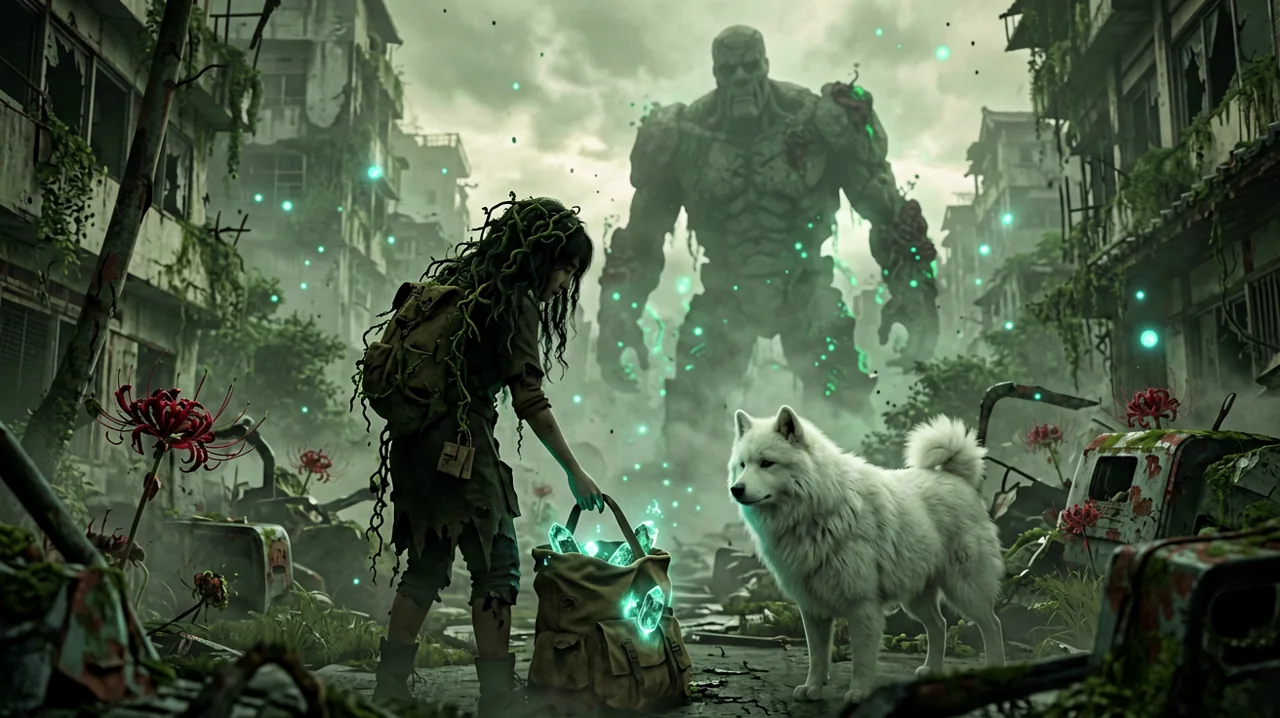
Game Freak has rolled out Patch 1.0.8 for Beast of Reincarnation, continuing their aggressive post-launch support cycle to stabilize the ambitious 4026 AD action RPG. While early patches focused on critical crash fixes, version 1.0.8 addresses some of the most consistent mechanical grievances raised during the game’s launch week, specifically targeting combat visibility and upscaling technology.
Simultaneously, as the initial wave of players pushes deep into the late-game regions, complex discussions surrounding obscure systems—like the contentious Battle Bag economy and elusive late-game Malefact spawns—are dominating community spaces. Here is an extensive breakdown of everything introduced in the new update, how the PC performance has shifted, and answers to the most pressing mid-game progression roadblocks.
The Camera Overhaul: Seeing the Blight Clearly
Since launch, one of the primary critiques regarding the combat system has been the default camera positioning. When engaging massive, erratic Malefacts in tightly enclosed ruined Japanese streets, Emma’s camera would frequently clip into environmental geometry or snap too close to her back. This made predicting wide-sweeping blight AoE attacks incredibly frustrating, often leading to unavoidable damage.
Patch 1.0.8 directly tackles this by introducing dedicated player camera distance options: Close, Medium, and Far.
For players struggling with parry timings against aggressive foes, switching the camera to “Far” is an immediate priority. The expanded field of view dramatically improves spatial awareness, making it significantly easier to monitor Koo’s positioning for tag-team maneuvers and track incoming projectiles. Game Freak has noted that further adjustments to the player camera—both in and out of active combat states—will continue in subsequent patches, indicating they are still fine-tuning the tracking logic when locked onto highly mobile bosses.
Additionally, the patch resolves an irritating narrative hitch where cutscenes would replay consecutively when moving between specific transition zones. However, the developers warned that due to how the trigger states were rewritten, players who update mid-playthrough might experience a final duplicate playback of certain event lines before the logic corrects itself permanently.
Another massive quality-of-life improvement quietly tucked into the patch notes is expanded keybinding freedom. PC players can now map the “Interact” action to any button, finally offering native support for mouse side buttons. This seemingly minor tweak goes a long way in making mid-fight resource gathering and blight sealing feel far more fluid on a mouse and keyboard setup.
Next-Gen Upscaling: DLSS 4.5 and FSR 4 Integration
For the PC audience, the headline feature of v1.0.8 is the official implementation of DLSS 4/4.5 (L/M) and AMD’s FSR 4 support. Prior to this, players were relying on FSR 3 or the game’s native TAAU, which resulted in notable ghosting during fast-paced vine-swinging sequences.
The integration of FSR 4.1.1 has yielded immediate dividends, particularly for players on high-end AMD hardware. Extensive testing from the Linux gaming community—running the game via Proton/CachyOS on systems equipped with the Ryzen 7 9800X3D and Radeon RX 9070 XT—indicates a phenomenal boost in stability. During heavily particle-dense encounters, such as the Taurus boss fight, FSR 4’s Quality mode provides visual clarity that rivals native rendering while offering incredibly stable 1% low frame rates. Some hardware enthusiasts are reporting that the RDNA 4 architecture is handling the dense spore environments more smoothly than equivalent setups utilizing RTX 5090 cards, a testament to how well the new FSR iteration integrates with the engine’s lighting pipeline.
It is worth noting, however, that frame generation options are still absent. Game Freak stated that frame generation implementation is “planned to be implemented soon,” meaning players relying on older GPUs to push higher refresh rates will need to wait a little longer.
A quick warning for cloud gamers: Players accessing the game through Boosteroid via Xbox Game Pass are currently reporting that the platform version is locking the resolution to 1080p and disabling native fullscreen options. Until this is resolved on the host side, cloud players will have to endure a compromised visual experience. Check our Settings Guide for ways to optimize standard PC performance in the meantime.
Explaining the Cleanse Walker and Battle Bag Economy
As more players transition from the introductory hours into the brutal mid-game, confusion regarding inventory management has spiked. A frequent source of frustration revolves around the “Battle Bag”—a dedicated quick-use pouch used during encounters—and its interaction with the game’s rest points, the Cleanse Walkers.
Many players have noticed that interacting with a Cleanse Walker seemingly “empties” their Battle Bag, leaving them without vital healing items like Rice or offensive Spirit Stones when they walk away. This is not a bug; it is a deliberate, hardcore resource management mechanic.
Beast of Reincarnation separates your total global inventory (the stash) from your active tactical pouch. The Battle Bag is strictly for items you plan to use dynamically during a fight, utilizing the game’s unique slow-motion tactical menus. When you rest at a Cleanse Walker to purge your blight buildup and heal, the game purposefully resets your active pouch. This mechanic forces players to deliberately pre-plan their loadouts before leaving the safety of a settlement or checkpoint. You cannot simply hoard 99 healing items and brute-force a boss; you must intentionally pack what fits into your limited slots.
Furthermore, players have questioned why identical items—such as multiple pieces of Rice—often refuse to stack perfectly, taking up valuable single slots in the bag. This is tied to the game’s blight corruption system. Foraged items carry hidden purity values depending on where they were harvested in the 4026 AD wasteland. A perfectly pure rice ball cannot stack with one slightly tainted by ambient spores. Understanding this intricate healing and difficulty scaling is mandatory for surviving the latter half of the campaign.
The Chapter 6 Fuji Mountain Malefact Mystery
Another highly discussed topic this week involves missing elite enemies in the late-game zones. Upon reaching the daunting Fuji Mountain in Chapter 6, players are tasked with hunting down powerful Malefacts to harvest high-tier upgrade materials. However, multiple community reports have surfaced claiming that specific elite enemies—namely a massive “headless golem” located in a mountain cave and an unnamed “evil beast”—are entirely absent when players arrive at their designated arenas.
Currently, it is unconfirmed whether this is a scripting bug introduced in recent patches or a highly specific design choice. Beast of Reincarnation relies heavily on dynamic world states. It is entirely possible that these elite encounters are tied to the in-game time of day, current weather patterns, or the ambient blight density of the mountain. Alternatively, they may be locked behind prerequisite side quests involving the surviving mountain settlements.
If you arrive at the headless golem’s cave and find it empty, the current community workaround is to refrain from resting at the nearest Cleanse Walker. Instead, leave the immediate sub-region, complete a different objective or advance the time cycle, and return later. We will continue to monitor this situation and update our Boss Fight Primer if Game Freak confirms it as an unintended issue.
Post-Launch Verdict: A Masterpiece Marred by its Finale?
With the first weekend behind us, the broader consensus surrounding Game Freak’s ambitious departure from family-friendly monster catching is highly positive, though not without caveats.
Those who have rolled the credits are praising the core loop as a triumph. The synergy between Emma’s responsive, punishing parry windows and Koo’s tactical slowdown skills creates a rhythm that easily stands toe-to-toe with the titans of the action RPG genre.
Yet, narrative pacing issues and boss design in the final hours have drawn criticism. Several players who have completed the roughly 40-hour journey have described the final boss encounter as “mid” or underwhelming when stacked against the monumental, multi-phase spectacles found in Chapters 4 and 5. While the journey through the blighted remnants of Japan is proving to be incredibly memorable, the destination leaves a slight desire for more mechanical complexity.
Regardless, Patch 1.0.8 proves that the developers are listening intently and iterating rapidly. Between the camera fixes and the massive upscaling improvements, the ruined world of 4026 has never looked or played better.