Beast of Reincarnation Early PC Performance and 10-Hour Community Impressions
Analyzing early community reports on Beast of Reincarnation's PC performance, DLSS optimization, ultrawide issues, and the first ten hours of gameplay.
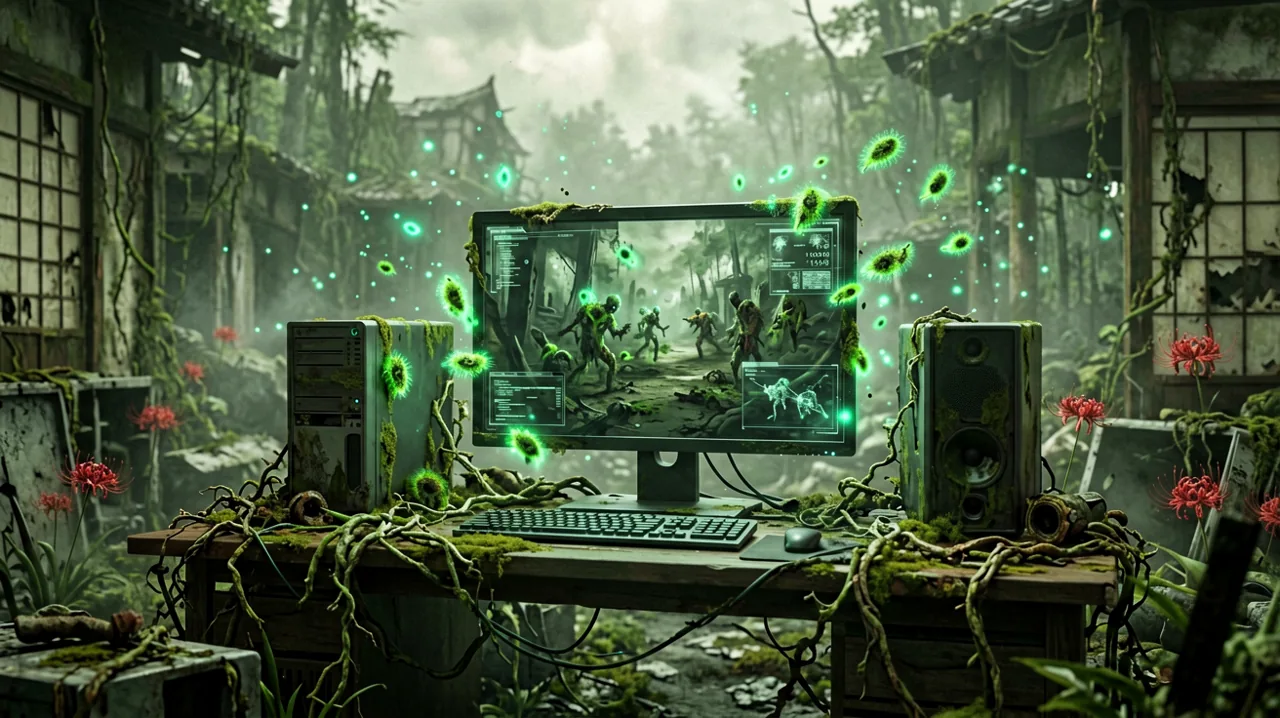
With the official August 4 release date just around the corner, Game Freak’s highly anticipated action RPG has reportedly leaked online. A pirated PC build of the game has been circulating the internet over the past three days, allowing a flood of early community feedback to hit social media platforms. Because the game represents a massive leap for the developer—transitioning to Unreal Engine 5 to construct a hostile, year 4026 Japan consumed by the parasitic blight—players have been intensely curious about how it performs. Based on unpatched community reports, we now have a clearer picture of the game’s PC hardware demands, unexpected technical quirks, and the overarching pacing of the first ten hours.
The Burden of Performance in a Timing-Driven RPG
Beast of Reincarnation is built upon a high-stakes, rhythm-intensive combat framework. Much like Sekiro: Shadows Die Twice or Stellar Blade, the game demands precise parries, careful stamina management, and split-second dodges. When you are fighting a massive mutated malefact, the window to execute a perfect block and subsequently use Emma’s vine-like hair to absorb the creature’s blight is reportedly incredibly tight. Because of this mechanical rigor, the game’s performance is not just a matter of visual flair—it is entirely tied to your ability to survive the encounters.
Early reports from the community indicate that trying to play the current build on older budget hardware might be a serious challenge. One user playing on a GTX 1660 Super paired with a Ryzen 5 Pro 4650g reported hovering between 35 to 40 frames per second on Medium settings, even with AMD’s FSR 3 set to Quality mode. In enclosed spaces like caves or ruined corridors, the frame rate occasionally climbed to the upper 40s, but it failed to hit the crucial 60 FPS threshold necessary for smooth, responsive combat.
The player noted that lowering the graphical settings further made the game look visually disastrous while only yielding a meager 2 to 5 FPS increase. This minimal scaling strongly implies a severe CPU bottleneck in this unpatched build. Furthermore, the CPU usage reportedly spikes heavily, sometimes hitting 100% during cinematic cutscenes, suggesting that the engine implementation is quite demanding on older processors. The lack of 60 FPS creates a noticeable sluggishness in camera movement and makes engaging faster, more erratic enemies significantly harder than intended. If your hardware is lagging behind the enemy’s attack animations, perfectly timing your blocks becomes an exercise in frustration—leading some players to retreat to older, optimized titles like Lies of P while waiting for a driver update or patch. Players planning to start the game on launch day should carefully review our pc-system-requirements to ensure their rigs can handle the load.
DLSS Upgrades and High-End Optimization
While budget hardware might struggle to maintain stability, players equipped with high-end NVIDIA GPUs are having a much better time. Interestingly, the leaked build reportedly ships with DLSS version 3.7.20. PC enthusiasts have already begun tinkering with the local files, successfully using tools like DLSS Swapper and NVIDIA Profile Inspector to forcefully upgrade the game’s upscaling tech to DLSS 4.5.
The results are extremely promising for high-end users. Reports indicate that with DLSS set to Ultra Quality and all in-game settings cranked to maximum at a 1440p resolution, the game can easily hold a stable 120 FPS. At this frame rate, the combat truly shines. The fluidity of Emma transitioning from a standard blade combo into a dynamic vine-grapple maneuver, followed up by Koo’s tactical slow-motion takedowns—as detailed in our mechanics overview on how Koo’s slow-motion tactical skills twist the combat—feels incredibly satisfying. The high frame rate eliminates input delay, allowing the game’s intricate parry mechanics to function exactly as intended.
Technical Quirks: Where is Ultrawide Support?
However, the PC port is not without its strange omissions. Multiple players have pointed out a baffling lack of native ultrawide (21:9 or 32:9) resolution support, and some have even struggled to find a standard exclusive fullscreen option in the menus. For a cinematic, atmospheric game set in a beautifully decaying vision of far-future Japan, the absence of ultrawide support is a significant immersion breaker. It remains to be seen whether this is simply an artifact of an early build or a genuine oversight that will require a Day 1 patch—or community modders—to fix.
The First 10 Hours: Combat Triumphs and Exploration Woes
Beyond the technical performance, we are also getting our first real look at the game’s pacing, art direction, and structural loop. Players who have managed to log over 10 hours into the campaign have shared extensive, spoiler-free thoughts on their journey so far.
First, the positive news: the combat system apparently has immense depth. While the early bosses are described by players as somewhat unremarkable or “so-so,” the actual moment-to-moment encounters are highly rewarding if you actively engage with the mechanics. Players are finding that getting crafty and mastering the various unlocked tools—such as the Spirit Stones and Emma’s unique Sealer abilities—creates incredibly stylish, highlight-reel-worthy combat sequences. This aligns perfectly with what we discussed in our boss fight primer, emphasizing that utilizing your entire arsenal is mandatory for survival against the horrors wandering the mountains.
However, the world design and exploration seem to be leaving some players wanting more. Aesthetically, players have compared the environmental vibe to a hypothetical Code Vein sequel covered in a Nier: Automata skin. While the initial impact of this ruined, overgrown Japan is striking, reports suggest that by Chapter 4, the environments start to feel homogenous. “I hope you love grass,” one player noted, pointing out a lack of artistic diversity in the early-to-mid game zones. If you were hoping to explore radically different biomes in rapid succession, you might need to temper your expectations for the opening acts.
Furthermore, exploration itself reportedly feels unrewarding. Moving around the vertical environments using Emma’s mutated vine arms is mechanically enjoyable, but the loot found off the beaten path is apparently lackluster. Crucially, community reports indicate that there are no cosmetic outfits or appearance customization options for Emma in the early game. Her striking, trauma-influenced design—which we previously analyzed in understanding Emma’s design—remains completely static. This means players searching hidden corners of the map will likely only find consumables or incremental stat boosts rather than exciting visual rewards, which might limit the incentive to explore every dark corner.
Pacing, Cutscenes, and “Ditching Dialogue”
Perhaps the most concerning feedback from early impressions relates to the game’s pacing. Players have noted a significant amount of downtime filled with slow cutscenes and dialogue that occasionally suffer from stiff animations. This jarring rhythm reportedly pulls players out of the otherwise excellent combat flow.
Interestingly, this feedback surfaces just as outlets report on Game Freak’s distinct narrative decisions regarding dialogue. The developers have seemingly taken a less-is-more approach to traditional RPG chatter, aiming to tell the story of the 18-year-old Sealer and her canine companion primarily through environmental storytelling and quiet moments. While this is a bold narrative choice, it might explain why the cutscenes feel unusual. If the game attempts to convey emotion purely through lingering, silent shots of the ruined world, any stiffness in character animations will be highly noticeable. The bond between Emma and Koo is the emotional core of the journey, but pacing issues in the early chapters might test players’ patience before the narrative hooks them completely.
Looking Ahead to Launch
It is vital to remember that all of these impressions stem from a pre-release, unpatched version of the game. While core structural elements—such as the lack of cosmetic outfits and the frequency of quiet cutscenes—are unlikely to change, the development team could easily deploy a Day 1 patch that addresses the CPU usage spikes, improves the frame pacing, and adds missing PC features like ultrawide resolution support.
Beast of Reincarnation officially launches worldwide on August 4, 2026, for PlayStation 5, Xbox Series X|S, and PC. If you are still on the fence regarding your platform of choice after reading these early PC impressions, remember that the game will be available on Microsoft’s subscription service on day one. You can read more about its availability in our guide on where to play and Game Pass. We will have full, comprehensive coverage, optimized build guides, and confirmed malefact bestiary details as soon as the embargo lifts and the game officially unlocks.