Game Freak's Generational Leap: Director Discusses Beast of Reincarnation's 'One-Person, One-Dog' Dynamic
Recent hands-on previews and director interviews reveal how Beast of Reincarnation pushes Game Freak into new territory with hardcore combat and an intimate character focus.
When a studio known primarily for defining the lighthearted monster-catching genre for nearly three decades pivots to a hardcore, post-apocalyptic action RPG, skepticism from the gaming community is entirely natural. Yet, as the expected August 4 launch rapidly approaches, recent hands-on previews and newly published director interviews paint a picture of a studio that hasn’t just stepped outside its comfort zone—it has entirely redefined it.
According to a series of recent media blowouts, including a deep-dive interview regarding the game’s core character dynamic, Beast of Reincarnation is shaping up to be a defining moment for developer Game Freak and publisher Fictions. Set against the grim, sprawling backdrop of the year 4026, the game trades turn-based battles for split-second deflections, replacing colorful arenas with a ruined Japan suffocating under a parasitic entity known as the blight.
This is not merely a shift in tone; media outlets are widely calling it a generational leap in technology, design, and storytelling for the developer. Here is everything we have learned from the latest round of hands-on sessions, developer commentary, and comprehensive buyer’s guides.
Escaping the Shadows of the Past
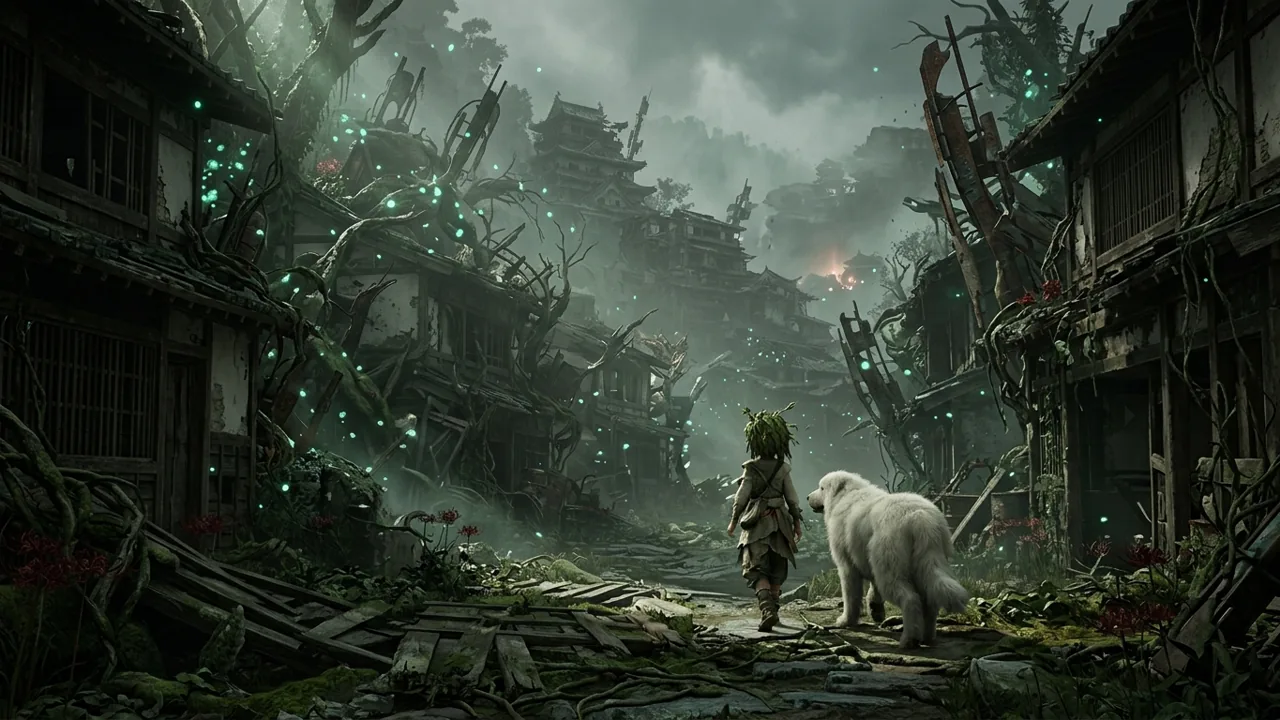
For years, followers of the studio have tracked the evolution from Project Bloom to Beast, wondering exactly how Unreal Engine 5 would be utilized by a team accustomed to vastly different hardware constraints. The hands-on previews confirm that the visual and atmospheric leap is staggering. The world of 4026 is oppressive and meticulously detailed. The remnants of traditional Japanese architecture jut out from twisted, overgrown landscapes, creating a jarring juxtaposition of ancient human history and aggressive, otherworldly flora.
The blight isn’t just a narrative device used to explain the end of the world; it physically alters the environment and the enemies within it. Previews note that the lighting engine handles the eerie, bioluminescent glow of the parasitic spores with incredible fidelity, creating a suffocating yet hauntingly beautiful atmosphere. When Emma navigates the isolated mountain settlements where the last remnants of humanity now cower, the sheer scale of the desolation drives home the isolation of her journey.
The ‘One-Person, One-Dog’ Philosophy
Perhaps the most fascinating insight from the recent media cycle came directly from the game’s director, who extensively discussed the “one-person, one-dog” dynamic at the heart of the RPG. While the gaming market has seen plenty of animal companions in recent years, the relationship between 18-year-old Emma and her dog, Koo, is framed as a brutal, symbiotic co-dependency rather than a simple master-pet dynamic.
Emma is a Sealer, a feared outcast capable of absorbing and manipulating the blight using her mutated, plant-like hair and vines. Koo, strikingly, is a malefact—one of the very mutated beasts that humanity hides from. The director emphasized that their survival relies on mutual protection and unwavering trust. Emma lacks the raw physical strength to stagger massive, heavily armored enemies on her own. Conversely, Koo lacks the supernatural ability to permanently purge the blight from other creatures.
This narrative bond bleeds directly into the gameplay loop. The director noted that Koo is not an immortal summon or a passive buff provider hovering in the background. He is a living, breathing participant in the harsh reality of 4026. If players fail to support Koo during a frantic skirmish, he can be cornered, overwhelmed, and rendered combat-ineffective. On the flip side, Koo’s innate predatory instincts allow him to sense ambushes and distract towering bosses, creating incredibly narrow windows for Emma to strike. It is a shared struggle that reportedly gives the narrative a profound emotional weight, anchoring the high-stakes action in a deeply personal story of survival. Those looking to understand the broader context of their journey and why they rely so heavily on each other can check out how the story and setting tie into their shared trauma.
Deliberate, Heavy, and Unforgiving Combat
The hands-on previews spent considerable time addressing the question on everyone’s mind: exactly how hard is the combat? While we have previously analyzed whether the game fits the traditional genre mold in our is it a Souls-like feature, the new impressions provide concrete details on the moment-to-moment feel of the action.
Combat is universally described as heavy, deliberate, and heavily reliant on maintaining momentum. Emma wields traditional bladed weapons that have been heavily modified with salvaged 1960s-era technology, but she cannot simply mash her way to victory against a horde of mutants. Stamina management and exact deflection timings are absolutely paramount. The flow of battle has drawn favorable comparisons to the rhythmic clashing of Sekiro: Shadows Die Twice, mixed with the aggressive, stylish evasion seen in games like Nier: Automata and Black Myth: Wukong.
What truly separates Beast of Reincarnation from its contemporaries is how Koo factors into this punishing rhythm. Players must actively issue tactical commands to the dog while simultaneously managing their own complex defensive positioning. Previews highlight the immense satisfaction of perfectly timing a parry, staggering a mutated monstrosity, and immediately commanding Koo to latch onto the enemy’s exposed flank. This tandem assault builds a stagger meter that eventually leaves the enemy vulnerable to Emma’s unique execution mechanics. Preparation remains paramount, making early research in our boss fight primer highly recommended.
Sealing the Blight: A Unique Execution Mechanic
When a malefact is completely broken in combat, Emma utilizes her prehensile, vine-like hair to rip the blight directly from the host. These sealing animations are reportedly brutal, visceral, and visually spectacular, highlighting the inherently cursed nature of her abilities.
However, the absorption of blight isn’t just for show. Harvesting this parasitic energy fuels her skill tree and allows for the modification of her gear. The combat loop effectively forces players to stay aggressive; to get stronger, you must constantly engage with the very infection that is destroying the world.
Gearing Up and Using Spirit Stones
Another crucial aspect highlighted in the recent “15 things to know before buying” coverage is the depth of the game’s customization systems. Surviving the mutated wilderness requires much more than just quick reflexes. Emma’s combat prowess is augmented by Spirit Stones—ancient, crystallized artifacts that channel specific elemental or tactical advantages.
According to the previews, these stones drastically alter Emma’s playstyle. Some might subtly increase the window for a perfect deflection, while others imbue her blade with residual blight energy to inflict devastating damage over time. Crucially, Spirit Stones can also be equipped to modify Koo’s behavior, perhaps making him more aggressive, increasing his defensive capabilities, or allowing him to draw enemy aggro more effectively during multi-target encounters. Properly managing your builds and spirit stones will clearly be the difference between life and death during the game’s grueling encounters.
Traversing a Broken Japan
The previews also shed light on how Emma moves through the world outside of active combat. Because her hair functions as a set of versatile, muscular vines, traversal is described as far more dynamic than a standard jog through a linear corridor.
The mountain settlements and overgrown ruins feature significant verticality. Emma can use her vines to grapple across shattered highways, scale crumbling temple walls, and safely bypass heavily corrupted zones that would otherwise prove fatal. The environmental design reportedly leans heavily into interconnected shortcuts and hidden areas, rewarding players who take the time to explore the decaying beauty of 4026. This isn’t an open world in the traditional sense, but rather a series of dense, wide-linear zones packed with environmental storytelling and terrifying ambient encounters.
Looking Ahead to Launch
With the release date confirmed for August 4 on PlayStation 5, Xbox Series X|S, and PC via Steam, the marketing cycle has hit its full stride. The confirmation that Game Freak’s ambitious new IP will be available on Xbox Game Pass on day one removes a significant barrier to entry for millions of players, though physical Deluxe editions are also generating substantial pre-order interest. For a full breakdown of platform differences and subscription availability, check out our guide on where to play and Game Pass.
While exact performance metrics for lower-end PCs and the Xbox Series S are reportedly still being fine-tuned, the preview builds running on high-end hardware showcased incredibly smooth framerates and breathtaking visual density. The studio is clearly aiming to prove they can run with the established giants of the AAA action-RPG space.
Beast of Reincarnation is rapidly positioning itself as a heavyweight contender for the latter half of 2026. By leaning heavily into a deeply personal character dynamic, punishing but fair combat, and a setting that feels wholly original, Game Freak is signaling that they are capable of delivering an experience far beyond their traditional catalog. Whether the full game can sustain the brilliance shown in these vertical slices remains to be seen, but the mechanical and narrative foundations are undeniably strong.