Swarm Malefacts
Evidence Note · Encounter Composition
A factual-status page for claims about groups of malefacts, encounter density and crowd combat in Beast of Reincarnation.
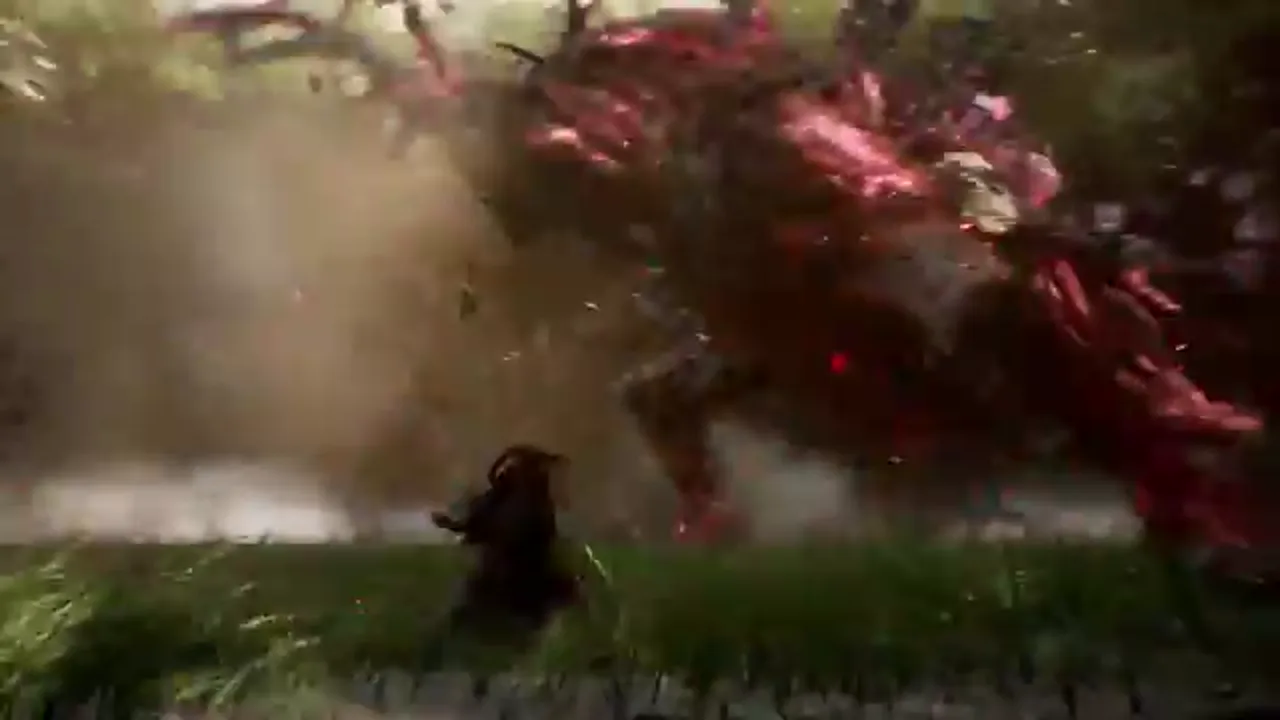
A source boundary is more useful than an invented bestiary entry.
This page is intentionally an evidence-first entry, not a speculative combat guide. Beast of Reincarnation has a striking vocabulary of blight, forests, malefacts, Nushi, Emma and Koo. It is easy for a trailer frame, an old article or a familiar action-RPG convention to grow into a detailed claim about enemy families. The public record has to come first. The official combat outline confirms Emma’s real-time katana attacks, Koo’s command techniques and a tactical command interface that slows time. Those systems may be relevant in many encounter shapes, but the sources do not turn that possibility into proof of a swarm enemy type.
The confirmed frame
Game Freak’s January 2026 Xbox Wire feature explains that Emma, a blightborn Sealer, and Koo, a malefact dog, travel through a post-apocalyptic Japan. Forests can erupt from wasteland, and the feature identifies Nushi as enormous malefacts that generate those blighted forests. Emma and Koo fight through the forests, defeat Nushi and absorb powers. Fictions’ official game page likewise presents a world of impermanence in which forests burst from a wasteland and describes real-time action paired with command-based techniques.
Those statements establish important context. They confirm that blight, transforming landscapes and hostile malefacts matter to the game. They do not automatically establish every adjective a fan or guide writer might attach to an unseen enemy. A good wiki preserves both sides of that distinction: it gives readers the confirmed context and makes the remaining gap visible.
What this label means on this wiki
The title Swarm Malefacts is a navigation label. It helps group questions that readers may search for, but it is not presented as a canonical taxonomy unless a first-party source uses the same term. The page status remains expected so that no one mistakes the label for a released database category. Its purpose is to prevent a vague or inherited claim from silently becoming lore.
That policy is practical. An official trailer can demonstrate a visual, but it may not identify an enemy name. A developer interview can establish a design goal, but it may not document a specific encounter. A storefront feature can mention bosses and captured powers without giving their exact rewards. Each source should be used for the fact it actually supports.
What the sources do not establish
There is no primary confirmation here of a creature called a swarm malefact, a minimum group size, area-of-effect strategy, surround behaviour, crowd-control resistance or a repeatable horde activity.
Absence of confirmation is not a denial. It simply means the wiki cannot honestly convert a plausible reading into a statement of fact. The game may contain material that later supports this label, and a live version can also differ from early presentations. Until the source is direct, readers should regard specific names, patterns, loot tables and build recommendations as unknown.
How to verify a future update
A reliable update needs more than a screenshot. Start with an official publisher, developer, platform-holder, store or support source. Record its URL and publication date. If the source names an enemy, preserve that spelling. If it only shows an image, describe it as an image rather than assigning a mechanical role. For a player-observed detail, include the game version, platform, location and reproducible steps; if the observation cannot be repeated, mark it as unverified.
This separation also protects readers after patches. Balance changes can alter encounter behaviour, controls and presentation. A current support note is better evidence for a live change than an announcement written months earlier. The wiki’s patch and support pages provide the appropriate place for version-sensitive information.
Reading the imagery responsibly
Every image attached to this page is a frame extracted from an official YouTube video and mapped in the source ledger to its video ID and timestamp. That documents visual provenance; it does not give the frame more factual authority than it has. Promotional footage may show a mood, environment or silhouette without confirming a name, category, quest location or drop. The rights in the footage remain with the relevant rights holder.
Readers who want the broad, confirmed enemy context should begin with Malefacts: Officially Confirmed Basics and Nushi Bosses. For the world context, see The Blight and Forest Transformation. Those pages distinguish verified statements from advice in the same way.
Version and correction policy
This entry is dated and versioned as editorial documentation. If a later official patch, trailer, support article or developer interview changes the available evidence, the page should be updated rather than silently rewritten. The update should state what changed, link the new source and leave the former claim out if it can no longer be supported. That matters particularly for action games, where launch patches can change camera behavior, input options, enemy tuning or the way an encounter is presented.
The same rule applies to reader reports. A useful report identifies the platform, game build, language setting and the point in the game where the observation occurred. It distinguishes a visual similarity from a named label, and it avoids extrapolating one encounter into a world-wide rule. A report without that context may point an editor toward a source, but it is not enough to establish a permanent fact on its own.
Why a source boundary helps players
Players lose time when a guide promises a route, reward or countermeasure that does not exist. A concise statement of uncertainty lets a reader decide whether to keep looking, check official support, or return after more information is released. It also gives search engines and future contributors a stable landing page for the phrase without spreading unsupported details. As the official record grows, the page can expand from this careful baseline into a specific, practical reference.
Editorial conclusion
Readers can use this route to check whether a group-combat assertion is supported. Practical advice should be added only after it is tied to a released encounter and a reproducible version of the game. This conservative wording is not filler: it is how the site remains useful when official information is limited. As Game Freak, Fictions or a platform holder publishes more precise material, this entry can become a real bestiary page with a source trail instead of having to retract invented detail.