Beast of Reincarnation Ending Explained: Shambhala, The Deer, and Community Theories
Confused by the final cinematic? We explore the growing community theories surrounding the Shambhala space station, the cryptic deer, and the true nature of the Beast.
The Long Road to the Year 4026
Game Freak’s ambitious departure from their traditional catalog has dominated the action RPG discussion space this summer. For weeks, players have been navigating the treacherous, blight-infested mountain settlements of futuristic Japan. We have learned how to harness Emma’s unique abilities—manipulating her vine-like hair to traverse broken terrain and absorb the parasitic blight—and we have bonded with her loyal, mutated canine companion, Koo.
The journey has been undeniably grueling. With punishing combat that demands precise timing and a steady understanding of weapon scaling, reaching the end credits is a badge of honor. It is a true 40-hour journey that tests both your reflexes and your patience.
However, as more players finally cross the finish line, the community conversation has shifted entirely. The rigorous samurai-inspired swordplay and tactical pet commands are suddenly taking a backseat to heated lore discussions. The final act of the game takes a massive narrative swing, transitioning from grounded, earthy survival to high-concept science fiction. For a game that spent its early chapters focused on rebuilding local communities and hunting down grotesque malefacts in the wilderness, the finale has left a significant portion of the player base stunned and searching for answers.
The Shambhala Space Station Revelation
The most jarring narrative pivot occurs when the true scope of the world is revealed. Throughout the game, players are fed fragmented hints about the world before the blight swallowed it, alongside vague, ominous references to “Project Bloom.” But nothing fully prepares you for the introduction of Shambhala.
According to a rapidly growing number of community reports and spoiler-filled discussions on Reddit, the final cinematic sequences pull the camera back—literally and figuratively. Shambhala is depicted not as a mythical sanctuary on Earth, but as a massive orbital space station. For players who spent dozens of hours fighting in muddy swamps and ruined traditional shrines, the sudden presence of an advanced, functioning orbital habitat is a massive shock to the system.
Players have observed that Shambhala wasn’t just a passive satellite observing the decay of Earth. Community theories heavily suggest that the station was built as an ark, a designated sanctuary meant to preserve the remnants of humanity while the blight ravaged the surface below. The grand plan, seemingly orchestrated by the old world’s leaders, was that humans would eventually transfer to Shambhala. Emma’s role as a Sealer—absorbing the toxic corruption from the earth—might not have been for the sake of the mountain settlements at all. Instead, it was likely a planetary cleansing mechanism designed to eventually make Earth habitable again for those waiting in orbit.
Unpacking the Title: The True Nature of the Beast
This brings us to the game’s namesake. Up until the late game, many players assumed the “Beast of Reincarnation” was merely a metaphorical title representing the cyclical nature of the blight, or perhaps an ultimate malefact boss lurking in the deepest infected zone. But as community members have started piecing together the lore, the entity seems to serve a much more structural, almost mechanical purpose.
In a recent Reddit thread dissecting the finale, one player noted their confusion regarding the Beast’s relationship with the space station itself. The prevailing theory is that the Beast was originally designed to facilitate the human transfer to Shambhala, or that it is intrinsically linked to the station’s orbital integrity. When the final confrontation concludes and the Beast is defeated or “gone,” the immediate consequence is catastrophic for the humans in orbit.
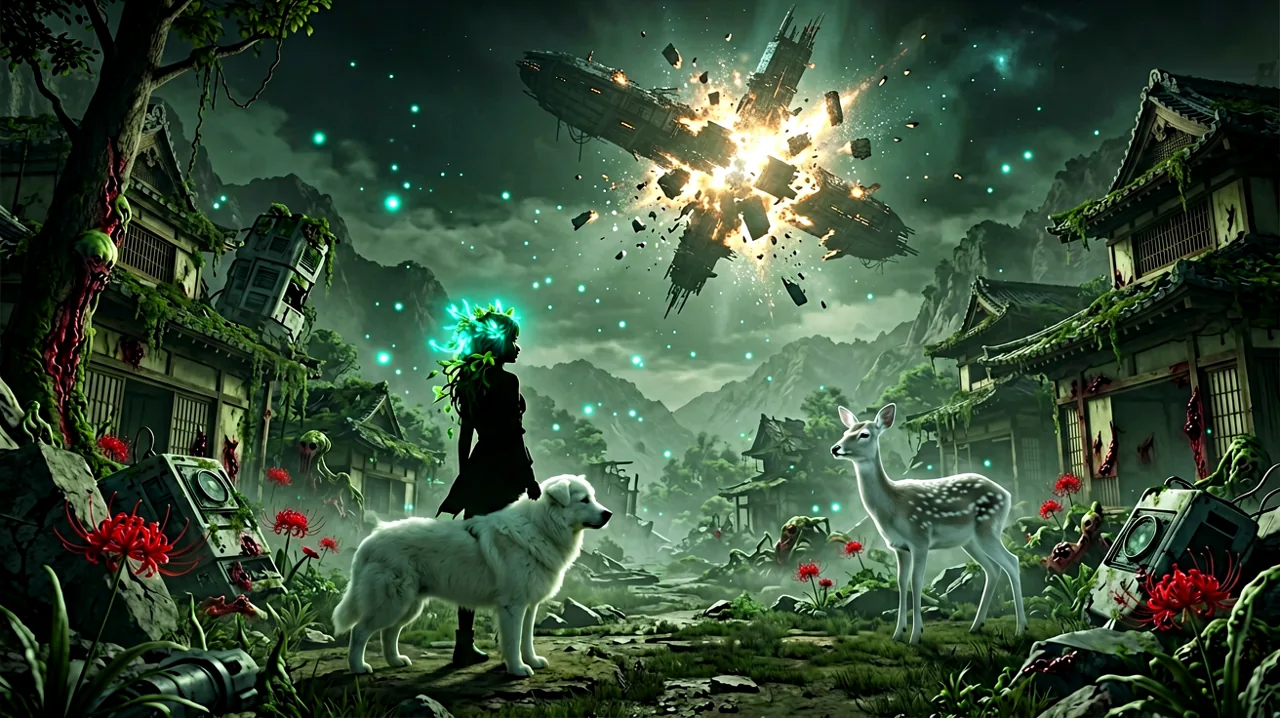
The cinematic reportedly shows the colossal space station breaking apart and falling toward Earth. One player described it as falling apart “like a bunch of Lego” once the Beast’s influence is removed. This detail completely recontextualizes the final fight. You aren’t just saving the immediate area from a massive malefact; you are dismantling the old world’s ultimate contingency plan. By eliminating the Beast, Emma effectively severs the tether holding Shambhala in the sky, bringing an explosive end to the orbital sanctuary and forcing whatever is left of humanity to live or die on the surface.
The Deer and the Symbolism of Rebirth
Perhaps the most heavily discussed image from the final cinematic is the lingering shot of a deer watching the burning wreckage of Shambhala plummet from the atmosphere. In a vacuum, a deer is just a woodland creature. But in the context of the year 4026, it carries immense narrative weight.
For the entirety of the game, players are surrounded by the blight. The flora is overgrown and parasitic, and the fauna has been horrifyingly twisted into malefacts. Koo is a prime example—a loyal companion, yes, but undeniably mutated by the environment. We spend the entire game battling grotesquely altered wildlife.
The appearance of a pristine, unmutated deer observing the destruction of the old world’s space station is a powerful visual metaphor. It heavily implies that the destruction of the Beast of Reincarnation has triggered a genuine planetary reset. With the artificial systems and the overarching corruption gone, natural life is finally returning to its original, uncorrupted state. This ending channels the quiet, melancholy optimism seen in titles like NieR: Automata, suggesting that the mechanical and the monstrous are finally burning out, leaving room for nature to heal (a sentiment echoed in our previous discussions on how the game channels NieR and Sekiro).
Why the Ending is Dividing the Community
This drastic shift into esoteric sci-fi territory hasn’t landed perfectly with everyone. Over on various soulslikes subreddits, prospective players are asking if the game is still worth picking up due to its current “Mixed” rating on Steam. While a portion of these reviews stem from early PC performance issues, a vocal segment of the player base is genuinely torn on the narrative direction.
Action purists who were drawn to the hardcore combat, tight parry windows, and the grounded dynamic between a girl and her dog often feel sidelined by the sudden lore dump. The Evangelion-esque climax requires a lot of reading between the lines, heavily relying on item descriptions and missable environmental storytelling to fully grasp. For those who just wanted to perfect their blade arts and farm spirit stones, watching a space station explode feels disconnected from the struggle of the early game. Game Freak has previously addressed the mixed reception regarding difficulty and tone, but the ending remains a major point of contention.
Conversely, lore enthusiasts are having a field day. The community is actively tearing through New Game Plus, scouring the mountain settlements for missed dialogue that might foreshadow Shambhala’s existence. The ambiguity is acting as a catalyst for deep dives into the lore of Project Bloom and the exact timeline of the blight outbreak.
Preparing for the Final Encounter
If you are currently working your way through the late game and approaching the point of no return, there are a few things you should prioritize before crossing the threshold. The narrative might shift into existential sci-fi, but the combat remains as punishing as ever.
First, ensure your weapon scaling is fully optimized. The enemies leading up to the final confrontation will test your mastery of Emma’s parry timings and dodge mechanics. You cannot rely on brute force; you must utilize the synergy between Emma and Koo. Make sure you are actively issuing tactical commands to Koo, as his slow-motion assists are crucial for interrupting the devastating attacks of endgame malefacts.
Second, stockpile your higher-tier spirit stones. The final sequences require heavy use of your blight-absorption mechanics. You will need every ounce of healing and stamina regeneration you can get. If you are struggling with the timing, we highly recommend revisiting our guide on mastering takedowns and Koo’s assists. Take the time to explore the remaining optional zones and complete any outstanding quests in the survivor settlements. Not only will this provide valuable upgrade materials, but it might also offer you subtle clues about the true nature of the world before the finale hits you with its orbital revelations.
Looking Ahead to Post-Launch Lore Updates
Game Freak has remained notoriously tight-lipped regarding the lore implications of the ending. As players continue to map out every inch of the blighted Japanese wilderness, we expect more theories to surface regarding the connection between the surface world and Shambhala.
For now, the ending stands as a bold, controversial choice for a studio that is actively proving it can handle dark, complex, and mature themes. Whether you view the falling space station as a tragedy for humanity or the birth of a new era—symbolized by the solitary deer—it is undoubtedly an ending that will be discussed for a long time to come. Keep an eye on our continuing coverage as the community uncovers more secrets hidden within the ruins of 4026.