Beast of Reincarnation One Month Later: A Gorgeous World That Struggles to Escape Its Own Design
One month after launch, we examine Beast of Reincarnation's critical reception, Sekiro combat comparisons, and Game Freak's massive departure from Pokémon.
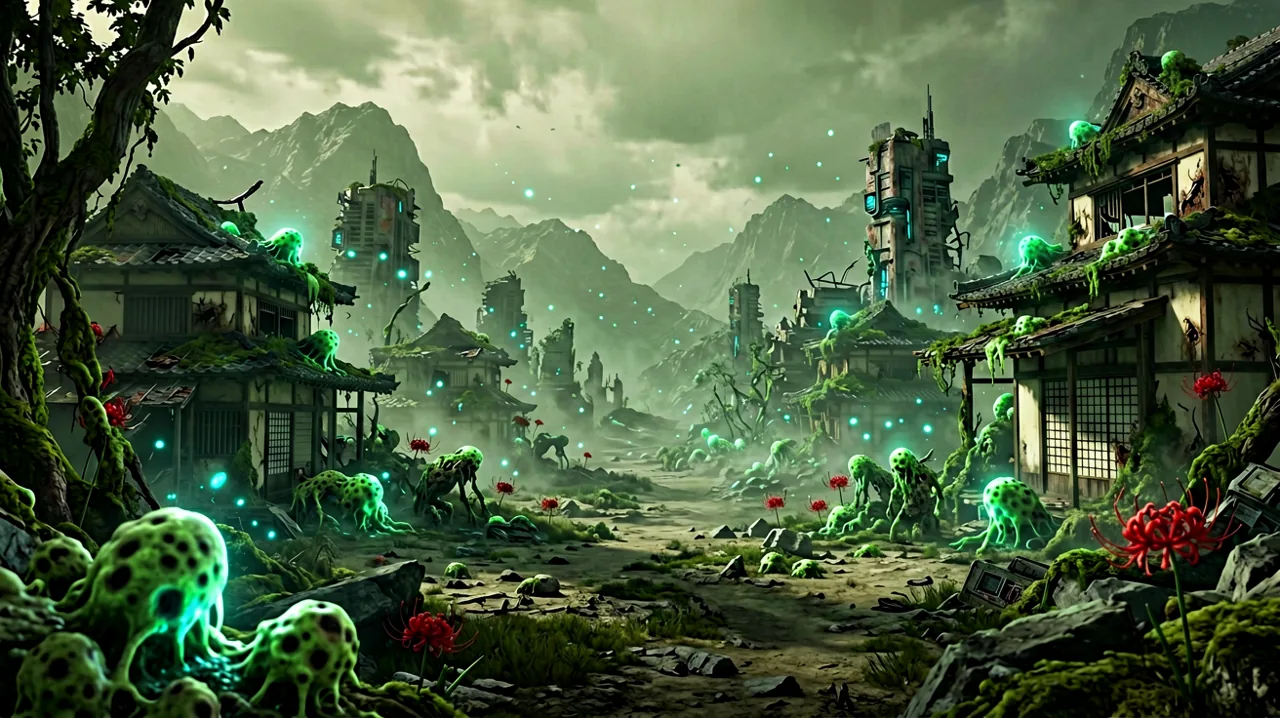
It has been exactly one month since Game Freak launched Beast of Reincarnation, dropping players into the year 4026 AD where a parasitic force known as the blight has consumed Japan. As humanity cowers in isolated mountain settlements, players take on the role of Emma, an 18-year-old Sealer with plant-like hair, and her mutated canine companion, Koo. For a developer intrinsically linked to the family-friendly Pokémon franchise, this dark, hardcore action RPG was always going to be a massive gamble.
As mainstream publications catch up on their late reviews and the hardcore community meticulously dissects the parry mechanics, a clear picture is forming. The 4026 AD Japan setting is an undeniable visual triumph, but the connective tissue holding the gameplay loop together remains highly divisive.
The Shock Factor: Game Freak’s Monumental Leap
Even weeks after release, the general gaming public is still processing the tonal whiplash. Mainstream outlets like The Star recently encapsulated the casual gamer’s reaction perfectly: “The people who make Pokémon made this?!” It is a testament to the sheer artistic departure of the project. Moving from vibrant, turn-based monster catching to an Unreal Engine 5 nightmare where grotesque malefact beasts tear through the wilderness is a staggering pivot.
This shock factor worked wonders for the game’s initial marketing push, easily securing its spot as a highly anticipated August release on PlayStation 5, Xbox Series X|S, and PC. However, now that the novelty of the developer’s pedigree has worn off, the game is being judged strictly on its merits as a demanding, character-driven action RPG. The transition has not been entirely seamless, and critics are beginning to articulate exactly where the friction lies.
A Gorgeous World That Struggles to Hold On to You
Late-arriving reviews have praised the game’s breathtaking aesthetic while raising valid concerns about its pacing and structural loop. A comprehensive review from 91mobiles summarized the experience as “a gorgeous world that struggles to hold on to you.” This sentiment is echoed across various post-launch editorials, with some characterizing the game as an ambitious journey that fundamentally “struggles to escape its own design.”
What does this mean for the average player navigating the blight? The core issue seems to stem from the contrast between the game’s incredible environmental art and its sometimes restrictive exploration mechanics. Using Emma’s vine-like hair to traverse ruined, futuristic Japanese architecture is initially thrilling. However, players frequently report that the connective zones between major story beats feel overly padded. The pacing occasionally grinds to a halt as players are forced into repetitive resource-gathering loops to upgrade their spirit stones and generator devices.
The settlements themselves—bastions of humanity blending traditional Japanese aesthetics with failing, rusty technology—are visually immaculate. Yet, the interaction within these safe zones often boils down to menu navigation and static NPC dialogue, making the beautiful world feel slightly hollow once the initial awe fades. It is a world that looks photorealistic and inviting, but structurally keeps the player at arm’s length during the slower, non-combat moments.
Parrying, Koo, and the Sekiro Comparisons
Where Beast of Reincarnation undeniably flexes its muscles is in its brutal, timing-based combat mechanics. From the day the game was revealed, comparisons to Sekiro: Shadows Die Twice, Nier: Automata, and Black Myth: Wukong were inevitable. Now that veterans have had a month to map the combat flow, a fascinating debate has emerged regarding the synergy between Emma and Koo.
The tactical foundation of the game relies on a specific economy: Emma defends, so Koo can attack.
In a recent, highly upvoted discussion within the hardcore action-game community, players highlighted the intricate balance of the game’s parry system. Successfully deflecting incoming attacks with Emma’s blade and vine-arms doesn’t just prevent damage; it acts as a battery. According to community analysis, the system operates on a strict “Charge Per Parry” basis. Every perfect deflection fills a tactical gauge, which can then be spent to command Koo to execute devastating counter-attacks. The cost of these canine strikes is directly tied to their Attack Power—meaning players must constantly weigh the risk of staying in the pocket to farm parries against the reward of unleashing Koo’s high-damage, slow-motion takedowns.
This reliance on Emma and Koo fighting as a deeply interconnected unit is mechanically brilliant, effectively solving the “useless AI companion” trope that plagues many action games. However, hardcore Sekiro veterans have pointed out one missing ingredient that holds the combat back from true perfection: sound design.
While the visual feedback of a perfect parry in Beast of Reincarnation is spectacular—sparks flying, vines snapping, the screen briefly freezing to emphasize the impact—the auditory feedback falls slightly flat. Players accustomed to the sharp, rhythmic, and immensely satisfying “clang” of a sword deflection in Sekiro note that Emma’s parries sound somewhat muted in comparison. In rhythm-heavy action games, audio cues are just as important as visual ones for maintaining the flow of combat. The lack of distinct, aggressive acoustic feedback for perfect deflections makes the steep learning curve slightly harder to master, as players are forced to rely entirely on visual indicators amidst the chaotic, spore-filled battlefields.
Performance Updates and Handheld Ambitions
On the technical front, Game Freak has been working diligently to optimize the experience. While console versions have received patches addressing camera tracking during large malefact encounters, the PC community has been pushing the limits of the game’s scalability.
Interestingly, there has been a surge of community interest surrounding handheld performance. Recent high graphics performance tests on devices like the Lenovo Legion Go (utilizing the Z1 Extreme chip) demonstrate that despite being a heavy Unreal Engine 5 title, the game is remarkably playable on portable PCs. This is largely thanks to aggressive upscaling solutions and the game’s relatively contained arena fights. For players utilizing Xbox Game Pass via PC, the ability to grind out minor side quests or farm amber on a handheld device has been a welcome surprise, mitigating some of the pacing issues found in the mid-game. For those tweaking their setups, consulting a PC performance guide remains highly recommended to strike the right balance between frame rate and the game’s demanding visual effects.
The Road Ahead
One month in, Beast of Reincarnation stands as a monumental, flawed masterpiece. It is entirely understandable why a game taking such a massive swing—transitioning a developer from turn-based monster catching to mature, post-apocalyptic action—would struggle with pacing and structural design.
Yet, for those who take the time to master the intricate dance between Emma’s defensive parries and Koo’s offensive strikes, the game offers a uniquely rewarding loop that no other title currently provides. Whether Game Freak decides to refine the auditory feedback of combat in future patches, or streamline the exploration mechanics, remains to be seen. But one thing is certain: they have successfully proven they can create far more than just pocket monsters.