The Duality of Beast of Reincarnation: How Boss Reuse and Cutscene Inconsistencies Impact the Late Game
Now that players are finishing Beast of Reincarnation, the community praises its Sekiro-like combat while critiquing heavy asset reuse and stiff facial animations.
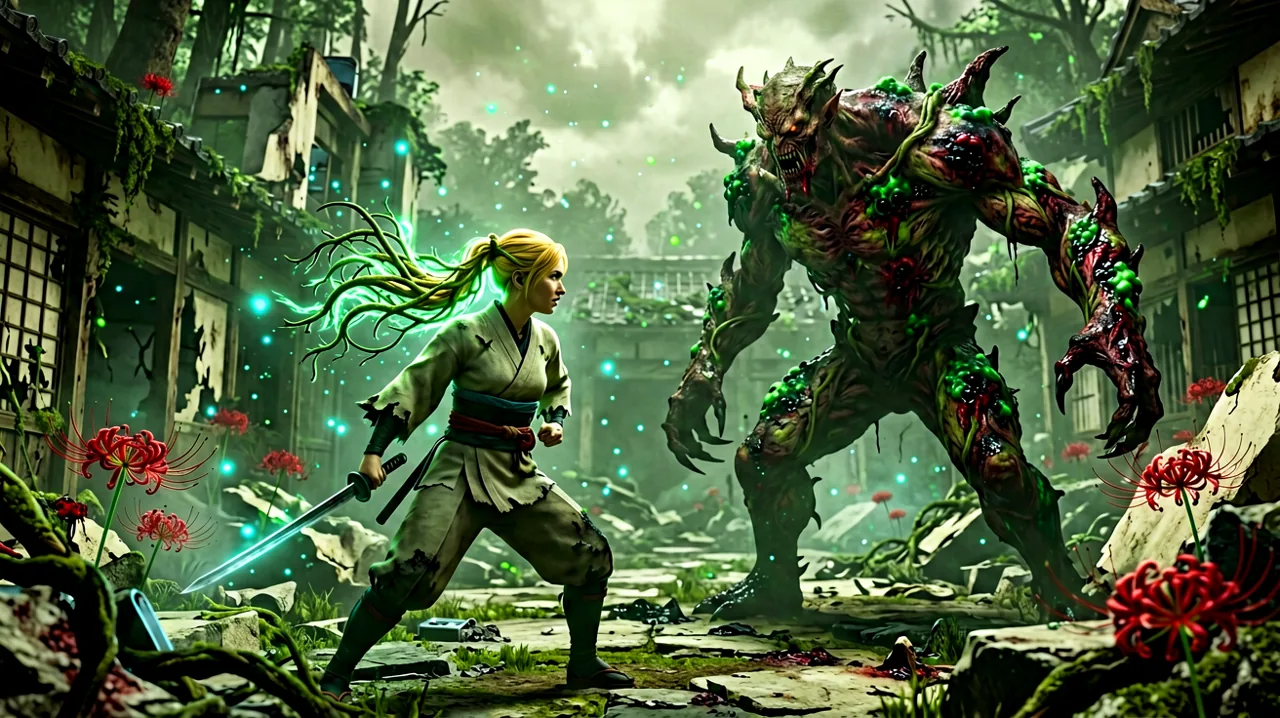
It has been over a month since Beast of Reincarnation launched globally, marking a massive creative departure for Game Freak. Plunging players into the year 4026, the game presents a harrowing vision of a distant-future Japan swallowed by an invasive parasitic force known as the “blight.” As the community finishes their initial playthroughs of this highly anticipated Action RPG, a clear consensus is beginning to form regarding the endgame experience.
Players have spent weeks navigating the treacherous mountain settlements alongside the 18-year-old Sealer, Emma, and her loyal Malefact companion, Koo. While early impressions were dominated by the sheer novelty of Game Freak’s pivot to a grim, challenging genre, those who have finally reached the credits are now providing more nuanced, comprehensive evaluations. The community verdict highlights a game of extreme contrasts: Beast of Reincarnation boasts some of the most satisfying action mechanics in recent memory, but it is ultimately weighed down by repetitive encounter designs and glaring inconsistencies in its cinematic presentation. Here is a closer look at what players are saying after completing the journey.
A Masterclass in Hybrid Combat Mechanics
If there is one aspect of Beast of Reincarnation that has unified the player base in praise, it is the deeply rewarding and punishing combat. The game requires precision, spatial awareness, and a flawless understanding of timing. According to recent endgame discussions circulating on platforms like Reddit, players are frequently comparing Emma’s defensive maneuvers to the legendary deflection mechanics of Sekiro: Shadows Die Twice.
The parry window in Beast of Reincarnation is exceptionally satisfying, allowing players to weave Emma’s vine-like hair and blade strikes into a seamless dance of offense and defense. When you perfectly deflect a sweeping claw attack from a towering Malefact, the immediate auditory feedback and the visual spark of clashing steel and corrupted flora are nothing short of intoxicating. The rhythm of battle demands your full attention, rewarding aggressive playstyles and split-second reactions.
But Emma does not fight alone, and it is the brilliant integration of her canine companion, Koo, that elevates the combat from a mere homage to a uniquely tactical experience. Dedicated players have noted that commanding Koo in the heat of battle feels reminiscent of the tactical assist systems found in modern Final Fantasy titles. By utilizing Koo’s slow-motion tactical skills, players can momentarily pause the frantic action to issue specific commands—whether it is interrupting an unblockable grab, distracting a fast-moving target, or setting up a coordinated stagger. This synergy between Emma’s high-stakes parrying and Koo’s strategic interventions creates a combat loop that remains engaging from the opening tutorial all the way to the final boss. The visceral process of absorbing and sealing the blight from weakened enemies serves as a phenomenal mechanical climax to these encounters, reinforcing Emma’s narrative identity as a Sealer through pure, unadulterated gameplay.
The Cinematic Divide: Spectacular Finishers Versus Stiff Dialogue
However, as players progress further into the narrative, a significant point of contention has emerged regarding the game’s visual storytelling. Built on Unreal Engine 5, the environmental design of a ruined, overgrown Japan is breathtaking. Yet, when the camera zooms in during narrative moments, the experience fractures into two entirely different tiers of quality, leaving the community highly divided.
On one hand, the cinematic finishers during major boss fights are universally lauded. When Emma triggers a final execution to seal a corrupted Malefact, the game treats players to meticulously choreographed, highly emotional cutscenes. The camera angles are dynamic, the lighting perfectly highlights the eerie glow of the blight, and the sheer force of Emma manipulating her plant-like appendages is conveyed with stunning cinematic flair. These moments are raw, powerful, and visually flawless, fully realizing the potential of the game’s unique premise.
On the other hand, players are finding that standard story cutscenes—particularly the heavy, emotional dialogue sequences occurring within the survivor settlements—are suffering from noticeably poor facial animations. In a game that relies heavily on the traumatic background of its characters and the bleak reality of their survival, rigid facial expressions severely undercut the emotional weight of the script. Several community members noted that these stiff animations completely ruined pivotal, heavy scenes, making otherwise tragic moments feel oddly bland and disconnected. Game Freak’s transition to hyper-realistic character models and intense narrative delivery is a commendable leap, but these inconsistencies in facial rigging show that the studio is still experiencing major growing pains with photorealistic, character-driven presentation.
The Fatigue of the Blight: Boss Asset Reuse and Pacing Issues
Perhaps the most persistent and damaging criticism levied against the latter half of Beast of Reincarnation is its heavy reliance on asset reuse, particularly concerning boss encounters. The blight is a fascinating narrative concept, mutating the flora and fauna of Japan into grotesque, terrifying Malefacts that pose a true threat to humanity’s survival. Early in the game, encountering a new apex predator like the Nushi Taurus is a chilling and exhilarating event that tests everything the player has learned. The creature designs are initially striking, blending natural animalistic traits with corrupted botanical horrors.
But as players push past the 25-hour mark in what is generally expected to be a 40-hour journey, a creeping sense of exhaustion sets in. To stretch the runtime of the final chapters, the campaign frequently recycles these earlier boss designs. While these returning Malefacts often sport new elemental affinities—spewing toxic miasma instead of basic physical strikes—or feature slightly altered attack timings to catch veterans off guard, the core wireframes, animations, and visual silhouettes remain fundamentally identical.
For a hardcore combat system that thrives on learning, reading, and mastering an enemy’s unique moveset, facing the exact same beast for the third or fourth time strips away the thrill of discovery. Community members have expressed immense frustration that this extensive reuse artificially inflates the runtime. The story begins to drag significantly as Emma and Koo are forced into prolonged gauntlets against familiar foes, stalling the narrative momentum precisely when it should be accelerating toward its dramatic climax. Many players argue that a tighter, more condensed 25 to 30-hour campaign with strictly unique boss encounters would have resulted in a vastly superior pacing structure.
The Final Verdict: A Flawed but Fascinating Foundation
As the initial launch hype settles and players digest the mixed reception of the game’s later stages, the hardcore community seems to be aligning on a solid but grounded consensus. Dedicated players are generally rating the overall experience around a 6.5 or 7 out of 10. This score reflects an immense appreciation for what Game Freak has attempted, counterbalanced by the undeniable frustrations of its late-game execution.
The touching dynamic between Emma and Koo, the evocative original soundtrack, and the exceptional core combat loop prove that the studio possesses the vision and talent to compete in the demanding AAA Action RPG space. Yet, the heavy-handed boss recycling and inconsistent facial animations serve as constant reminders of the project’s technical limitations.
Beast of Reincarnation is a beautiful, deeply flawed experiment. It is a game where you might groan at the sight of a recolored boss, only to cheer moments later when you perfectly parry its onslaught and unleash a breathtaking cinematic finisher. Game Freak has successfully laid the groundwork. If they can refine their narrative presentation and commit to greater enemy variety in future updates or potential sequels, Emma and Koo’s next journey could easily transcend these growing pains and achieve true greatness. For now, it remains a highly recommended, albeit imperfect, adventure through a beautifully ruined world.
Sources
- Reddit: Finished Beast of Reincarnation, here are my thoughts (https://www.reddit.com/r/BeastofReincarnation/comments/1whbub4/finished_beast_of_reincarnation_here_are_my/)