Beast of Reincarnation Pacing & Secrets: Matsukawa Zone Armor, Shrinking Maps, and the Cutscene Debate
Discover the hidden Library Hall armor in the Matsukawa Zone, and join the community debate over shrinking late-game maps and unskippable cutscenes.
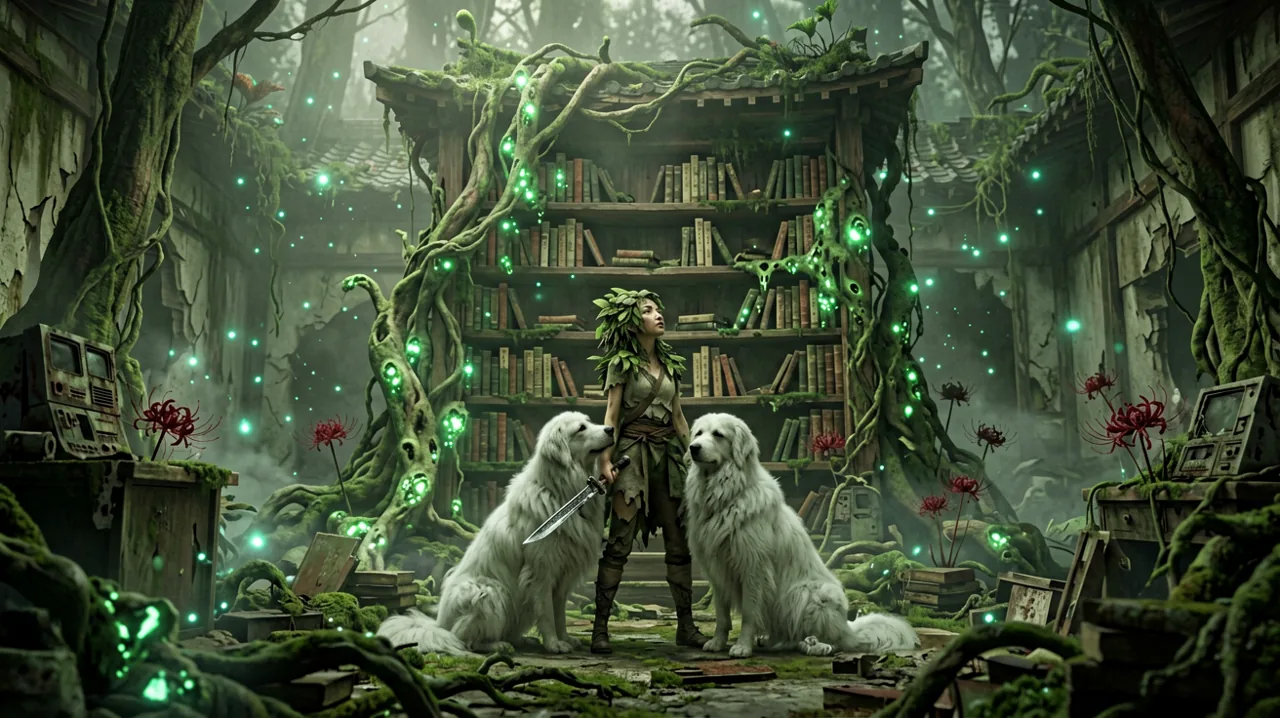
A Shifting Landscape in 4026 Japan
Game Freak’s foray into the hardcore action RPG space with Beast of Reincarnation has undeniably shaken up the late 2026 gaming landscape. Set against the breathtaking yet terrifying backdrop of year 4026 Japan—a world utterly consumed by the parasitic blight—the journey of our 18-year-old Sealer, Emma, and her faithful malefact companion, Koo, is a massive and welcome departure from the studio’s traditional roots. Yet, as the launch window dust settles and dedicated players push deep into the endgame, a multifaceted discussion is brewing within the community.
Players are currently charting the depths of the game’s massive overworld, unearthing community-reported secrets like the highly sought-after armor sets hidden within the perilous Matsukawa Zone. At the exact same time, a vocal segment of the player base is beginning to critique the game’s overarching structural pacing. Reports of shrinking map sizes in the later chapters and mounting frustrations over unskippable cutscenes are dominating forum threads across the internet. Today, we are examining these latest community discoveries, addressing the pacing controversies head-on, and highlighting a surprising technical triumph regarding the game’s performance on the Xbox Series X ecosystem.
Unearthing the Matsukawa Zone and Library Hall
When you first step out of the isolated mountain settlements and into the sprawling, blight-infested wilderness, Beast of Reincarnation immediately flexes its environmental design muscles. Early regions are vast, interconnected playgrounds perfectly calibrated to test your mastery of Emma’s unique traversal abilities. Using her mutated, plant-like hair to swing seamlessly across shattered highways and scale overgrown skyscrapers is an exhilarating experience, and the game heavily rewards those who dare to venture far off the critical path.
One of the most significant recent discoveries comes courtesy of the community’s relentless exploration in the Matsukawa Zone. According to a recent report from Hardcore Gamer, this mid-game region holds some of the most crucial defensive gear required for surviving the late-game difficulty spikes. Deep within the overgrown ruins of the Matsukawa Zone, players can discover a secluded, highly fortified campsite known as the Library Hall.
Finding the Library Hall is no small feat. It requires scaling the crumbling remnants of an old-world colony, demanding precise platforming and clever use of Koo’s environmental commands to clear thick walls of blight blockages. Once inside the perimeter, players are immediately greeted by a massive collection area guarded by a fierce, coordinated gauntlet of mutated malefact enemies. You cannot simply sneak past or button-mash your way to victory here. The game’s hardcore combat mechanics demand utmost respect and focus.
Players must perfectly time their parries with Emma’s retrofitted 1960s-style blade, waiting for the exact fraction of a second the malefacts expose their vulnerable blight-cores. Commanding Koo to distract the larger, heavier beasts creates brief, slow-motion tactical windows, allowing Emma to weave in her plant-like vines to absorb and seal the corruption. It is a grueling test of endurance, requiring careful management of your limited spirit stones. At the very top of the Library Hall, furthest from the main entrance, lies a chest containing a highly valuable piece of armor. For those struggling to survive the escalating threat of the parasitic blight, this detour is practically mandatory. For a deeper breakdown of optimizing your loadouts for these gauntlets, consult our builds and spirit stones feature.
The Pacing Debate: Are Late-Game Maps Shrinking?
While the Matsukawa Zone represents the absolute peak of Beast of Reincarnation’s open-ended exploration, a growing number of dedicated players are pointing out a stark shift in the game’s pacing as the overarching narrative progresses. Over on the main Reddit community, a prominent and slightly divisive discussion has emerged regarding the physical scale of the game’s later environments.
Early adopters are reporting that the areas introduced at the start of the game are undeniably massive, offering dozens of hours of non-linear exploration and hidden lore fragments detailing the tragic fall of the 4026 civilization. However, as Emma and Koo push closer to the true source of the corruption, the zones reportedly become progressively smaller and significantly more linear. One community member recently voiced a sentiment shared by many in the endgame: “I had an absolute blast playing this game. Some bits felt rushed, and I’m surprised to find that the areas at the start were massive and got progressively smaller.”
This “front-loaded” map design is a common reality in modern AAA development, where immense resources are necessarily poured into the opening hours to hook players, occasionally leaving the final acts feeling slightly constrained in comparison. In the context of Beast of Reincarnation, this structural shift creates a jarring contrast. The early game actively encourages you to lose yourself in the ruined beauty of Japan, uncovering story and setting secrets at your own unhurried pace.
In contrast, the community reports that the later chapters feel much more akin to a cinematic boss rush, aggressively funneling Emma from one brutal combat arena to the next with minimal room to breathe or explore. Some die-hard defenders argue this is a deliberate narrative choice—as the blight grows more aggressive and the apocalyptic stakes rise, the claustrophobic, linear map design forces players to confront the hardcore combat head-on without the safety net of over-leveling. Still, for a title that so heavily advertised the symbiotic, free-roaming exploration between a young girl and her loyal dog, the reported reduction in late-game scale has left some fans yearning for just one more massive, sprawling open zone before the credits finally roll.
The Platinum Roadblock: Unskippable Cutscenes
Perhaps the most universally agreed-upon critique currently circulating the community is the glaring absence of a scene-skipping feature. Beast of Reincarnation is an intensely narrative-heavy experience. The complex emotional dynamic between Emma’s stoic, trauma-fueled burden as a Sealer and Koo’s feral yet deeply loyal nature is conveyed through numerous gorgeously rendered cinematic sequences powered by Unreal Engine 5.
On an initial playthrough, these cutscenes are a stunning visual treat that rival top-tier animated films. But Beast of Reincarnation is fundamentally a punishing, mechanics-driven action RPG built around mastering frame-perfect parries and executing brutal takedowns. Players are expected to die and retry repeatedly. When facing down a particularly unforgiving boss encounter, being forced to watch a dramatic two-minute monologue before every single attempt quickly transitions from deeply immersive to outright infuriating.
This frustration is particularly palpable among trophy hunters and hardcore completionists. Over on the trophy-focused subreddits, players are sharing their hard-earned completion screenshots with exhausted, slightly bitter captions like, “I saved this one for the platinum: revenge for the lack of scene skipping.” Another user bluntly asked the developers why the cinematics had to be “so damn long and tedious” when retrying encounters.
The absence of a skip button feels like a strange quality-of-life omission, especially for a title frequently and favorably compared to genre giants like Sekiro or Nier: Automata, where rapid iteration and instant combat resets are baked directly into the core gameplay loop. For players diving back in to mop up missing collectibles, these unskippable moments act as a massive roadblock. Given that Game Freak has already been highly proactive with technical fixes (such as the sweeping changes seen in the first post-launch patch), the community remains highly optimistic that a skip cinematic feature is currently in the pipeline.
A Technical Triumph on Xbox Series X
Despite the valid community critiques regarding late-game pacing and cutscene implementation, there is a remarkably glowing bright spot in the current discourse: the game’s rock-solid technical stability. Unreal Engine 5 releases have garnered a notoriously mixed reputation over the past year for being exceptionally demanding, often struggling with micro-stuttering, poor frame pacing, or aggressive resolution scaling on current-generation console hardware. However, Beast of Reincarnation is reportedly bucking the trend entirely, particularly on Microsoft’s flagship console.
Recent discussions on Xbox-focused forums have highlighted just how well Game Freak’s engine optimization holds up under extreme pressure. Players troubleshooting persistent, console-crashing bugs in other recent high-profile action titles have specifically pointed to Beast of Reincarnation as the absolute gold standard for stability. One user noted that while they experience hard crashes to the dashboard after 15 minutes in other demanding titles, they can run UE5 heavyweights like Beast of Reincarnation for hours “sin problemas” (without any problems).
Since the game launched directly into the where to play and Game Pass lineup on day one, ensuring a flawless technical experience on the Series X was absolutely critical for player retention. The fact that Emma’s intricate, physics-based vine movements, the dense particle effects of the glowing blight spores, and the massive, screen-filling malefact bosses all run seamlessly is a monumental achievement for the studio. It ensures that when you mistime a critical blight seal or get flattened by a behemoth, the blame lies squarely on your own reflexes, not a frustrating hardware frame drop.
As the community continues to dissect the sprawling world of 4026 Japan, Game Freak’s ambitious gamble is clearly paying off, provided they can address the minor pacing and quality-of-life bumps along the road.