Beast of Reincarnation Boss Tier Lists Spark Debate: The Overlooked Bear Nushi
Two months after launch, the Beast of Reincarnation community is debating the best malefact boss fights, with the fearsome Bear Nushi taking center stage.
The Evolving Conversation Around Malefact Encounters
It has been roughly two months since Game Freak released their ambitious departure from their traditional catalog, Beast of Reincarnation. Set in the distant year 4026, within a hauntingly beautiful, ruined Japan consumed by the parasitic “blight,” the game introduced players to a punishing yet deeply rewarding action-RPG framework. Now that the initial rush of the campaign has settled and the dedicated community has spent hundreds of hours mastering the mechanics, discussions are naturally shifting toward ranking the encounters. Over on dedicated action game forums and social media, players are hotly debating the ultimate tier list of malefact boss fights. However, creating a definitive ranking is proving to be a highly contentious endeavor, as different playstyles and weapon loadouts drastically alter how an encounter feels.
The Reddit Tier List and the Bear Nushi Controversy
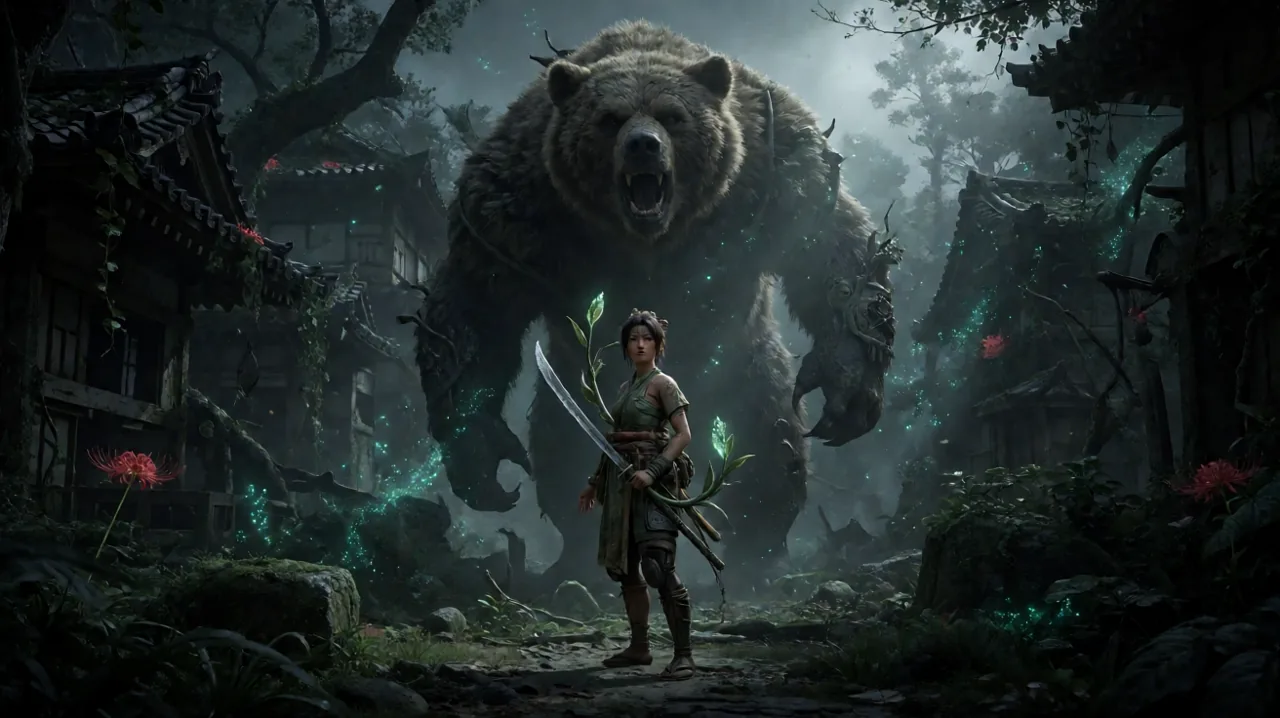
A recent prominent tier list posted on the r/CharacterActionGames subreddit has ignited a wave of pushback from veteran Sealers. The primary point of contention revolves around the complete omission of certain high-impact encounters, specifically the fearsome Bear Nushi. As players navigate the decaying mountain settlements and treacherous overgrowth, they face a diverse roster of corrupted wildlife. The Bear Nushi, a massive, blight-infested beast, has reportedly become a fan favorite for its relentless aggression and the specific ways it forces players to utilize Emma’s parry mechanics. Seeing it completely excluded from a “Best Bosses” ranking has prompted the community to vocalize their disagreements and reassess what actually constitutes a top-tier encounter in this unforgiving world.
The debate highlights a fascinating split in the player base. Some value cinematic flair and narrative weight, heavily favoring bosses that cap off major story chapters. Others, specifically the hardcore action crowd, judge encounters purely on mechanical tightness: the clarity of hitboxes, the rhythm of the parry windows, and the fairness of the punishment for a missed dodge. For these players, the Bear Nushi represents an essential skill check that should never be ignored.
Combat Mechanics: What Defines a Top-Tier Boss?
To understand why these rankings are so fiercely debated, it is essential to look at how the development team structured the core combat. Unlike traditional hack-and-slash titles, Beast of Reincarnation demands a rhythmic, almost surgical approach to dismantling enemies. Emma, the 18-year-old outcast and Sealer, relies heavily on her unique ability to manipulate her plant-like hair and vines. This trait is not merely an exploration tool for traversing fractured terrain; it is a vital combat mechanism used to absorb and seal the blight from weakened malefacts.
A truly outstanding boss fight in this game is one that perfectly balances the necessity of deflecting heavy physical strikes with the tactical deployment of these sealing abilities. When a boss’s attack pattern aligns perfectly with the player’s defensive timing, the resulting flow state is incredibly satisfying. Players argue that the Bear Nushi reportedly excels exactly in this area. According to community veterans discussing the encounter online, the fight acts as a rigorous exam for spacing and stamina management. Unlike the encounters detailed in our Nushi Taurus combat guide, which heavily feature telegraphed charging attacks, the Bear Nushi is said to utilize erratic, sweeping strikes combined with sudden area-of-effect blight spore explosions.
The Crucial Role of Koo in Boss Rankings
Another massive factor in how the community rates these encounters is how well a boss accommodates the companion mechanics. Emma does not fight alone; her companion Koo, a canine who is also technically a malefact, is central to the combat loop. Managing Koo’s slow-motion tactical assists is vital for interrupting devastating attacks or creating brief windows to heal. Bosses that allow for rich synergy between Emma’s evasive maneuvers and Koo’s aggressive takedowns are frequently elevated to the top of tier lists.
In the case of large, hyper-aggressive enemies like the Bear Nushi, players note that commanding Koo to draw aggro is practically required on higher difficulties. When a boss is designed to acknowledge and react to both Emma and Koo dynamically, without the AI feeling cheap or overly randomized, the community consistently praises the encounter. Conversely, bosses that ignore Koo entirely or feature wide-sweeping attacks that instantly neutralize him tend to fall to the bottom of the community rankings.
How Patches Have Shifted the Meta
It is also impossible to separate the current tier list debates from the history of the game’s post-launch updates. When the action RPG first launched, the community occasionally cited frustrations with unforgiving stunlocks and inconsistent camera tracking, particularly during battles with towering malefacts in enclosed arenas. Early adopters might hold a lingering negative impression of a boss simply because they fought it during the initial 1.0 release build.
However, subsequent technical updates have completely transformed the perception of many fights. The introduction of the massive camera overhaul in patch 1.0.8 gave players a much better view of massive sweeping attacks. A boss that felt structurally unfair in early August might now be considered a mechanical masterpiece in October. This ongoing technical evolution means that launch-window reviews and current community tier lists often look entirely different, fueling further debate on platforms like Reddit.
The Impact of the 1.1.0 Update
The recent introduction of the ruthless one-hit difficulty mode in update 1.1.0 has further scrambled the established meta. Encounters that players previously powered through using optimized endgame spirit stones and upgraded 1960s-era blade configurations now require absolute perfection. In this punishing environment, the visual clarity of a boss’s attack animations becomes the absolute most critical factor in its ranking.
Bosses with clean, readable wind-ups are rising to the top of the community’s favorites, while those relying on chaotic, screen-filling blight particle effects are heavily penalized by hardcore players. The Bear Nushi, despite its overwhelming presence and aggressive nature, is praised by mechanical purists for its highly legible physical animations. When a single mistake means an immediate “Game Over,” fairness and predictability naturally trump visual spectacle.
Encounter Reuse and Pacing
The discussion around boss rankings inevitably touches on the topic of encounter pacing and enemy reuse. As we explored in our previous coverage regarding boss reuse and cutscene inconsistencies, Beast of Reincarnation occasionally recycles early-game mini-bosses as standard elite enemies in the late-game ruined settlements. The community is sharply divided on whether these recycled encounters should be judged individually or if a boss’s overall rank should drop if its moveset becomes too familiar by the final chapters.
Unique, one-off narrative bosses tend to dominate the upper echelons of casual tier lists purely due to the spectacle, the bespoke musical tracks, and the emotional weight of the story. However, purely mechanical players argue that the combat loop itself should be the sole determining factor, leading to situations where a seemingly random, deeply challenging field boss like the Bear Nushi is championed over major story antagonists.
The Visual Spectacle of the Blight
Beyond purely mechanical execution, the environmental integration of these encounters plays a massive role in how the community remembers and rates them. The year 4026 presents a striking contrast between decaying remnants of civilization and the grotesque vitality of the parasitic blight. A top-tier boss fight in Beast of Reincarnation is rarely confined to an empty, static arena. Instead, these battles are dynamic struggles that often alter the surrounding environment.
Players frequently cite atmospheric tension as a major factor in their personal rankings. When fighting a major malefact, the air is thick with glowing spores, and the Sealer’s job is not just to defeat the enemy, but to actively cleanse the area. Using her vine-arms to literally rip the corruption away mid-combat adds incredible weight to the action. Bosses that incorporate this environmental storytelling—where the blight visibly recedes upon their defeat, restoring a brief moment of peace to the ruined landscape—are highly praised, adding a layer of melancholy to the victory.
Conclusion: A Thriving Combat Community
What is truly fascinating about the ongoing discourse is how it reflects the success of Game Freak’s ambitious transition into a mature, challenging genre. Prior to the game’s launch, many observers questioned whether the studio could deliver a genuinely hardcore action experience. The fact that players are fiercely debating the minute details of i-frames, parry windows, and boss recovery frames proves that the developer has cultivated an audience deeply invested in the combat systems.
As players continue to push the limits of the combat engine and experiment with different spirit stone combinations, the boss tier list will undoubtedly continue to shift. The current debate over the omission of the Bear Nushi serves as a perfect microcosm of the Beast of Reincarnation community: passionate, detail-oriented, and deeply appreciative of the intricate dance of timing required to survive the blight. Whether you agree with the current Reddit rankings or believe certain corrupted beasts are being unfairly judged, the sheer volume of discussion is a testament to the enduring depth of the game.