Community Meets Beast of Reincarnation: UEVR Mods, Linux Struggles, and Game Freak's Recent Apology
We break down the latest Beast of Reincarnation developments, from community-reported UEVR profiles allowing VR gameplay to ongoing Linux performance bottlenecks.
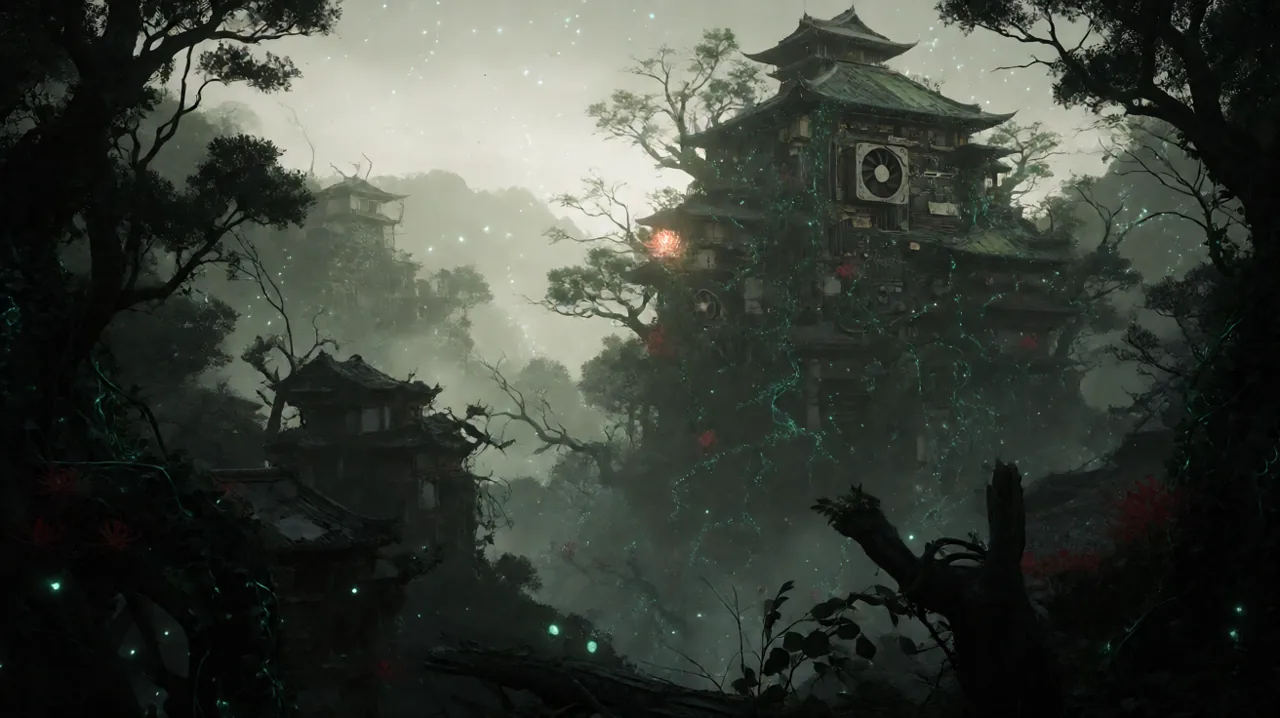
It has been roughly two months since Game Freak released their highly anticipated non-Pokémon action RPG, and the conversation surrounding the game refuses to settle down. Set in a post-apocalyptic 4026 Japan swallowed by a parasitic force known as the blight, the game introduced players to Emma—an 18-year-old Sealer capable of manipulating vine-like hair to absorb corruption—and her mutated canine companion, Koo. The studio’s pivot to a grim, hardcore combat system drew massive attention and heavy comparisons to titles like Sekiro and NieR: Automata.
While many praise the atmospheric storytelling and the sheer ambition of the project, a persistent undercurrent of technical friction and difficulty balancing continues to shape the post-launch narrative. Today, we are looking at three critical developments that highlight exactly where the game stands right now: a surprising reported apology from the game’s director regarding overall enjoyment, the community’s relentless push to force Unreal Engine 5 games into Virtual Reality through UEVR, and the ongoing optimization headaches for Linux gamers running dual-GPU hardware.
A Shift in Tone: The Director’s Reported Apology
When a studio known primarily for family-friendly monster-catching mechanics suddenly drops a dark, punishing action RPG, growing pains are expected. We previously covered the initial developer responses to the game’s steep difficulty curve in our analysis of the first post-launch patch, but recent reports suggest the studio is taking the criticism more to heart than initially believed.
According to a recent report by Yahoo Tech, the director of the project has reportedly issued a formal apology, stating that the game is not “sufficiently enjoyable” for a segment of its audience. This is a fascinating choice of words. It does not just address frame rate stutters or camera clipping; it attacks the core design philosophy.
The combat loop in this title is unforgiving. Players must perfectly time their parries to avoid devastating stunlocks from massive malefact enemies. If you miss a deflection, Emma is heavily punished, often losing large chunks of health and momentum. While hardcore action fans thrive on this kind of pressure, a large portion of the player base expected a more accessible journey, especially given the heavy marketing focus on the emotional bond between Emma and Koo. The director’s reported comments indicate an awareness that the skill floor might have been set too high, leaving casual fans stranded in the early mountain settlements, unable to progress past the first few major boss encounters.
It remains not yet confirmed whether this apology will translate into a tangible “Easy Mode” or a structural overhaul of enemy aggression. However, knowing Game Freak’s historical desire to maintain a broad audience appeal, it is expected that upcoming patches might quietly tweak the parry windows or increase the effectiveness of the spirit stone loadouts to smooth out the mid-game difficulty spikes.
The Hardcore Reality of 4026
To understand why the director might be backpedaling on the difficulty, you have to look at how the mechanics stack up in real-time combat. Emma’s primary defensive and offensive tool is her mutated, vine-like hair, which she uses to grapple, attack, and execute Sealer arts to cleanse the blight from her surroundings.
Synergizing this with Koo’s tactical abilities—which we broke down in our guide on Koo’s slow-motion tactical skills—requires a massive amount of mental bandwidth. You are managing Emma’s stamina, reading the erratic attack patterns of mutated wildlife, and actively commanding Koo to intercept flanking enemies. When it works, it feels like an incredibly choreographed dance of violence and nature. When it fails, you are caught in an endless loop of knockbacks.
If the development team does act on this reported apology, they will have to be incredibly careful. Softening the combat too much could alienate the hardcore demographic that currently champions the game’s intricate mechanics. The balance between accessibility and retaining the brutal identity of the world will be the defining challenge for the studio moving forward.
Taking the Blight to Virtual Reality via UEVR
While official channels are busy figuring out how to make the base game more approachable, the PC modding community has taken the exact opposite route, finding ways to make the experience even more intense. Thanks to the game being built on Unreal Engine 5, players have started utilizing the popular UEVR injector framework to force the title into Virtual Reality headsets.
A recent YouTube showcase picked up by Google News highlighted a functional UEVR profile and settings configuration tailored specifically for this game. The framework essentially hooks into the engine’s rendering pipeline, translating a traditional flat-screen third-person perspective into a fully stereoscopic 3D environment.
Seeing the overgrown, ruined architecture of 4026 Japan in VR is reportedly an awe-inspiring experience. The game’s art direction relies heavily on the contrast between decaying modern technology and vibrant, parasitic plant life. When you are physically surrounded by the floating green spores of the blight, the scale of the world drastically changes. The towering malefact bosses, which already take up most of the screen on a television, suddenly become terrifying, physically imposing behemoths leaning over you.
The Visuals and Mechanics of a VR Port
Playing a fast-paced character action game in VR comes with a massive set of caveats. Because the combat relies on rapid dodging, sudden camera pans, and fast-paced vine traversal, the motion sickness potential is astronomically high.
Community-reported VR profiles generally suggest keeping the game in a modified third-person view rather than forcing a full first-person perspective. By treating the game world like a massive diorama, players can appreciate the intricate animations of Emma and Koo without subjecting their inner ears to the chaotic tumbling of standard gameplay.
Even with optimized settings, running an Unreal Engine 5 title in VR requires exceptionally powerful PC hardware. The engine’s advanced lighting and geometry systems are already incredibly demanding. Pushing those visuals to a high-resolution VR headset at a stable 90 frames per second is currently the domain of top-tier enthusiast rigs. Still, the fact that the community has managed to get a playable version of the game working in VR so close to launch is a testament to the versatility of the engine and the dedication of the player base.
Linux, Dual GPUs, and the 40 FPS Wall
Speaking of demanding hardware, the PC performance discussion is far from over, particularly for players outside the standard Windows ecosystem. While our previous coverage detailed the optimal handheld PC settings for devices like the Steam Deck, the wider Linux community is hitting some frustrating roadblocks.
A recent discussion on the r/cachyos subreddit shed light on a specific, stubborn issue affecting players using dual-GPU laptops (such as machines combining AMD Ryzen processors with dedicated NVIDIA graphics cards). According to community reports, these setups are severely underperforming. Users who have properly configured their systems—setting up prime-run, forcing maximum performance modes, and tweaking NVIDIA server settings—are finding that the game outright refuses to push past 30 to 40 frames per second.
The most baffling part of this issue is that lowering the graphics to the absolute minimum seems to have zero impact on the frame rate. This behavior strongly suggests an engine-level bottleneck or a translation layer conflict within Proton, rather than a pure lack of graphical horsepower.
In Unreal Engine 5, heavy reliance on CPU-bound tasks like asset streaming and complex AI behavior (especially Koo’s dynamic pathfinding and the physics calculations for Emma’s vines) can often create severe bottlenecks. When playing on a Linux translation layer, these CPU requests have to be interpreted on the fly. If a dual-GPU laptop is not properly routing the intensive physics calculations through the dedicated card, the system chokes, resulting in the rigid 40 FPS cap that players are currently reporting.
Looking Ahead: What Needs Fixing
As we move deeper into the post-launch window, Game Freak has a clear, two-pronged battle ahead of them.
On the design front, they have to address the philosophical concerns brought up in the director’s reported apology. Finding a way to make the game sufficiently enjoyable for the wider audience without stripping away the precise, timing-based combat that hardcore players love will require surgical precision. Whether this comes in the form of expanded accessibility toggles, looser parry windows, or entirely new difficulty tiers remains to be seen. For now, players struggling with the difficulty should consult our builds and spirit stones guide to optimize their loadouts.
On the technical front, the community is clearly doing the heavy lifting where official support ends. The UEVR mod showcases the incredible visual potential of the game’s engine, but the persistent Linux bugs highlight the fragility of PC optimization. Until an official patch addresses the dual-GPU routing issues, Linux laptop users might have to rely on custom community Proton builds or simply tolerate the lower frame rates.
Ultimately, the game stands as a fascinating, flawed masterpiece. It is a title that pushes boundaries both in its narrative design and its technical ambitions, leaving a trail of beautiful chaos—and a few frustrated gamers—in its wake.