Advanced Weapon Mechanics & Damage Scaling in Beast of Reincarnation
A detailed breakdown of Beast of Reincarnation's hidden damage numbers, exploring Strength and Florescence scaling, elemental weapon effects, and critical hit modifiers.
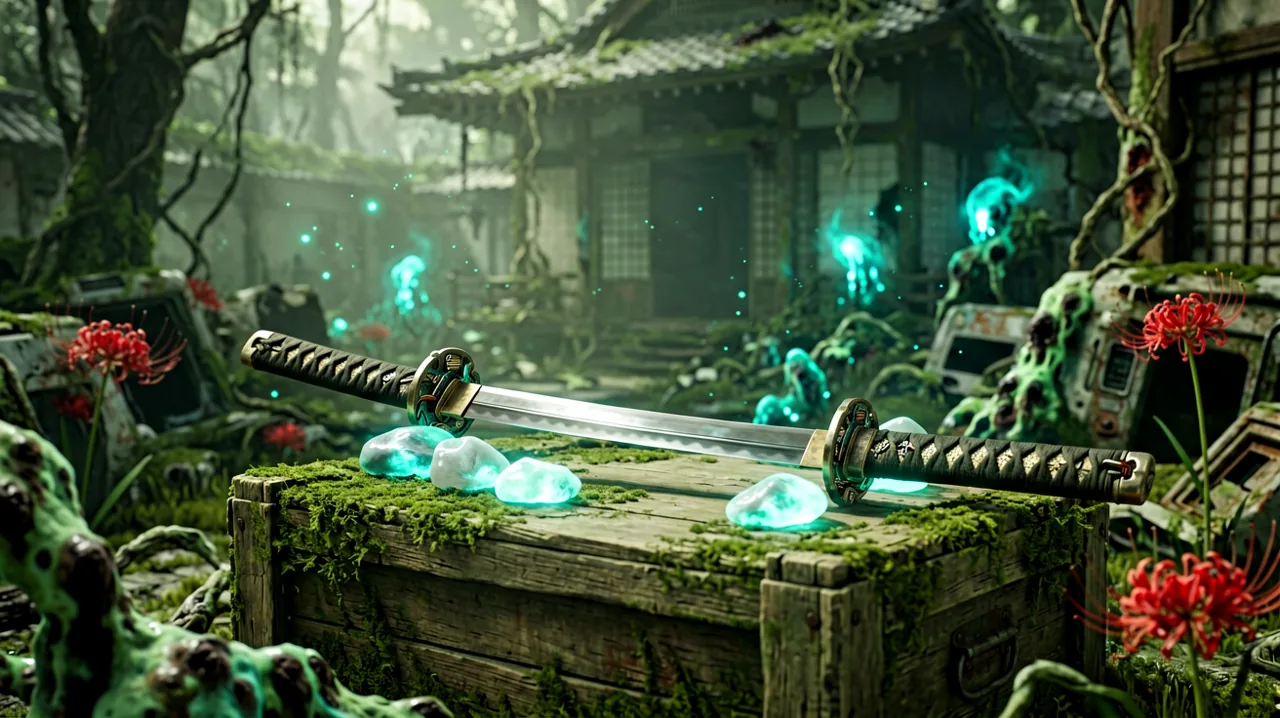
Game Freak’s bold leap into the hardcore action RPG space with Beast of Reincarnation has dominated discussions for the past month. With the initial wave of exploration largely complete and the world map thoroughly charted by the community, players are turning their collective attention toward min-maxing. The combat system relies heavily on timing, spacing, and understanding your equipment. However, the game famously obscures some of its deeper mathematical mechanics, leaving fans to figure out exactly how stats like Florescence interact with Emma’s diverse kit.
Thanks to extensive frame-by-frame testing and community research gathered over the last few days, we finally have a concrete look under the hood. From the exact multipliers governing critical hits to the hidden behaviors of late-game elemental weapons, here is a breakdown of the advanced weapon mechanics and damage scaling currently running the meta.
The Foundation: Static Damage Values
One of the most significant revelations from recent community footage analysis is that Beast of Reincarnation employs a completely static damage model. In many modern RPGs, striking an enemy yields a slight variance in damage output—perhaps hitting for 105 damage on one swing and 98 on the next, thanks to an invisible numerical roll.
The development team opted out of this entirely. Barring outside multipliers such as active sword buffs, debuffs applied to the enemy, or striking a heavily armored segment of a massive malefact, every single basic attack will reportedly deal the exact same amount of damage.
This static approach heavily reinforces the game’s tactical identity. When you are coordinating attacks alongside Koo and managing Emma’s plant-like hair to grapple out of danger, knowing exactly how many hits it takes to force a stagger state is vital. It removes luck from the equation, punishing poor timing while rewarding players who meticulously calculate their stamina and combo strings against aggressive bosses.
Strength vs. Florescence: Optimizing Your Build
When leveling up and slotting in spirit stones, the primary dilemma for most players revolves around investing in Strength (often listed as Attack in localized menus) versus Florescence (Skill Power). The community testing has finally clarified the exact division of labor between these two primary stats.
Strength acts as your foundational workhorse. It increases the damage of both standard sword swings and your equipped Blade Arts. If you prefer a highly aggressive, close-quarters playstyle where you are constantly trading blows, deflecting, and whittling down a malefact’s posture with relentless standard combos, Strength provides the most consistent overall return on investment.
Florescence, on the other hand, governs Emma’s unique capabilities as a Sealer. Testing indicates that this stat strictly affects Blade Arts—your heavy, cooldown-based or resource-spending martial techniques. Crucially, the scaling multiplier for Florescence on Blade Arts is noticeably larger than the Strength multiplier. If your build revolves around surviving with dodges and Koo’s crowd-control barks, only to punish a boss during a brief vulnerability window with a high-tier Blade Art, dumping points into Florescence is mathematically superior.
Interestingly, this rigid division of stats extends to specific gear pieces. The highly sought-after effect of the Cirrus item, for example, has been community-reported to affect only normal attacks. It provides zero benefit to Blade Arts, meaning players running Florescence-heavy builds should swap Cirrus out for accessories that better complement burst damage.
The Truth About Critical Hits
Critical hits are a staple of the action RPG genre, usually offering a massive spike in damage that ranges from 150% to 200% of base damage. Beast of Reincarnation takes a significantly more restrained approach, which might surprise players who have been heavily investing in crit-chance optimizations.
Community data shows that base critical hits in the game deal exactly 10% more damage than a standard strike. Even if you invest heavily in Emma’s specific “Critical Boost” node within the skill tree, that multiplier only bumps up to a 15% damage increase.
Why are the numbers so conservative? The leading theory is that the combat loop is explicitly designed to prioritize elemental exploitation and blight absorption over raw physical burst. Because critical hits can trigger on multi-hit Blade Arts and rapid standard combos, a traditional 200% multiplier would likely trivialize the intricate rhythm of the combat. Furthermore, as players have discovered with elemental weapons, certain projectile effects can critically hit independently, meaning a higher global multiplier would completely break endgame scaling.
For now, players should treat critical hits as a supplementary bonus rather than the core pillar of a build, unless they are using rapid-striking daggers designed to fish for those +15% procs constantly.
Elemental Buildup and Weapon Effects
Managing the blight is central to both the narrative of 4026 Japan and the moment-to-moment combat. Elemental weapons are your primary tool for turning the tide against mutated wildlife. Extensive testing has uncovered that elemental weapons behave differently depending on their specific “family” of passive effects.
All elemental weapons build up their respective status effect on the enemy over time, but this buildup rate increases dramatically when the weapon’s unique effect is actively triggered. These effects generally fall into two distinct mechanical categories:
Lightning Strikes: Thunderwave, Winterwake, and Black Blossom
When the unique effect of the Thunderwave Sword, Winterwake, or Black Blossom is activated, every subsequent sword swing calls down a localized strike from above directly onto the target. Depending on which of the three weapons you have equipped, these strikes rapidly build up lightning, flame, or poison status bars. While the raw physical damage of the strike itself is notoriously low, they guarantee rapid status application and can independently trigger critical hits regardless of your positioning.
Energy Waves: Sunrise, Spring Storm, and Camellia
In contrast, weapons like the Sunrise Sword, Spring Storm, and the Camellia operate as horizontal projectile launchers. Once their effect is active, swinging the blade shoots out an energy wave that travels across the battlefield. These waves deal contact damage and build up fire, water, or lightning. Because these are linear projectiles, positioning Emma using her vine-assisted mobility becomes critical; firing energy waves through multiple lined-up enemies allows for massive, area-of-effect elemental application.
In both cases, players must remember that the physical damage of the projectile or the lightning strike is intentionally suppressed. The true tactical value lies in forcing the enemy into an elemental staggered state, allowing Emma to safely move in and attempt a seal alongside Koo.
New Game Plus and Community Feedback
While the combat mechanics continue to impress with their depth, the community has voiced some frustrations regarding the replayability of the campaign. As players push into New Game Plus to test out these optimized Florescence builds and maxed-out elemental swords, a common pain point has emerged on social media platforms: unskippable cutscenes.
Beast of Reincarnation features a gripping narrative detailing the bleak existence of humanity in the mountain settlements, but the pacing of a second playthrough is severely hampered by forced story segments. Action RPG veterans, accustomed to the rapid boss-rush pace of consecutive playthroughs in similar titles, are actively requesting an auto-skip feature. Given that Game Freak has been highly responsive to early feedback with recent updates, the community remains optimistic that NG+ quality-of-life adjustments are on the horizon.
Final Thoughts
The mathematical foundation of Beast of Reincarnation rewards deliberation and intentional gear choices. Whether you are scaling Strength for a bruising, in-your-face brawl alongside Koo, or maxing out Florescence to unleash devastating Blade Arts after a perfect dodge, understanding these hidden numerical modifiers will save you countless hours of frustration. As players continue to map out the exact elemental thresholds for endgame bosses, the combat meta will undoubtedly continue to evolve. For now, optimize those stat allocations, reconsider your reliance on critical hit multipliers, and use those weapon effects to their maximum tactical potential.