Beast of Reincarnation: Max Level Cap, Weapon Scaling, and Platinum Trophy Explained
Reaching the endgame in Game Freak's action RPG? We break down the level 200 cap, how maxed weapon damage works, and the journey to unlocking the Platinum trophy.
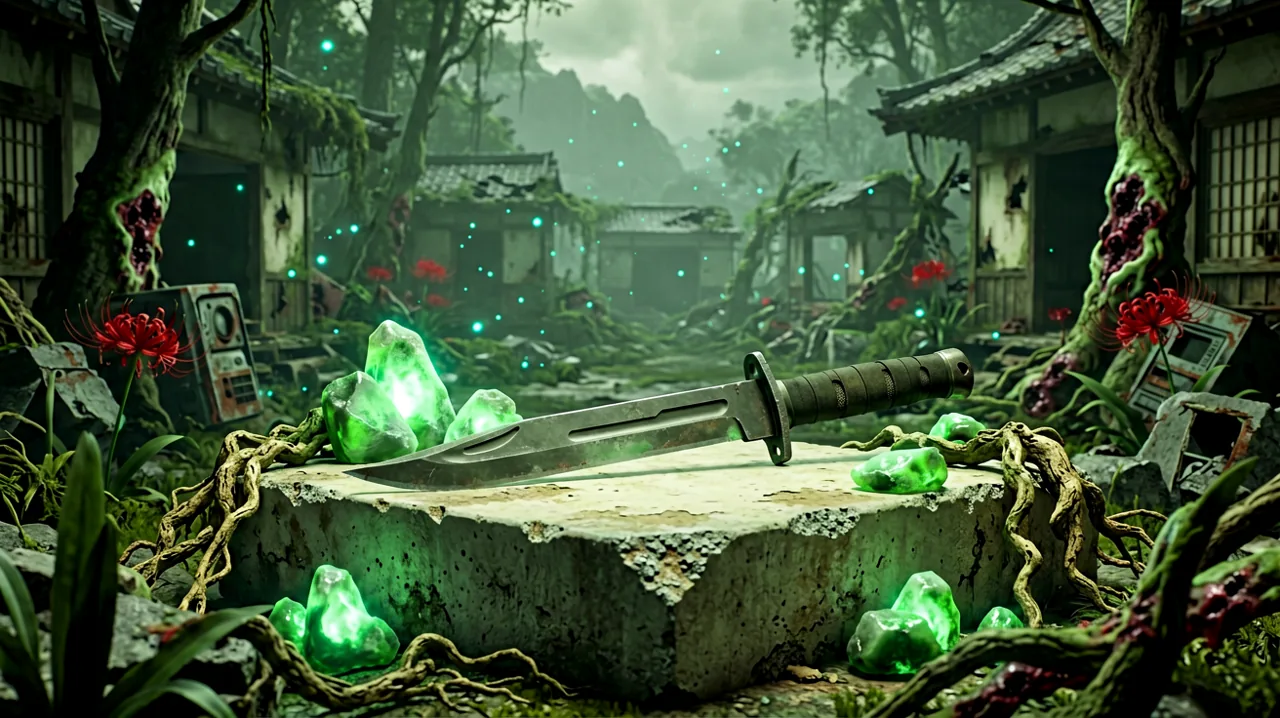
Game Freak’s bold departure from their traditional franchise formula has resulted in one of the most mechanically intense action RPG experiences of 2026. Set in the distant year 4026, Beast of Reincarnation throws players into a beautifully ruined vision of Japan completely swallowed by the parasitic biological anomaly known as the “blight.” Taking on the role of Emma, an 18-year-old Sealer capable of weaponizing her plant-like hair to absorb this aggressive corruption, you and your malefact canine companion, Koo, must survive a grueling gauntlet of mutated horrors.
Now that the dust has settled since the highly anticipated August launch on PlayStation 5, Xbox Series X|S, and PC, the most dedicated portions of the player base have thoroughly mapped the absolute outer limits of the endgame. By pushing their character builds, upgrading materials, and combat execution to the maximum, the community has successfully uncovered the hard level cap, unraveled how late-game weapon scaling functions, and rated the overall difficulty of earning the Platinum trophy.
Hitting the Ceiling: The Level 200 Max Cap
For players relentlessly grinding through the overgrown wastelands, hunting down elite marks, and challenging the game’s toughest optional bosses, character progression eventually hits a hard stop. Dedicated community members and trophy hunters have confirmed that the absolute maximum level in Beast of Reincarnation is precisely level 200. Once Emma hits this specific threshold, experience points simply stop accumulating entirely, locking in your overall stat distribution for the rest of your save file.
Reaching level 200 is a monumental task that requires running through heavily infested late-game zones and repeatedly executing flawless takedowns on massive malefact enemies. At this level, Emma’s capabilities are effectively maxed out, providing a substantial pool of health, extensive stamina for dodging, and maximum blight-absorption capacity.
However, due to Game Freak’s incredibly strict enemy scaling algorithms, you cannot simply overpower the hardest encounters through sheer numerical superiority. Even at level 200, the hardcore, timing-based combat—which continues to draw heavy, well-earned comparisons to Sekiro: Shadows Die Twice—remains completely lethal if you miss a parry window or mistime your dodges. You still need to rely heavily on Emma’s vine traversal to reposition out of area-of-effect attacks and use Koo’s tactical slowdowns effectively. Character level matters, but execution matters far more. For more information on how late-game enemy scaling operates, check our detailed endgame scaling guide.
Weapon Scaling: The Equal Base Damage System
Perhaps the most surprising mechanical revelation from endgame players is how Game Freak chose to handle weapon upgrades and final stats. In many traditional action RPGs, late-game gear objectively invalidates your starting equipment by boasting significantly higher base physical stats. Beast of Reincarnation takes a completely different, highly deliberate approach to arsenal balance.
According to community-reported data, when upgraded to their absolute maximum tier using top-level spirit stones, every single melee weapon in the game ends up with the exact same base damage output. Whether you are wielding a crude, scavenged 1960s-inspired blade you acquired in the early mountain settlements or a legendary, intricately crafted halberd forged in the final chapters, the raw physical DPS equalizes at the final upgrade tier.
This design philosophy profoundly shifts the entire focus of endgame build-crafting away from blindly chasing raw damage numbers. Instead, it places a heavy emphasis on utility, attack animations, and elemental affinities. The true differentiation between maxed-out weapons lies solely in their built-in elemental properties—such as fire, lightning, or unique blight-cleansing status effects.
Because the base physical damage is identical across the board, players are strongly encouraged to swap weapons dynamically to exploit the specific elemental weaknesses of different malefact species. If a massive, heavily armored beast is highly vulnerable to lightning, a maxed-out lightning blade will dramatically outperform a fire-based weapon of the exact same level, purely due to the elemental damage multiplier. This system ensures that every single piece of gear you find remains completely viable from the opening hours all the way through the final confrontation, tying perfectly into the game’s broader emphasis on tactical flexibility.
Synergizing Maxed Weapons with Koo’s Assists
An incredibly important factor to consider when choosing your max-level weapon is how its specific elemental affinity pairs with Koo’s combat abilities. As a mutated malefact himself, Koo possesses unique biological properties that can dramatically amplify your overall damage output when properly coordinated.
For instance, when Emma wields a maxed-out fire blade, commanding Koo to perform a heavy takedown on a burning enemy can trigger a devastating thermal explosion, dealing massive area-of-effect damage to surrounding infected creatures. Similarly, utilizing a lightning-infused weapon while Koo locks down an enemy in the watery marsh regions creates a highly conductive chain reaction that can stun entire groups of smaller foes.
Because the base damage is flat across all top-tier weapons, recognizing and exploiting these environmental and companion-based synergies becomes the true test of a master Sealer. The game actively rewards you for thinking tactically and treating Koo not just as a passive pet, but as an integral, dynamic extension of your own arsenal. You can review our detailed breakdown of companion tactics and timing in our combat guide.
Earning the Platinum Trophy: A Forgiving 4/10 Difficulty
Given the game’s reputation for punishing difficulty, demanding parry windows, and unforgiving boss encounters, you might naturally assume that earning the Platinum trophy (or achieving 100% completion on Xbox and Steam) would be a brutal, controller-breaking ordeal. Interestingly, the current community consensus points to a highly accessible, rewarding 4/10 Platinum difficulty rating.
The trophy list fundamentally respects the player’s time. While you absolutely do need to master the combat system to defeat all the mandatory story bosses and the hidden optional encounters, the game entirely avoids the tedious, mind-numbing fetch quests and repetitive grinds that plague many modern open-world RPG completion lists. There is a vast array of lore collectibles scattered across the ruined Japanese landscapes, but players report that hunting them down is relatively straightforward and rarely feels like a chore.
Furthermore, community feedback strongly indicates that very few critical objectives or items are permanently missable. If you focus on exploring the environments thoroughly, engaging frequently with the survivor settlements, and utilizing Emma’s vine-hair mechanics to vault up to seemingly unreachable hidden areas, you will naturally acquire the vast majority of the required items during a standard playthrough.
You will also need to max out your bond with your canine partner to unlock specific achievements, an engaging process that naturally occurs as you fight together. You can read more about how this specific mechanic tracks your progress in our Koo affection system overview. Overall, earning the Platinum serves as a highly rewarding victory lap that celebrates your mastery of the game, rather than a frustrating checklist. If you need help finding specific hidden items, consult our completionist guide.
New Game Plus (NG+) Impressions
After completing the main storyline, sealing the core blight anomalies, and watching the credits roll, players are immediately granted access to the New Game Plus (NG+) mode. This mode allows you to carry over your hard-earned level 200 stats, your fully upgraded elemental weapons, and your gathered spirit stones into a completely fresh playthrough.
However, early community reception to NG+ has been somewhat mixed. While it provides an excellent opportunity to replay the campaign with a fully realized, endgame-ready build, the structural experience largely remains identical to the first run. Enemies possess significantly higher health pools and hit much harder—demanding even tighter timing on your parries and dodges to survive—but the mode reportedly does not introduce any radically new mechanics, altered enemy placements, or surprise boss phases.
For players who have already thoroughly mastered the combat loop, sprinting from main objective to main objective in NG+ can begin to feel slightly monotonous. If you are looking for a completely fresh challenge that fundamentally alters the rules of the game, the second playthrough might feel a bit routine. Despite this, it remains an excellent, high-stakes testing ground for trying out alternative elemental weapon builds that you didn’t focus on during your initial run.
PC Community Notes: Audio Enhancements and OBS Recording Glitches
For those playing the game on PC via Steam or the Xbox Game Pass app, a couple of recent community developments and software updates are worth noting before you boot up your next session.
First, audio peripheral manufacturer SteelSeries recently rolled out update 118.0.0 for their GG software suite, which officially introduces a custom Sonar audio preset explicitly designed for Beast of Reincarnation. This finely tuned preset drastically improves the directional audio cues, making it significantly easier to pinpoint off-screen malefact attacks based purely on sound, while also greatly enhancing the atmospheric soundscape of the overgrown wilderness.
On the troubleshooting front, several PC content creators and streamers have reported severe visual glitches and screen tearing when attempting to capture their gameplay footage using OBS Studio. Despite the game running flawlessly on their physical monitors, the resulting OBS video recordings often appear distorted or completely corrupted. Until a definitive patch is deployed by either Game Freak or the OBS development team, the community highly recommends utilizing the built-in Xbox Game Bar recording feature, which is currently reported to capture the game smoothly without any visual distortion.
Final Thoughts
As the global player base continues to dissect every intricate mechanic of Game Freak’s ambitious title, the overarching picture of the endgame becomes much clearer. The strict level 200 cap and the brilliantly equalized weapon damage system definitively prove that Beast of Reincarnation is a game primarily focused on player skill, precise timing, and elemental strategy rather than mindless stat-padding. Paired with a highly respectful, enjoyable trophy list, it stands as a finely tuned action RPG experience that rewards genuine dedication and mastery without demanding endless, hollow grinding.